βoihisʂa-ata
A Material Proposal for the Technological Democratization of Microbial Fuel Cells in the Colombian context
Hosted by Agoston Walter, Pablo Campuzano, Dr. Camilo AyalaThis project is now archived and was part of DDW22
Event type
Exhibition
Location
West
Fashion Tech Farm
Zeelsterstraat 80
5652EL
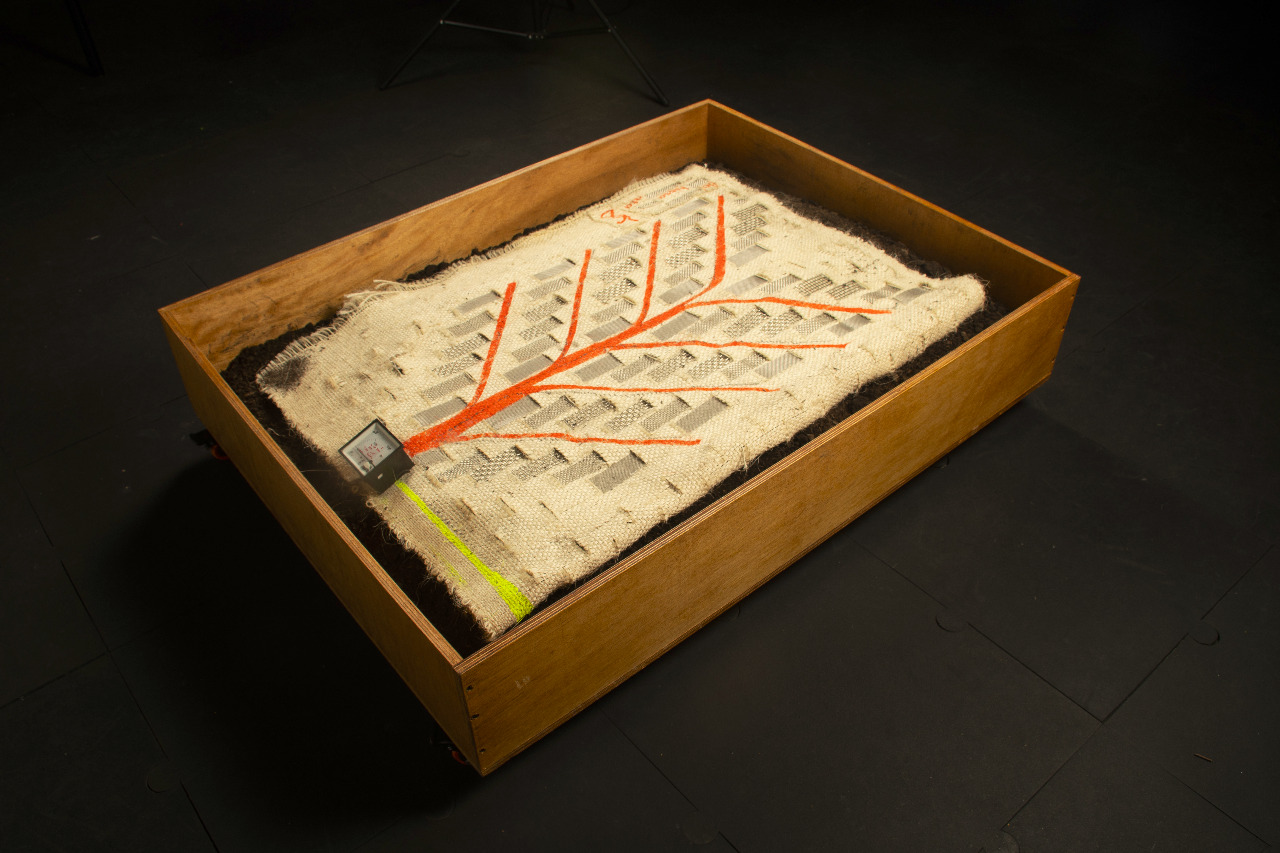
βoihisʂa-ata in an exhibition box of soil
Pablo Campuzano
βoihisʂa-ata, meaning 'Earth Cloak - One' in the indigenous Muisca language, is a textile that makes electrogenic bacteria in the soil visible. βoihisʂa-ata is crafted with materials and techniques accessible in the Colombian context, allowing citizens to begin to interpret the soil microbiome.
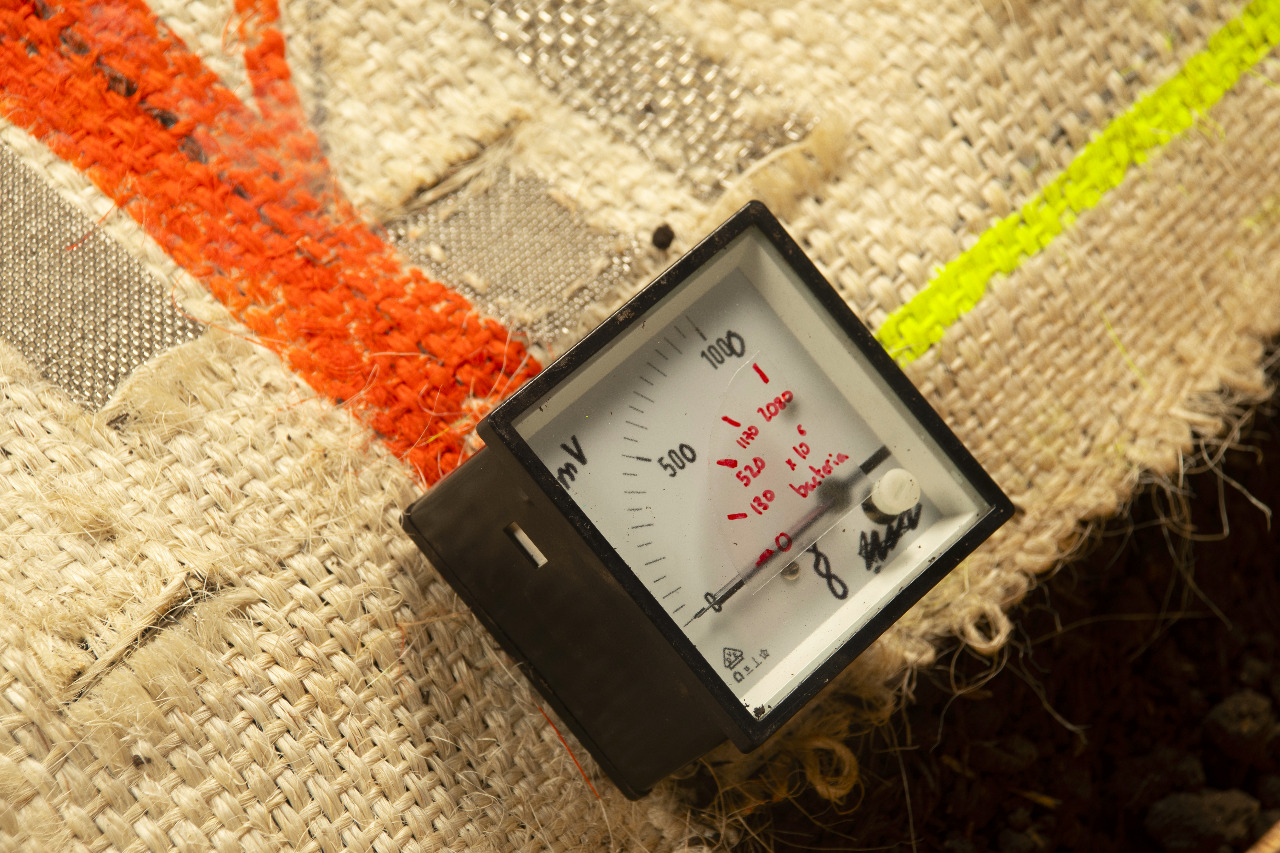
A close-up view of the modified voltmeter
Pablo Campuzano
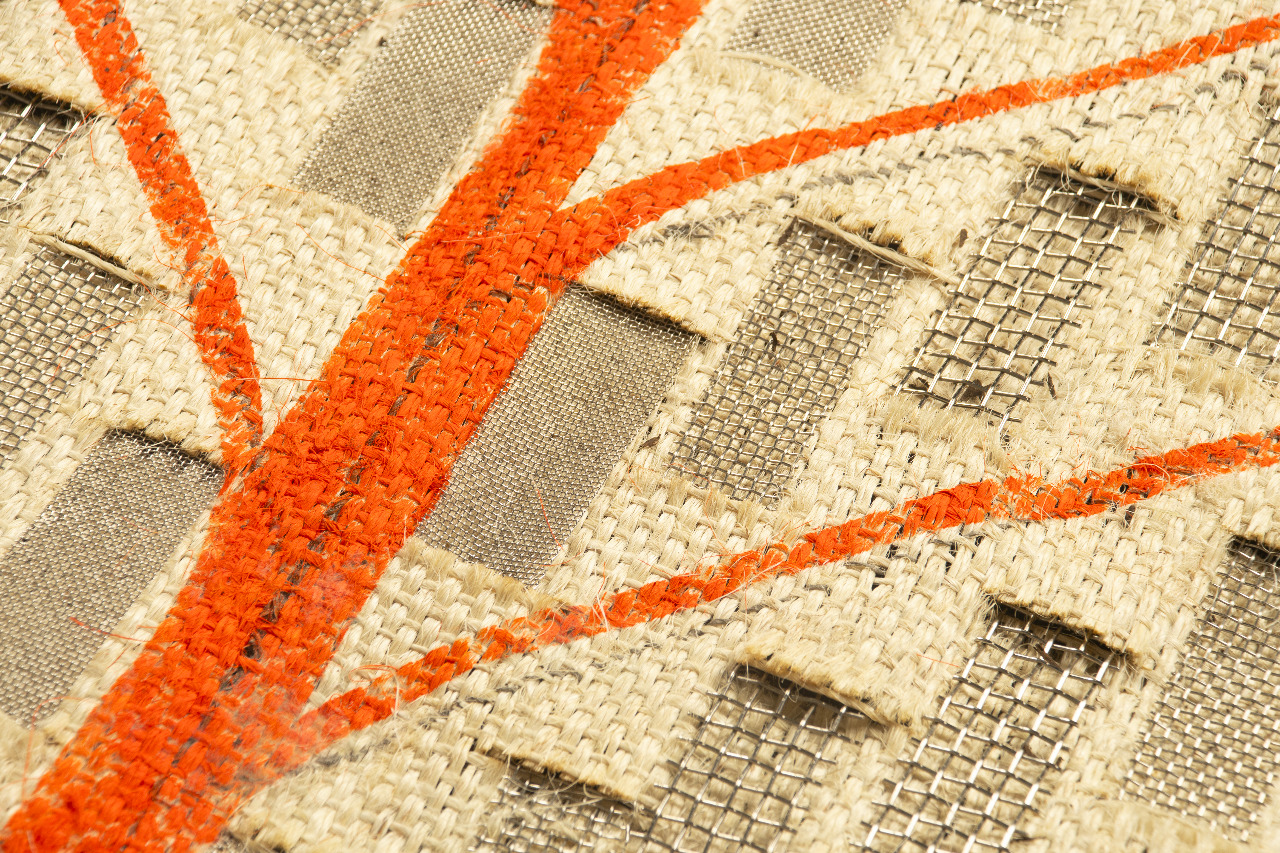
Highlights display sewn electrical connections
Pablo Campuzano
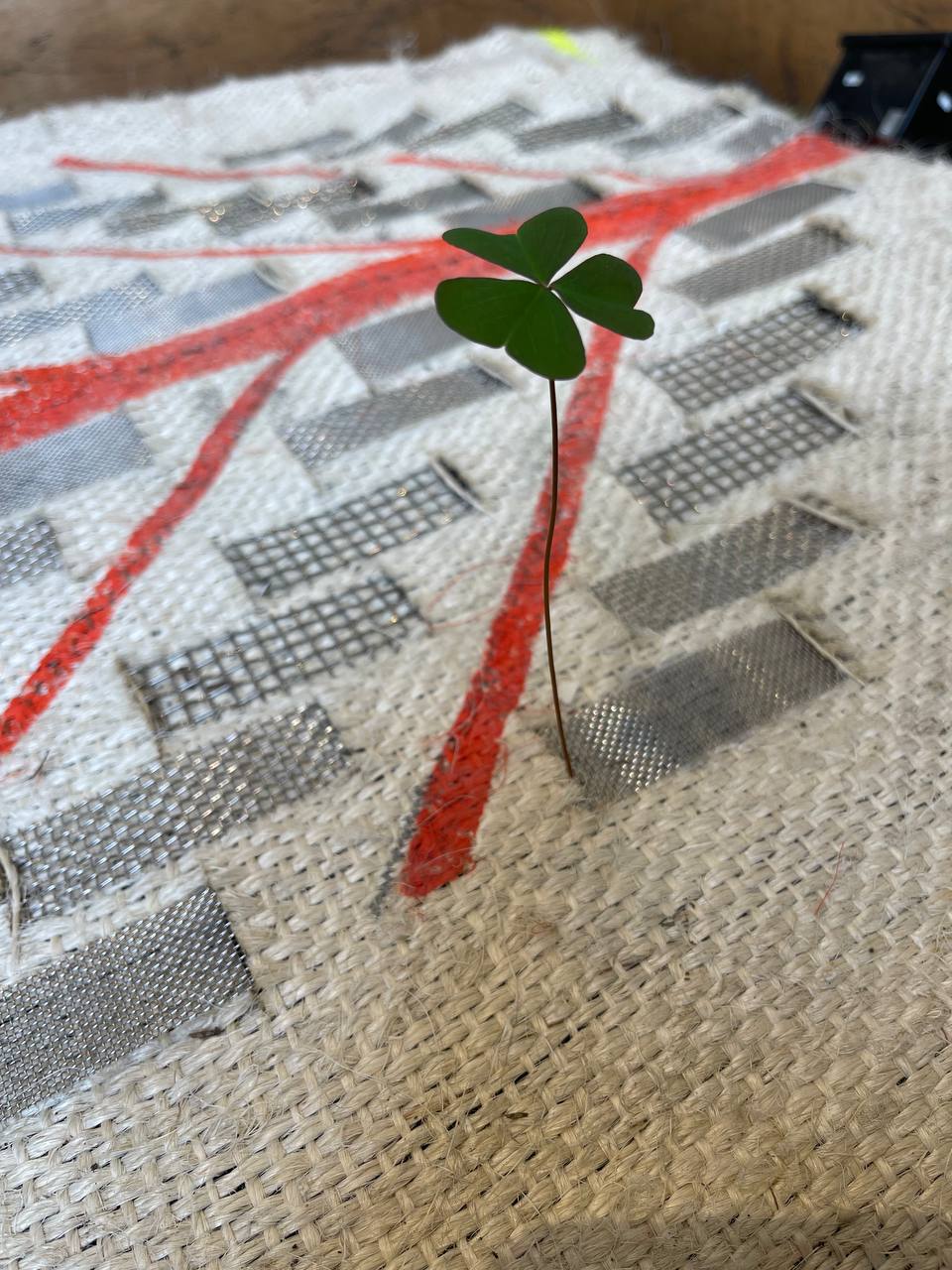
In use, the textile melts into the local ecosystem
Agoston Walter
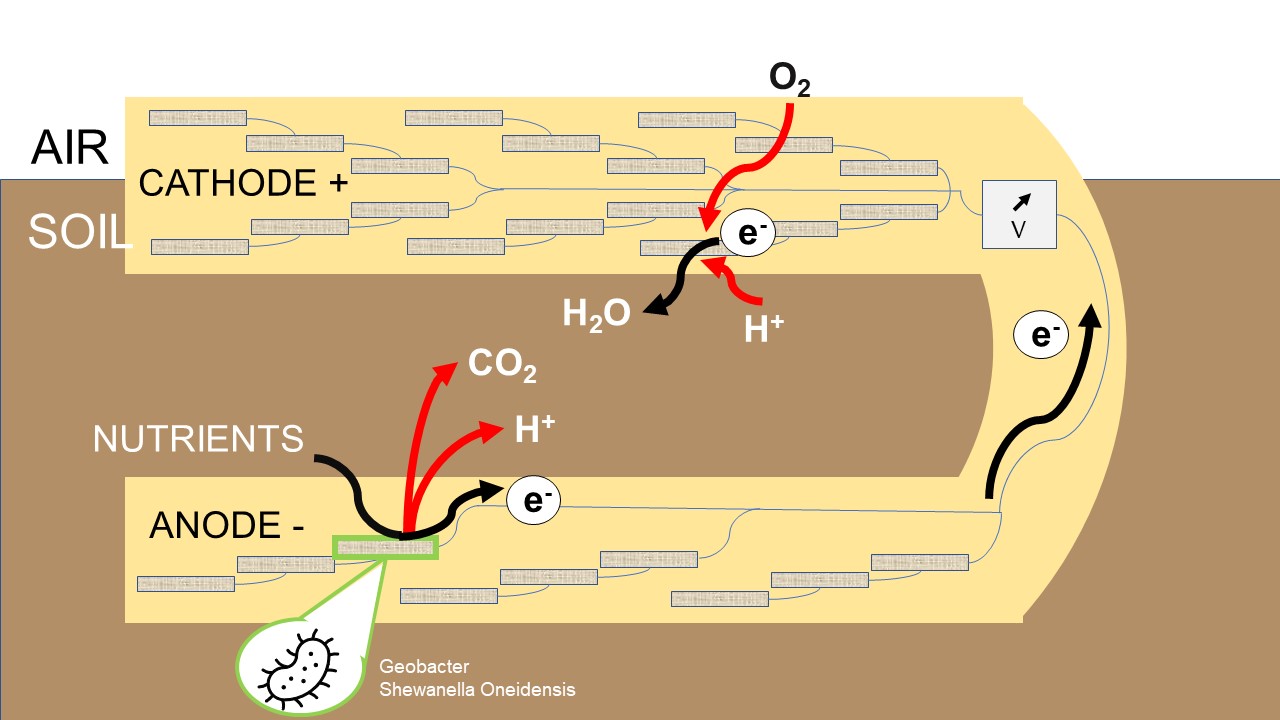
A cross-section diagram showing reaction flow
About Agoston Walter, Pablo Campuzano, Dr. Camilo Ayala
Agoston Walter, MSc ID student @ TU Eindhoven
Pablo Campuzano, BA Design student @ UniAndes
Dr. Camilo Ayala, PhD Design professor @ UniAndes
Agoston combines life sciences with electrical engineering to tie together environmental and socio-cultural context to investigate meaning and ways of life.
Pablo blends digital and material craftsmanship with a societal sensibility and critique.
Dr. Ayala collaborates with the Colombian government to spur social innovation through DIY material design
Colofon
Industrial Designer
Ágoston Ottó Walter
Interaction Designer
Pablo Campuzano
Project Mentor and Material Designer
Dr. Camilo Ayala-García
Similar projects
Plant Fictions
Phytomorphic Being
International Creative Women
HOME
Minkowski
Get into the mindset of a Futures Thinker
Zhejiang University
Air Defender
Erwin Thomasse & Lucas Maassen
design
Raccogliere Project
RACCOGLIERE
Fé Ramakers
The Unselfish Cabins
Waag Futurelab
Expeditie naar planet B
Studio Shun Chih Chang
Waterface
Koning Willem I College
TRANSFORMATION - From here to Eternity