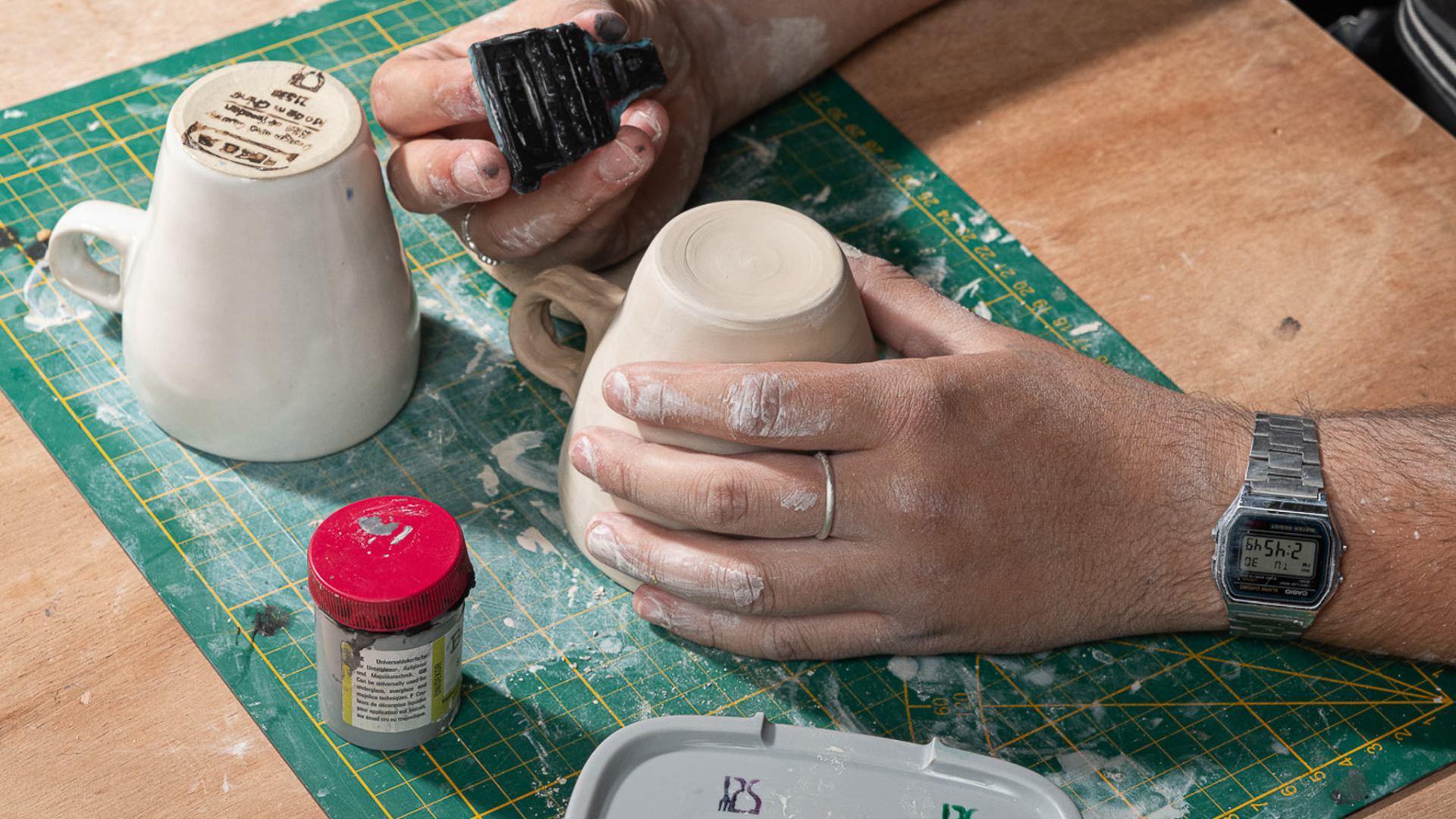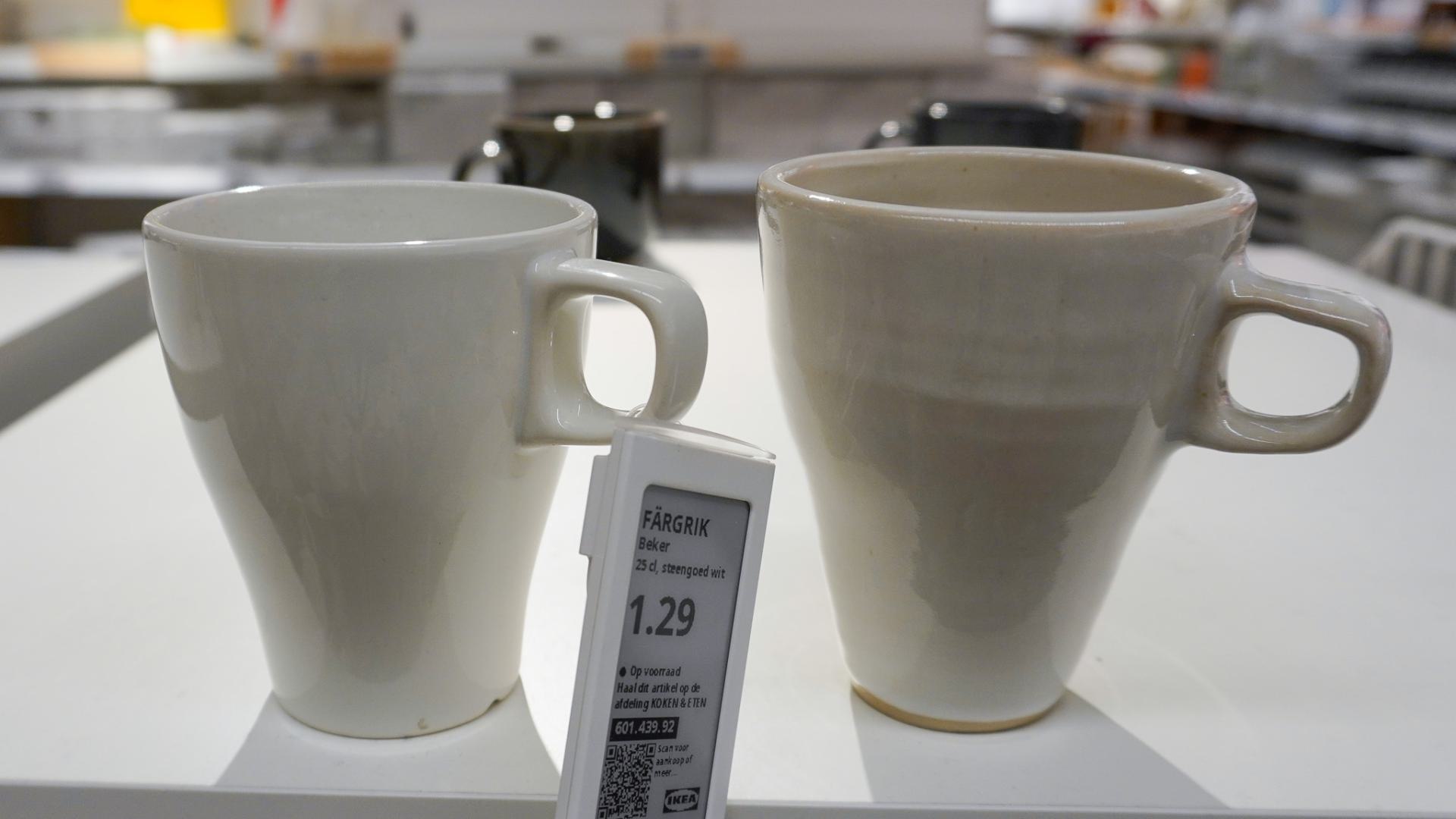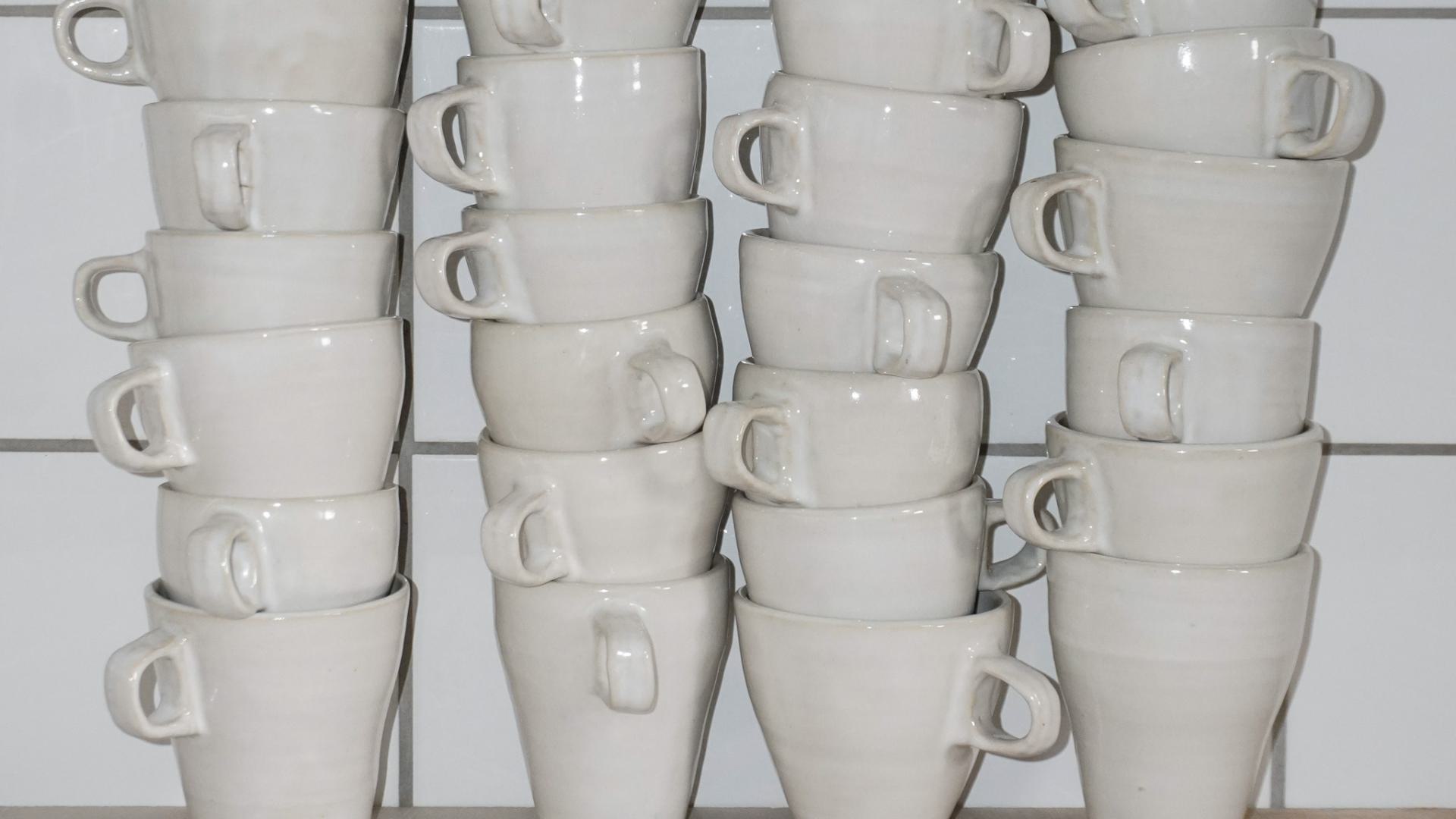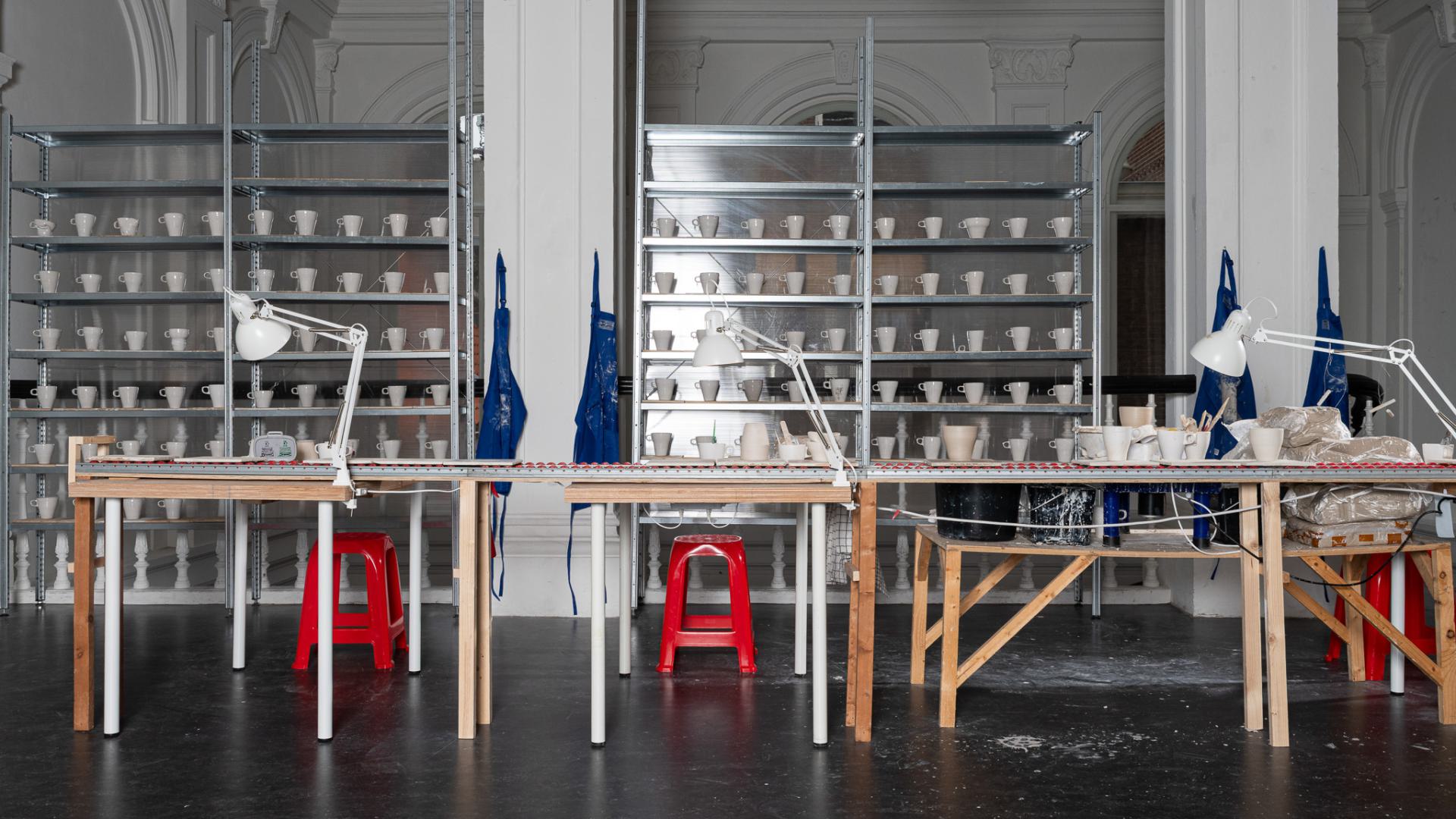
Industrial (In)Difference is a factory-floor assembly line and quality-control department that continuously produces the FÄRGRIK mug, IKEA’s cheapest mug, currently sold for €1.29. Mugs travel along a conveyor belt, where they are assessed against a set of criteria and assigned a value. At the end of the line, visitors can purchase each mug for whatever price the assessment determined it was worth.
In mass production, quality control measures conformance. Yet the boundary between defect and ‘acceptable difference’ is not fixed. Technical limits, economic pressures, and cultural expectations shape what is tolerated, what goes unnoticed, and what can still be sold. This assessment relates only to an object's physical properties, leaving the labour conditions under which it was produced and its environmental impact outside the picture.
What does it mean to assign value to an object while overlooking the people who made it? Drawing on my own experience making and selling pottery, Industrial (In)Difference questions how mass-produced ceramics can be sold so cheaply while the labour behind them remains invisible. As designer Marjanne van Helvert argues in her Dirty Design Manifesto, design is never neutral. Every object carries the social and environmental conditions of its production, whether visible or not. By making mass-produced goods visible as objects also made by hand, the project asks us to reconsider where our objects come from and how we assign value to them.