Context and problem
When children end up in a hospital bed after surgery or illness, getting them up and moving is crucial for a good recovery. Without daily activity, children can lose up to 1.5% of muscle strength each day. Yet, young patients still spend up to 95% of their hospital stay in bed.
Sterile hospital rooms and clinical tools simply don't resonate with a child's need to play, explore, or compete. Parents often desperately want to help, but lack the means to do so. This often leaves physical activity dependent on the scheduled physiotherapy sessions, meaning children get less than 30 minutes per day where moving is actually fun
The solution
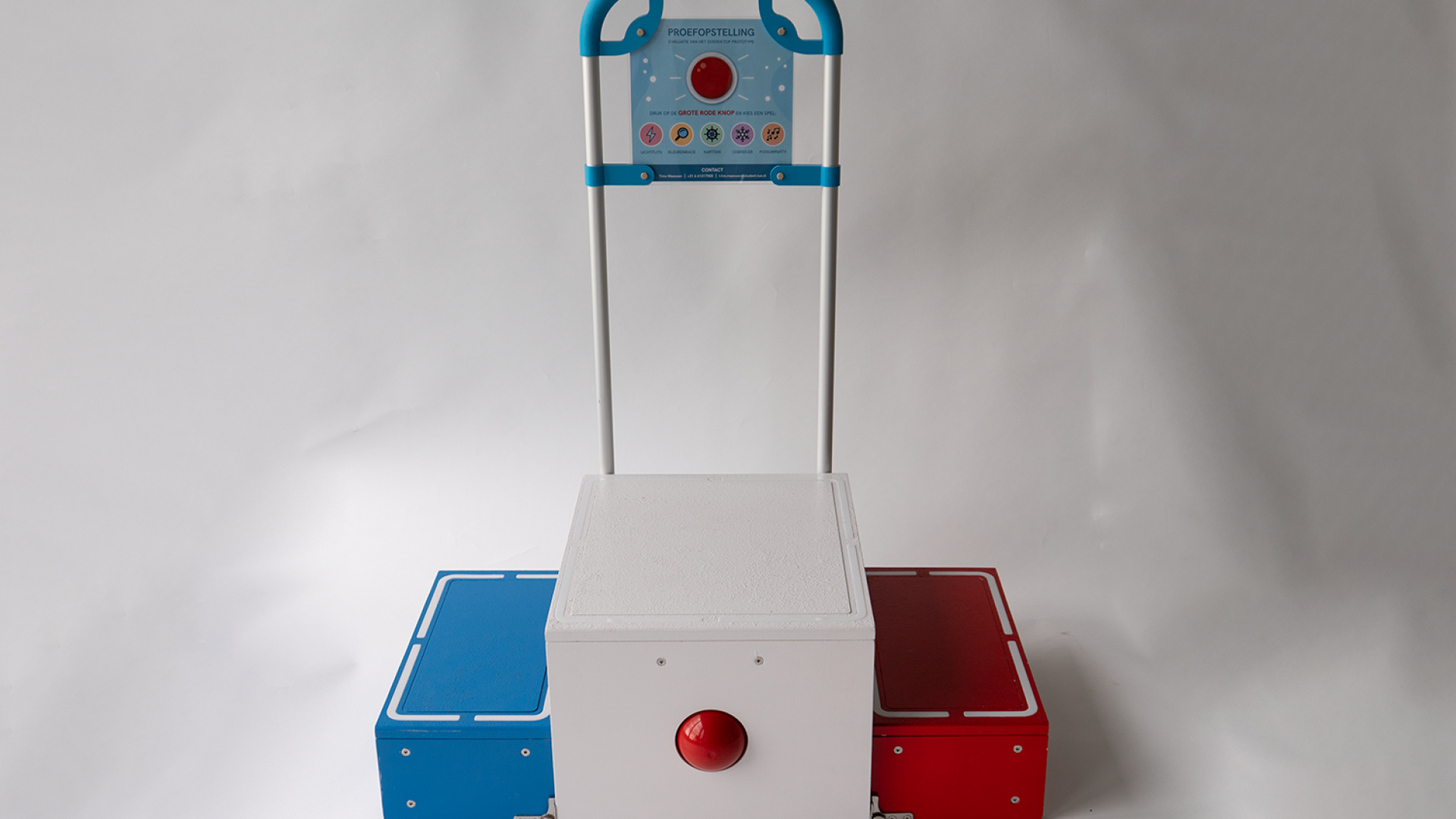
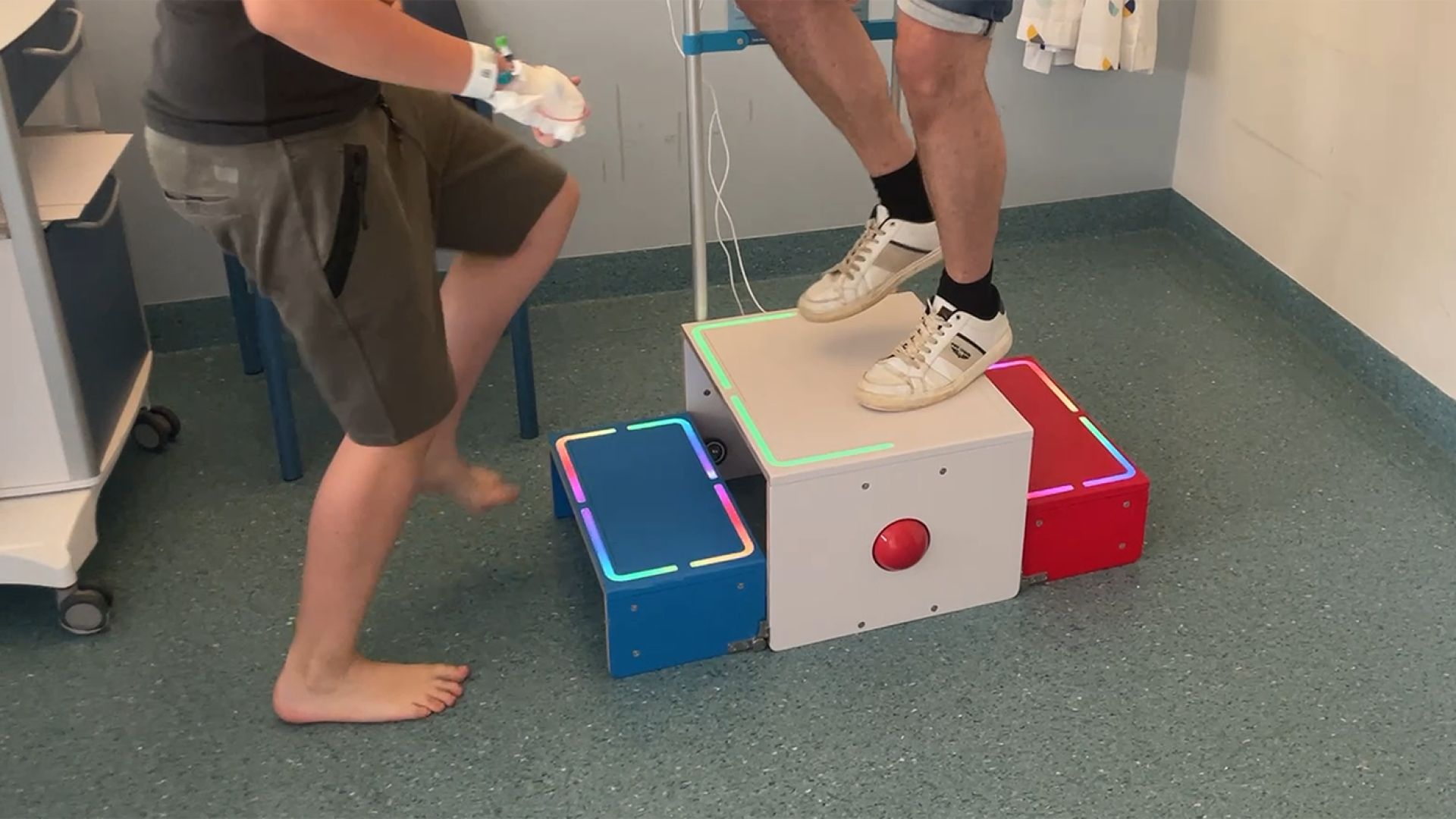
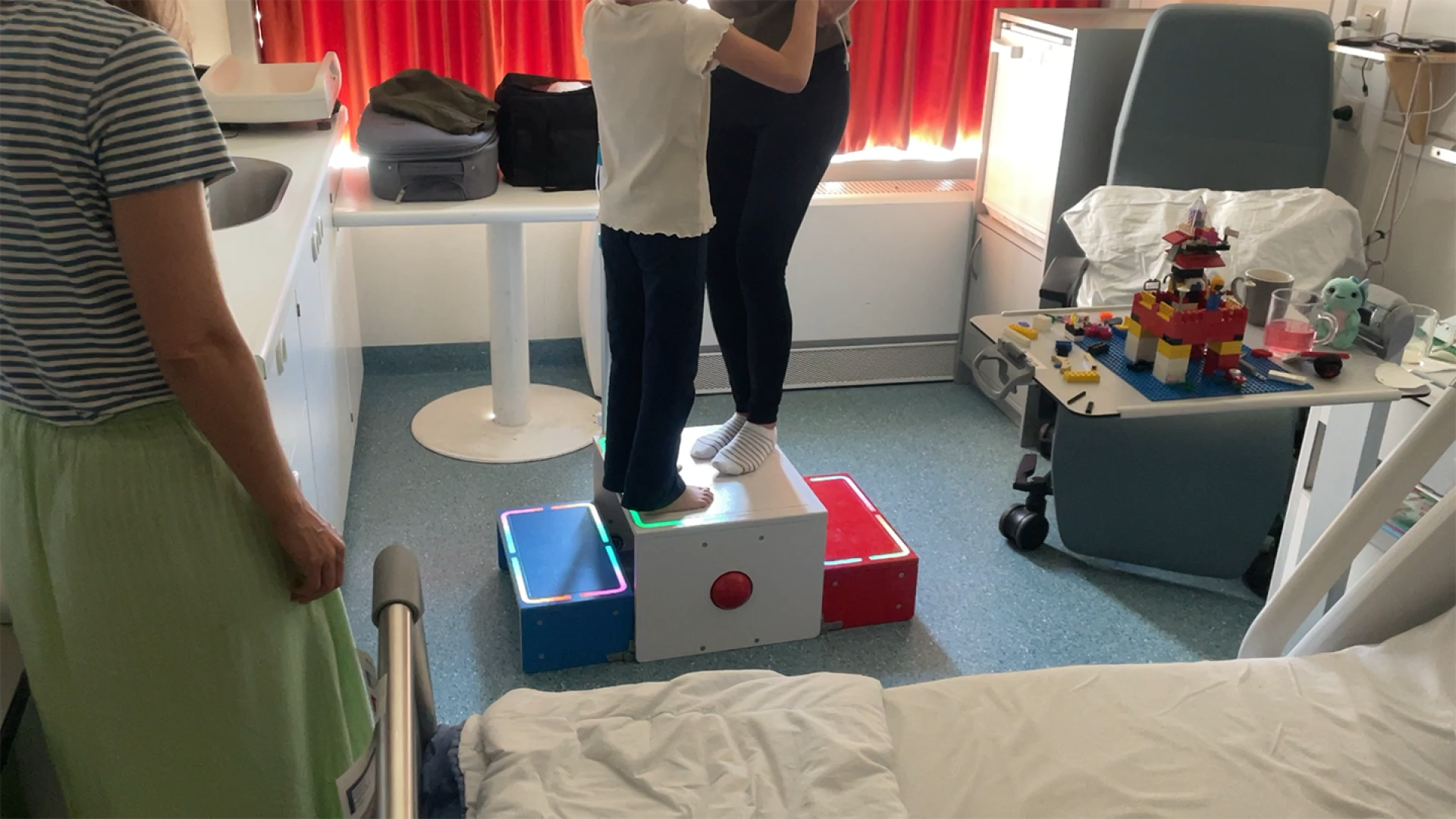
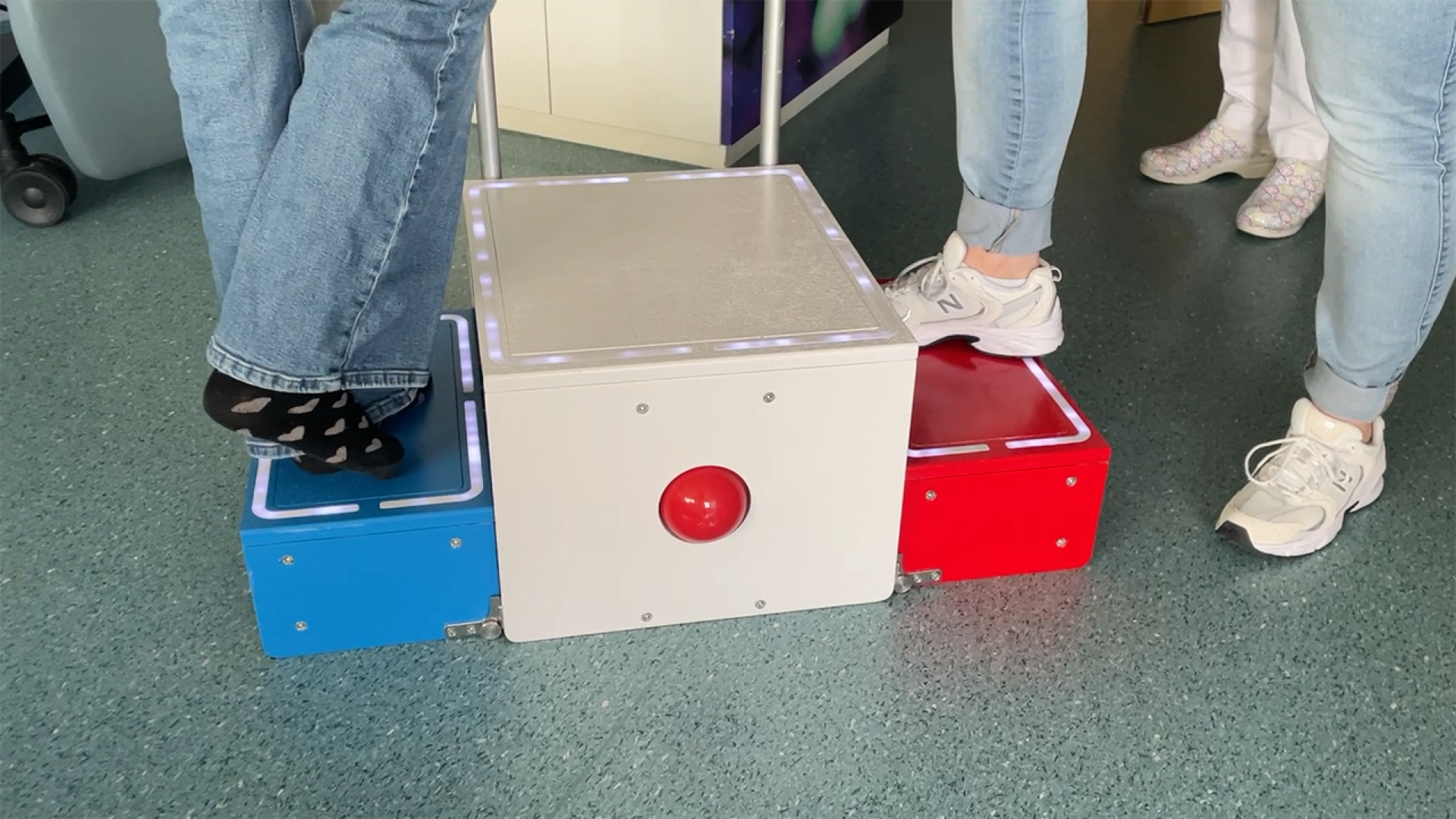
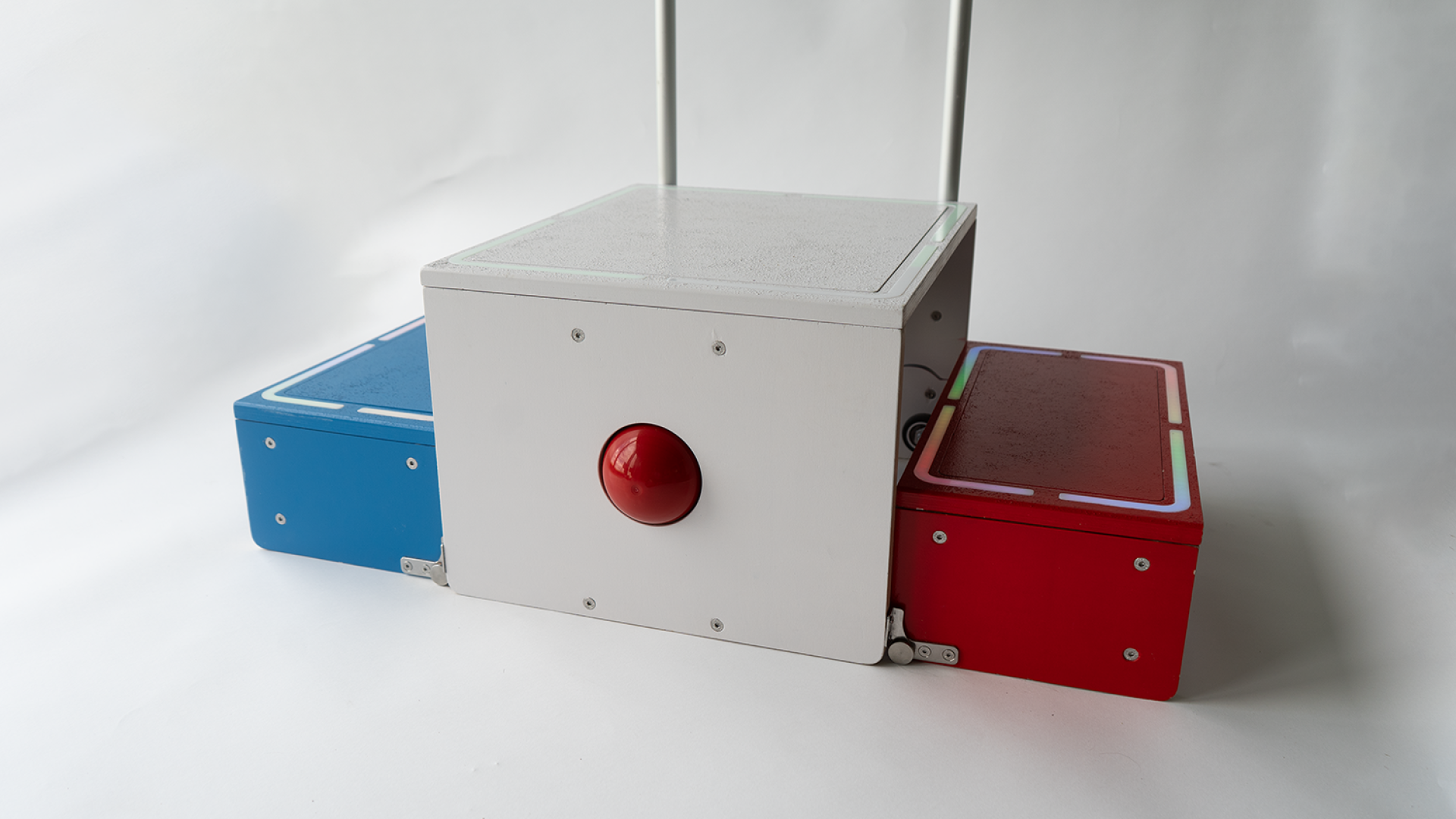
OverDeTop is an interactive, bridge-shaped staircase that turns the sterile hospital room into an active and social playground. Children only need to press the big red button to start various audiovisual games, which can be played either on their own or together with their family.
OverDeTop has been developed in close collaboration with pediatric doctors, nurses and physiotherapists from the MosaKids Pediatric Hospital and Groene Hart Hospital. This led to a design that is not only fun, but also supports effective storage and transportation by being collapsible, revealing its wheels. A 2.5-week deployment proved it easily integrated into hospital workflows and effectively got children, and their parents, into action.
The impact
OverDeTop proves that hospital stays can be about more than clinical treatment and play can act as a catalyst for physical recovery.
The unique bridge shape naturally onboards parents, turning passive them as passive observers into active coaches and competitors.
Next to the expressive games, the staircase can be used directly at the bedside. Hence, even the more hesitant players can sit on the edge of the bed and participate in many joyful moments.
Recognized with two awards at the TU/e Contest 2026, OverDeTop proves that play is not purely about fun, but can effectively support children in their physical recovery, while supporting the existing workflows of hospital staff.