Messy Mundane
Messy Futures is a speculative design project that focuses on the ordinary and everyday aspects of living in 2050. Instead of presenting the future as a polished, seamless narrative, it highlights the messy, contradictory, and layered nature of daily life. By shifting attention towards the mundane, Messy Futures suggests that the future is best shaped through looking at what’s already there. Mess is treated not as waste but as a resource: leftovers that can spark creativity, rewilding projects that support biodiversity and material improvisations that spark circular ways of living. In this way, the project proposes that futures are not clean slates but patchworks: imperfect, collective, and dynamic.
Museum of the Future
Messy Futures uses different objects and scenarios as vignettes that shape a future vision. Each of these objects is an invitation to explore the alternative future. An apron stitched from reclaimed materials invites you to consider a future in which every citizen is given time to engage in community work, such as caring for local flora and fauna. A tarpaulin makes you wonder how we will protect ourselves in a climate with increasingly hot summers.
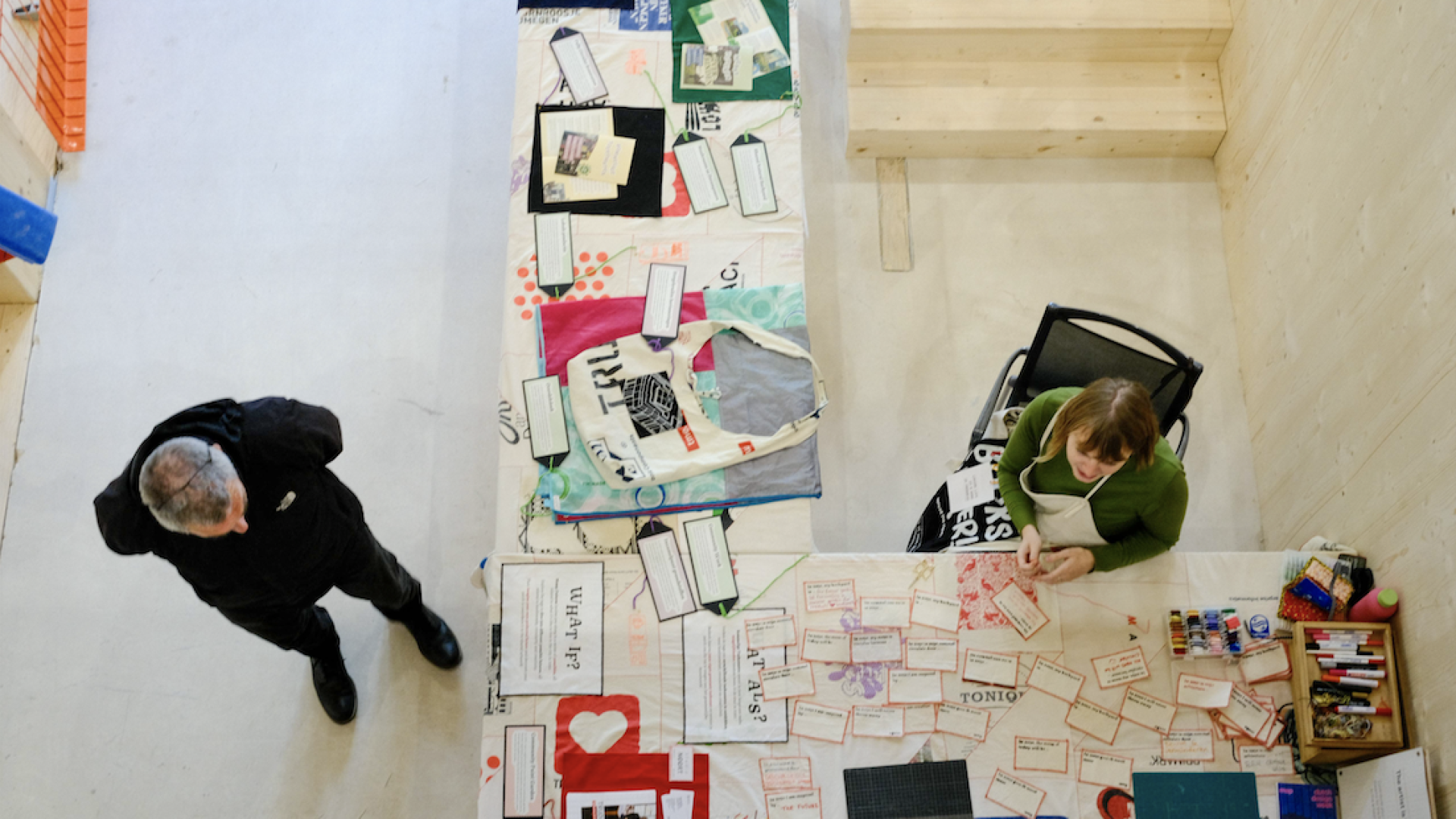
At Dutch Design Week 2025, Messy Futures was presented as a participatory installation. Visitors could contribute their ideas about a messy future on fabric patches, which were embroidered and stitched onto a tablecloth. The resulting artwork is a rich patchwork that shows the diversity of messy futures, from repairing clothes to forest farming.
Project Background
Messy Futures approaches design as an open, collective practice. Futures are not singular, coherent stories but layered, contradictory, and shared. By combining speculative design with co-created scenarios and public contributions, the project demonstrates how imagination itself can be circular and regenerative. The project originated during my residency at Trudo, an innovative social housing corporation in Eindhoven. They invited me to explore future scenarios around living in 2050 and to inspire both colleagues and external audiences. Workshops with Trudo colleagues provided many of the seeds for the speculative objects and narratives, grounding the work in lived perspectives while expanding it beyond the organisation into the public realm. It does not end with answers, but with a question: if the future is messy, what kind of mess do we want to create together?