What if nature became part of the design process? From palm fibres and insect resin to growing salt crystals and plant-based building materials, DDW26 invites you to discover designers experimenting with natural materials and surprising processes. Here’s a selection of exhibitions featuring remarkable installations, new materials and designs that look as though they’ve grown rather than been made.
Woven Landscapes
Designer: Ori Orisun Merhav
Location: Klokgebouw, Strijp-S (B4)
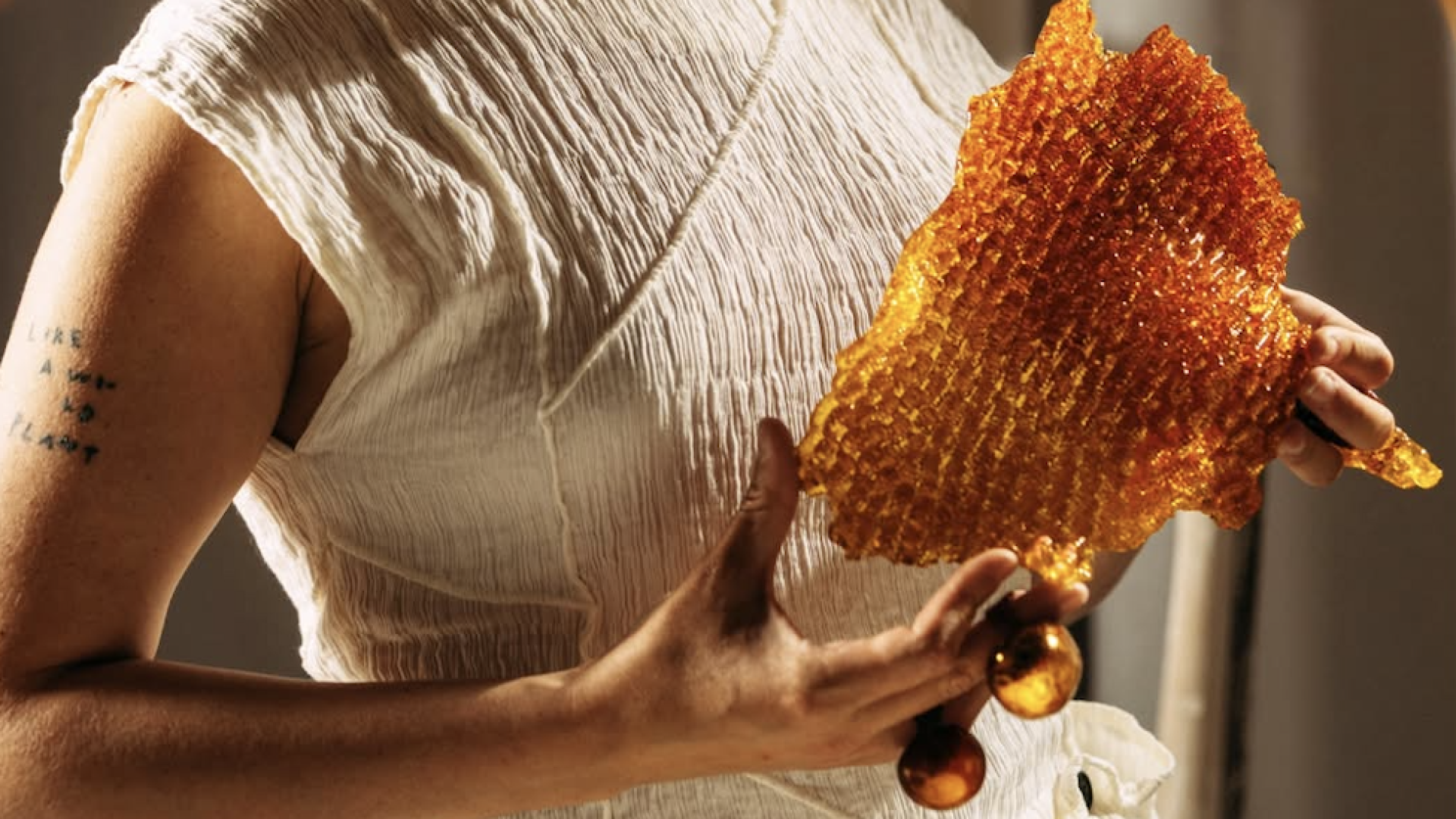
Can you create a sculpture with the help of insects? In Woven Landscapes, designer and materials researcher Ori Orisun Merhav explores the remarkable possibilities of collaboration between humans and nature. She combines traditionally woven palm fibres with lac, a natural resin produced by insects. Together, they form a new material that she uses to create organic sculptures.
The installation features forms reminiscent of cocoons, nests and other natural shelters. At its centre is a sculptural seating form rising from a landscape of fibres. Through her work, Merhav explores how materials can tell stories about their origins. What if a material were not simply something we design with, but also carried traces of the insects, plants and people that contributed to it?
WETHOUSE
Designer: Yvonne Gu / 3h57m
Location: Ketelhuisplein, Strijp-S (B5)
What if you could build a greenhouse from plants that grow in wetlands? That’s exactly what designer Yvonne Gu explores in WETHOUSE. Plants such as reeds, cattails and willows are transformed into building materials, from insulation and wall panels to woven screens. Materials often considered waste products are given a surprising new purpose.
At Ketelhuisplein, you can discover an experimental greenhouse pavilion made from natural materials that also forms part of a larger ecosystem. It collects rainwater, retains moisture and supports the growth of new plants. WETHOUSE shows how buildings can not only reduce their impact on nature, but also actively contribute to it. A fascinating glimpse into a different way of building!
Residue
Designer: Hanzhang Liu
Location: De Fabriek, Baarsstraat 38 (D7)
In Residue, designer Hanzhang Liu allows salt crystals to slowly grow over objects. The installation is inspired by the widespread stockpiling of salt in China following the Fukushima nuclear disaster. As the crystals accumulate, the forms beneath them gradually disappear from view. It’s a fascinating experiment in which a natural growth process reveals how events leave traces in our collective memory.
BioFilix
Designer: Brian Patterson
Location: BioArt Laboratories, Oirschotsedijk 14-10, Strijp-T/R (A1)
How can the movements and growth patterns of plants be translated into sculpture? In BioFilix, Brian Patterson explores the relationship between natural forms and technology. His kinetic installation makes invisible data visible through organic movement.
Experiments with living processes
These projects show just how much inspiration and potential nature has to offer. Sometimes, the most interesting ideas emerge when you give the material itself a little room to do its thing. During this DDW, you can discover not only remarkable designs, but also the stories and experiments behind them.