Sustainable design of the energy grid
The energy transition requires not only new technologies, but also a different approach to materials. Achieving climate targets and meeting the growing demand for energy infrastructure will require vast quantities of raw materials. In 2020 alone, Dutch regional grid operators purchased around 50 million kilograms of materials, a figure expected to rise significantly in the coming years. The energy transition is therefore also a materials transition. By incorporating circular design and reuse from the outset, we can build a future-proof energy grid that is reliable, sustainable and flexible, while making responsible use of the materials it depends on.
The design
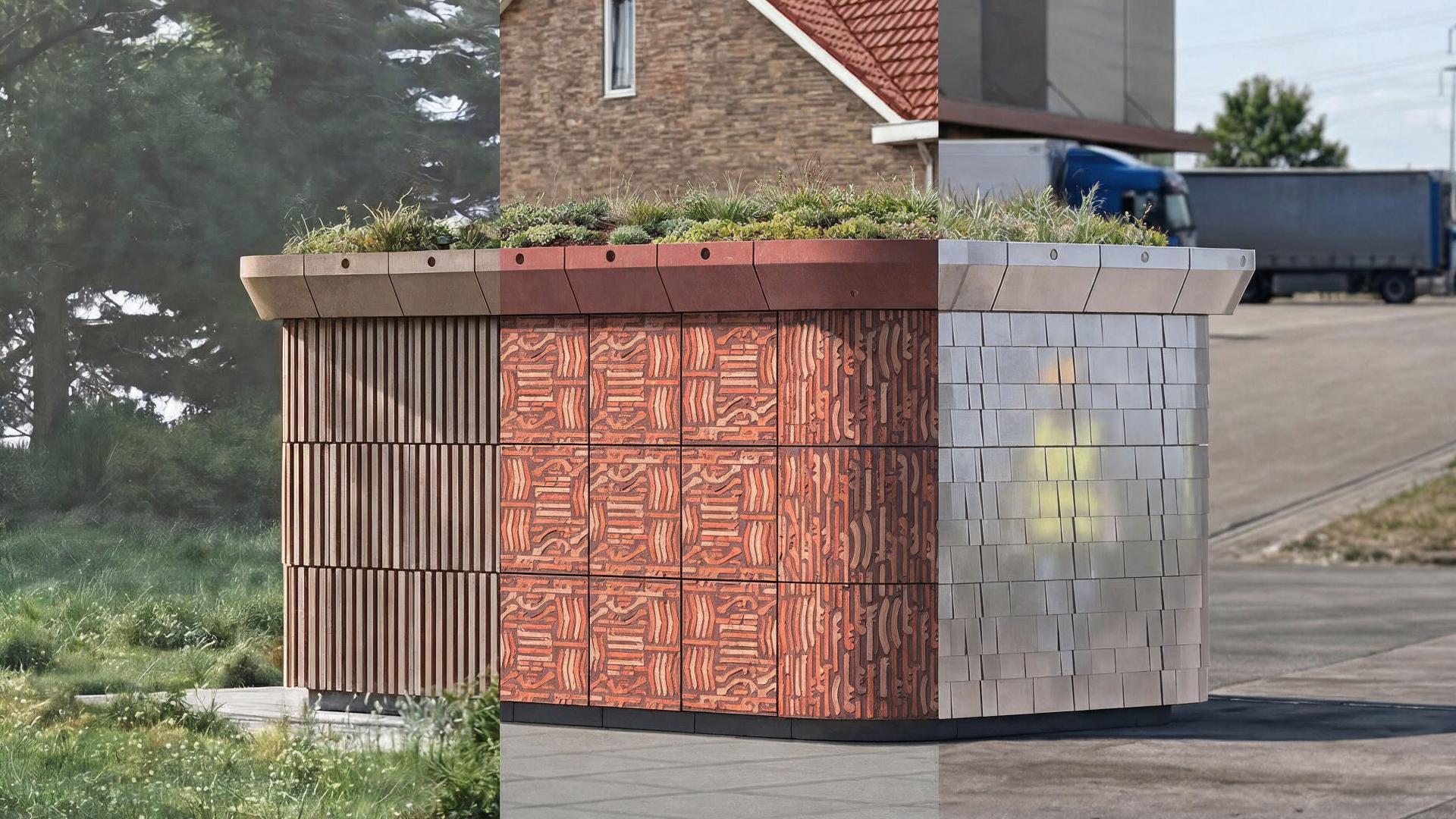
Alliander and Rademacher de Vries developed a circular transformer substation based on standardization, timber construction and modularity. By using a standardized sizing system and reusable components, materials can remain in use longer and be redeployed more easily. The design is also highly adaptable: interchangeable façade panels allow the appearance of the substation to be tailored to its surroundings or changing needs.
Circularity was not added as an extra feature but embedded as a core design principle from the outset. The substation combines concepts such as reuse, flexibility and efficient material use, demonstrating how these principles can contribute to a future-proof energy grid.
The design is the result of a collaboration between designers and experts from both within and outside Alliander. The Co/Lab shows how a design-driven approach can offer new perspectives on the energy transition. As such, the transformer substation is not only a tangible design solution, but also an invitation to apply circular and future-oriented thinking more broadly across energy infrastructure.