The project
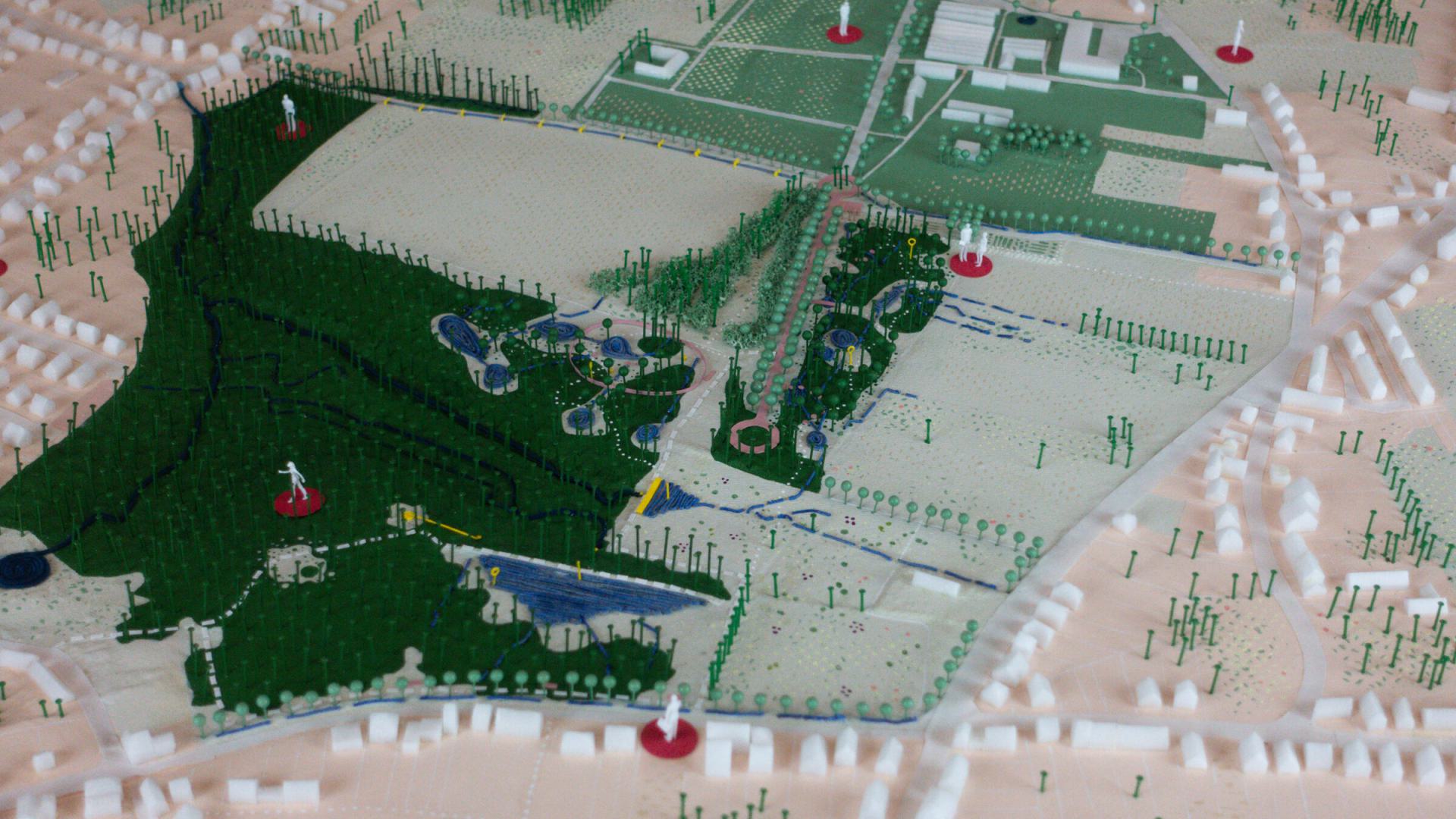
In the centre of Roosdaal, a remarkable 7.5-hectare forest project is taking shape: the Dorpsbos.
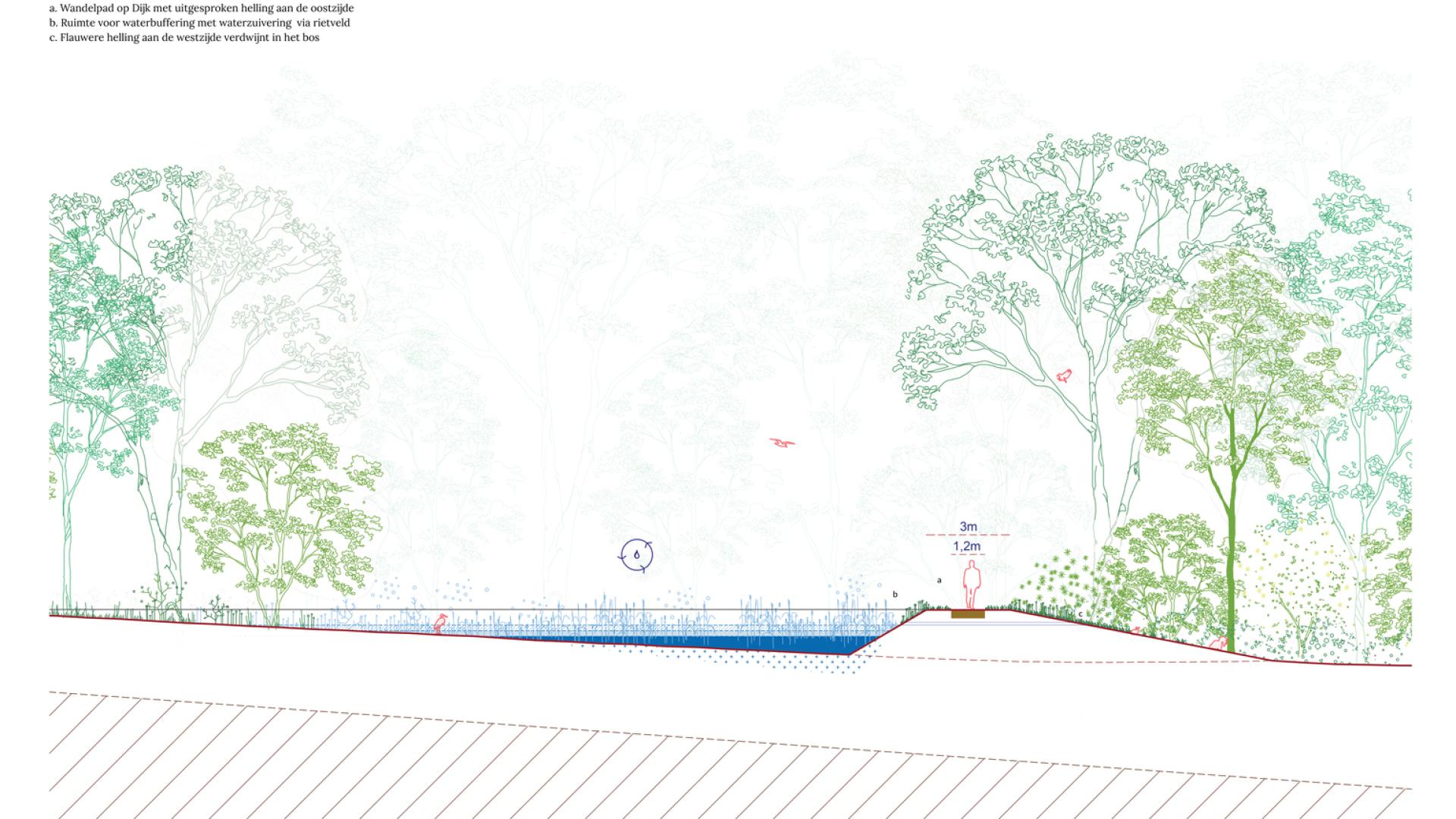
The forest holds water on the flanks of the valley, helps reduce flood risks downstream, and forms the starting point for developing a lively village centre for Pamel. Three water strategies shape the sponge landscape: buffering and holding water, a sponge and infiltration forest, and water infiltration.
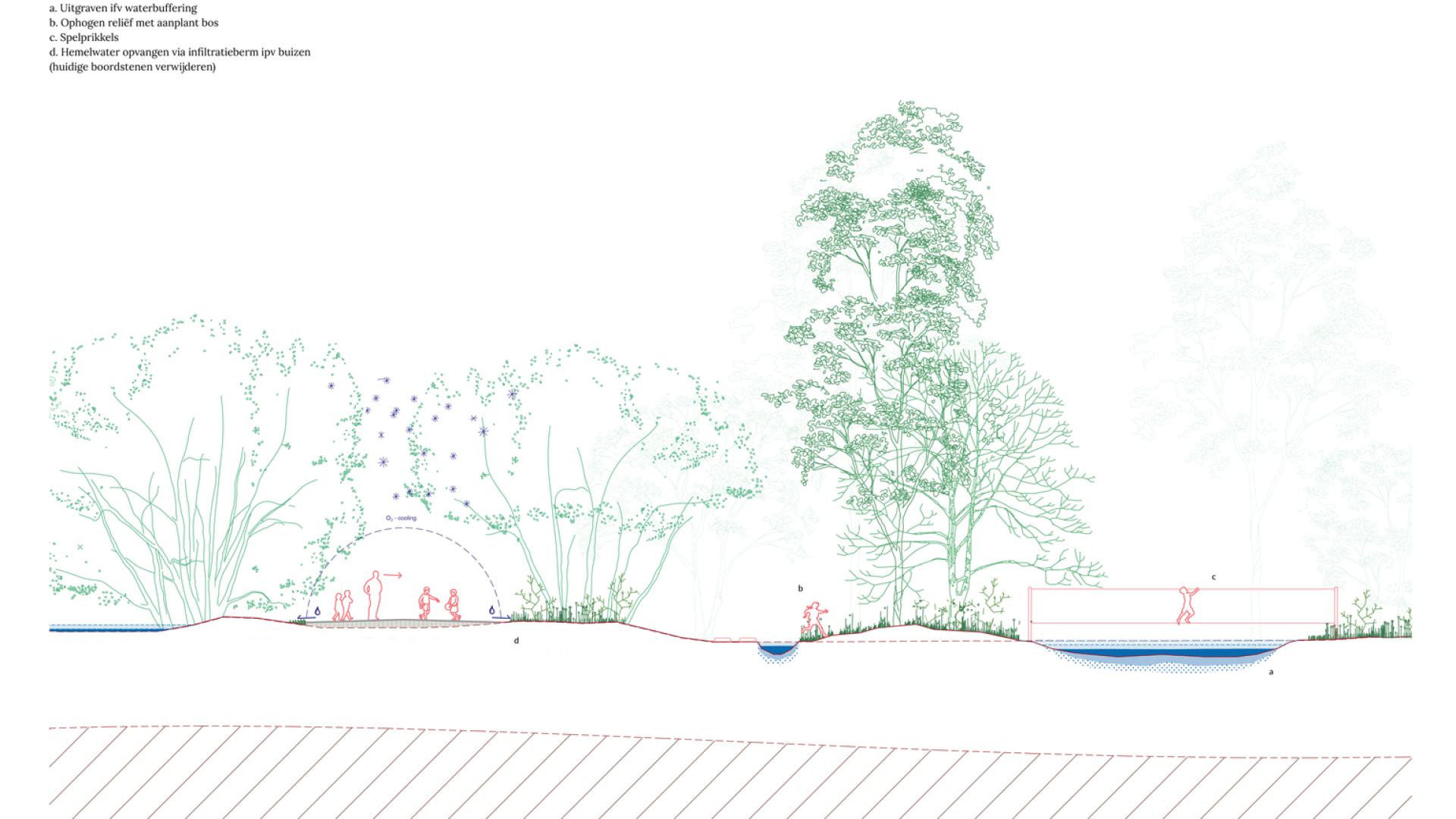
Each strategy translates into a different spatial typology. Technical water measures become visible and tangible in the Dorpsbos this way, for example through a wet off-leash dog meadow or a set of water steps.
Maat-ontwerpers sees the project as a laboratory for innovative spatial practices around climate.
Idea
A Christmas card marked the start of this project. In December 2022, the designers at Maat made a commitment: no Christmas tree this time, but a whole forest! Maat is putting its money where its mouth is and planting a forest. We’re not interested in a run-of-the-mill commercial corporate forest. We’re looking for a pilot project where we can experiment and innovate. A project that serves as a laboratory for our own operations, but above all to inspire and act as a catalyst for change.
We listened intently and, through Liesl Vanautgaerden from the Environment Department in Roosdaal, came across the following: the local council had recently purchased plots of land there to plant a forest. Roosdaal is situated next to Ninove, but more interestingly: it lies on the banks of the River Dender. Familiar territory for Maat’s designers. Between 2017 and 2022, Maat was, after all, involved in the process and design research concerning flood risks in the Dender Valley. A project that continues to have an impact in the area to this day in the form of TOP Dender.
Sponge landscape
The village wood marks the start of the development of a strong village centre for Pamel. The village centre will become a vital ecological link, a sponge full of water and a public space for socialising, play and experiencing the landscape, offering added value to residents.
. Each water strategy translates into a different spatial typology. Technical water management measures thus become visible and tangible throughout the village wood.
- The first water strategy focuses on buffering and retaining water through distinct interventions in the landscape. For example, we are creating a wall across the Nattemeersbeek to retain water. The wall unfolds into a flight of steps, thus providing seating along the footpath.
- In a second water strategy, we are creating a sponge and infiltration forest. Changes in relief create areas that can fill with water. We are planting trees on the raised areas. Through this combination of water pools and woodland, the soil acts as a sponge for water.
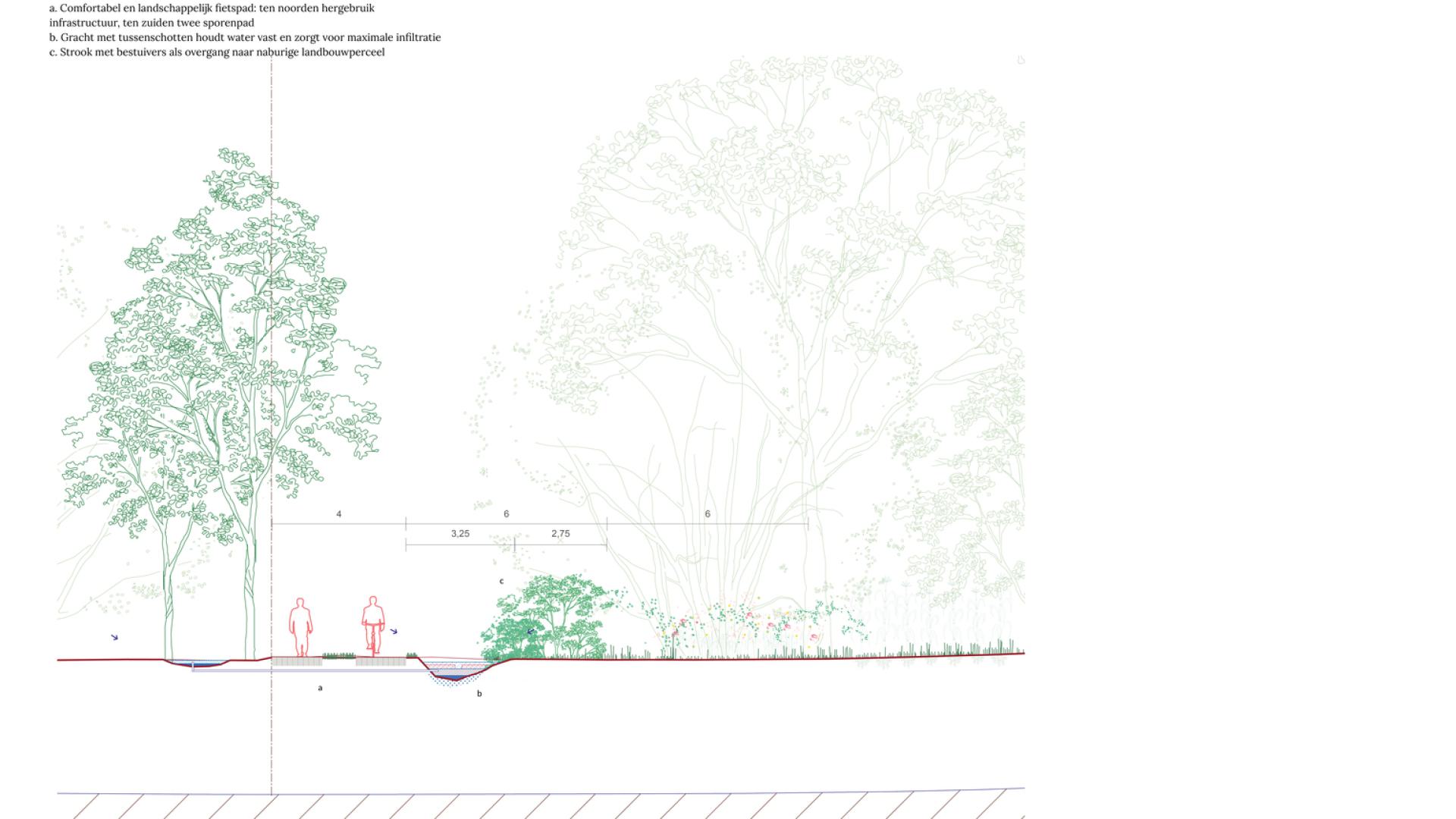
- The third water strategy focuses on retaining, slowing down and infiltrating water. A canal running alongside the cycle route collects the water, and allows it to infiltrate as deeply as possible