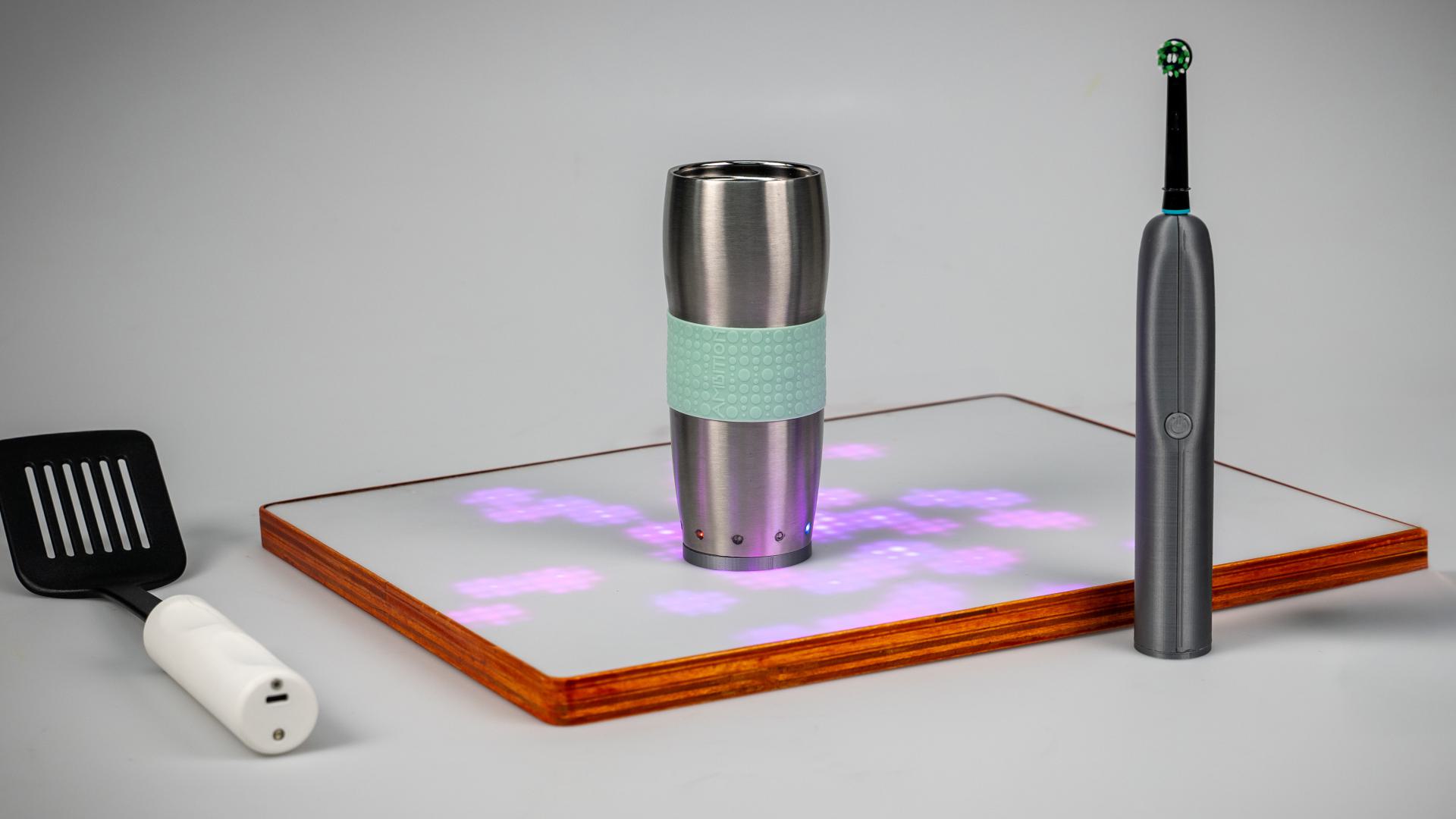
A novel approach to home rehabilitation
Traditional hand rehabilitation at home requires dedicated time and effort that many patients find difficult to maintain. This leads, together with the lack of supervision by a professional at home, may lead to low motivation, and eventually functional decline. To solve this problem, we took a different approach than the traditional rehabilitation approaches that require motivation and time to perform the rehabilitation exercises.
We transformed objects used during activities of daily living (ADLs) into smart rehabilitation tools that facilitate seamless hand rehabilitation at home –we call these tools the “Freehabilitation Toolkit”. Over the past 3 years, we collaborated with multiple clinicians and patients to develop four interactive prototypes. These individual prototypes underwent preliminary user evaluation, gathering feedback from patients and clinicians on their usefulness. The individual prototypes were received well, and the feedback of the stakeholders supported our vision of the ‘toolkit’.
By incorporating rehabilitation exercises, such as training grasping movements and force, into common ADLs (i.e., brushing teeth, drinking from a cup, etc), patients engage with hand therapy without allocating time for it, or they are training their hands while performing the daily tasks. With this approach, task-specific exercises seamlessly become part of regular daily routines, and training time naturally increases throughout the day. The tools in the toolkit monitor the progression of the stroke survivors on the exercises and make the insights available to the patient and clinician.