Fostering meaningful connections among homebound older adults in Twente
This project focused on older adults in Twente who experience a lack of social connection. Homebound individuals, who often remain within small circles, are particularly hard to reach and risk being overlooked. Yet tackling loneliness directly can reinforce stigma and discourage engagement. The challenge was therefore reframed through the Positive Health framework, shifting the focus from deficits to strengths and meaningful life experiences. To better understand the homebound older adults, the designer conducted interviews, contextmapping sessions, and literature studies, uncovering implicit values and motivations. Findings revealed the importance of personal and casual interactions, a meaningful life, and culturally grounded trust. The central design challenge became: how to foster connectedness among older adults in Twente, thereby enhancing their well-being?
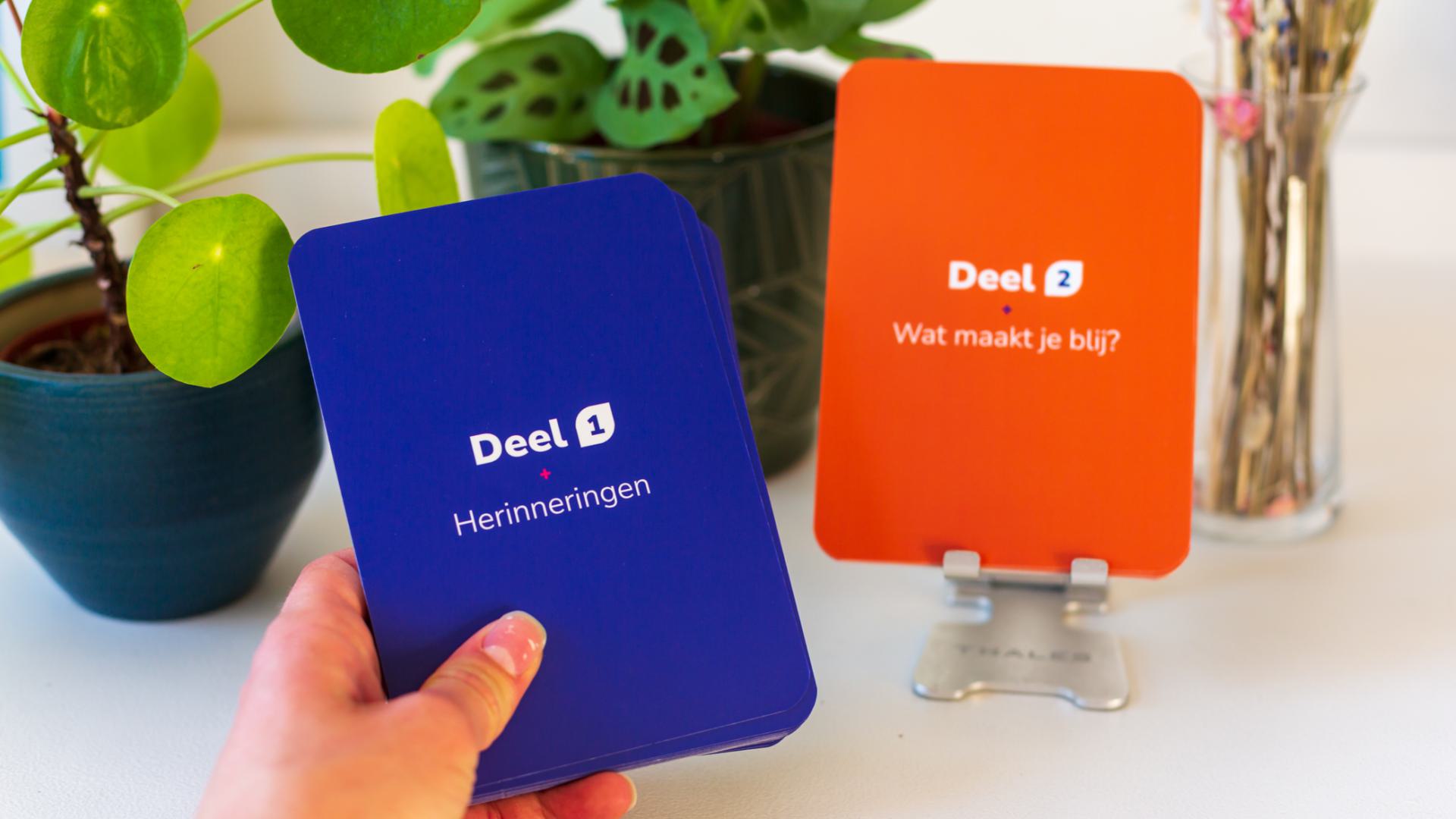
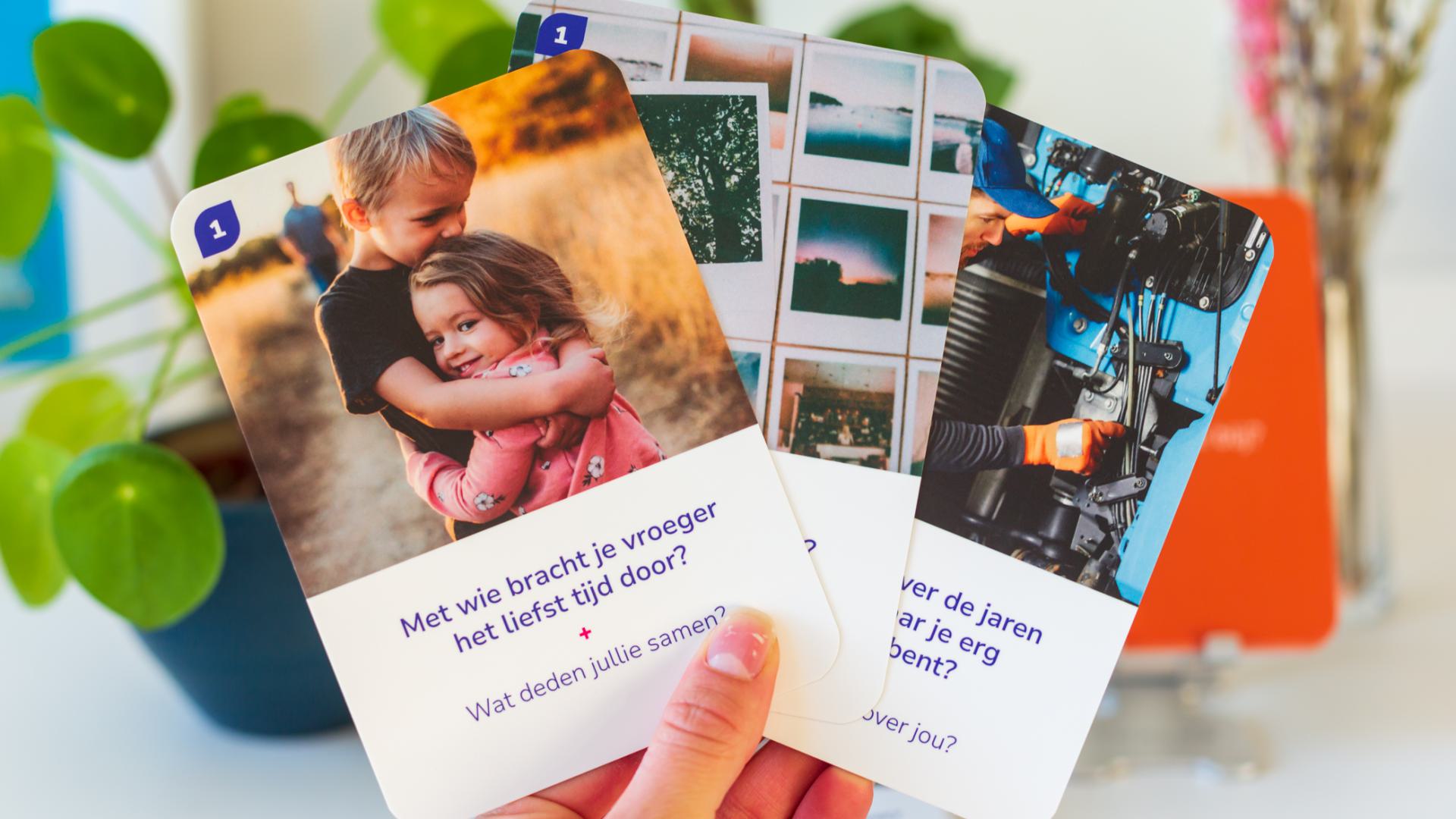
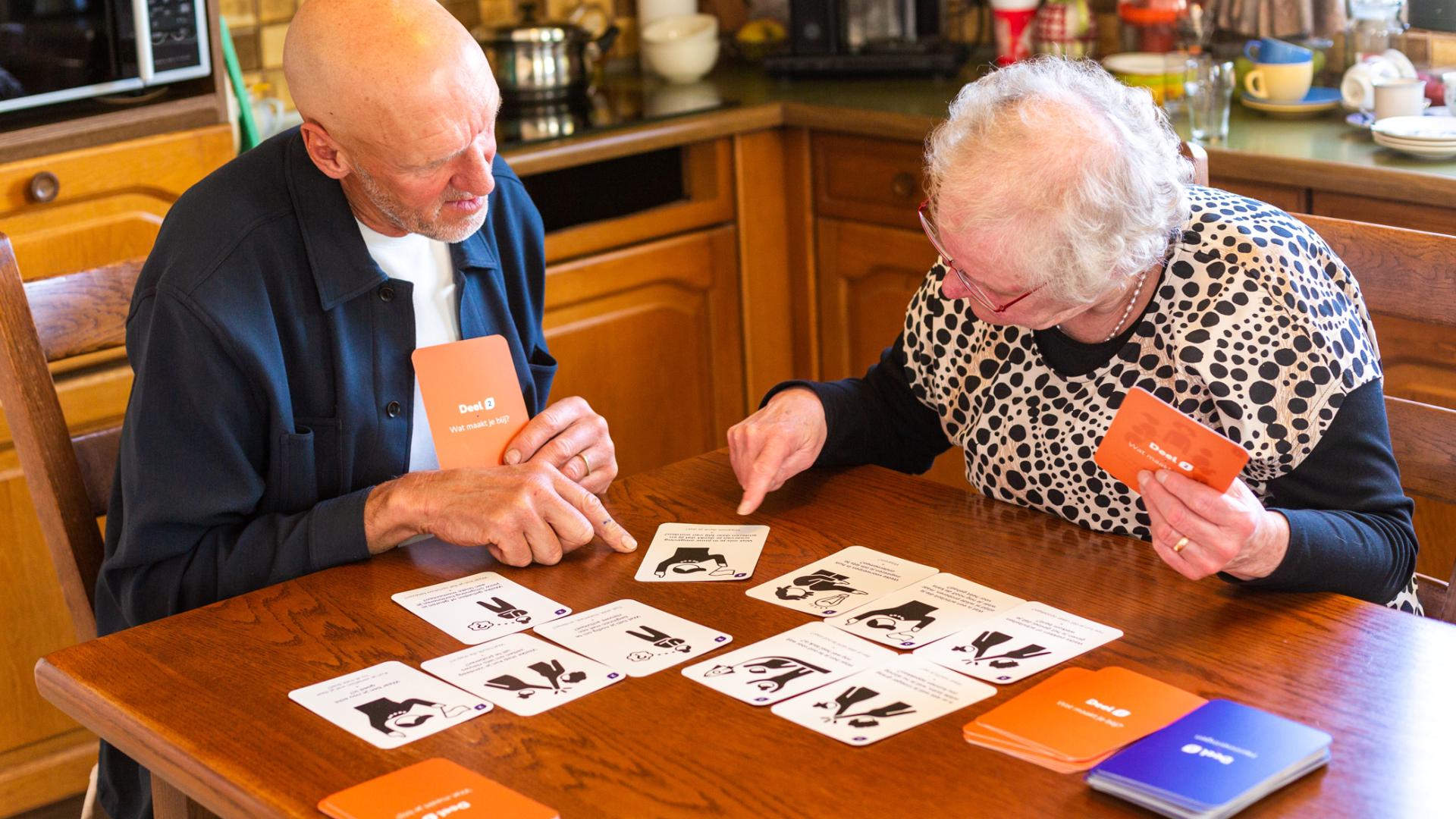
Building on these insights, collaboration with local village supporters led to the creation of a conversation-based card game: “Wat maakt je blij?” (“What makes you happy?”). Specifically designed for homebound older adults and their trusted contacts, the game invites players to reflect on strengths, interests, and meaningful life experiences. Its casual, low-pressure format avoids therapeutic or childish associations, instead fostering warm, equal interaction. Multiple design iterations and playtests shaped the outcome, ensuring accessibility and resonance. Participants reported feeling more emotionally connected: “He gave me a hug when he left, he normally never does that.” In some cases, gameplay also encouraged small, self-driven actions, such as calling an old friend or revisiting a hobby, potentially widening social circles. Next, the village supporters valued the tool for healthcare contexts, appreciating how it gently promotes reflection without imposing a “helping” dynamic. The process emphasized ethical, person-centered methods to strengthen existing relationships.
While the game can be enjoyed by different groups, it was specifically designed with homebound older adults in mind. These individuals are often difficult to involve directly, and ethical limitations made testing with them challenging. Nevertheless, playtests with older adults and their trusted contacts demonstrated the game’s potential to support health on three levels: encouraging self-reflection, deepening emotional bonds, and inspiring joyful future activities. Its long-term impact on sustained connectedness remains uncertain, and its success depends on how it is introduced. Framing must avoid implying that older adults “need help,” instead presenting it as a positive, empowering activity. Future implementation should equip facilitators with sensitive strategies. Ultimately, the project illustrates how design can create non-stigmatizing, joyful tools that open space for reflection, meaning, and connection.