Tension
Sustainable materials often struggle with social acceptance as they lack desirability, and they fail to clearly communicate their natural origin. Furthermore, their sustainable origin makes these materials prone to natural processes like decay. This conflicts with our current aesthetic where materials are expected to remain perfect and unchanged for centuries. This tension creates a barrier for integrating bio-based materials into our built environment.
Transformation
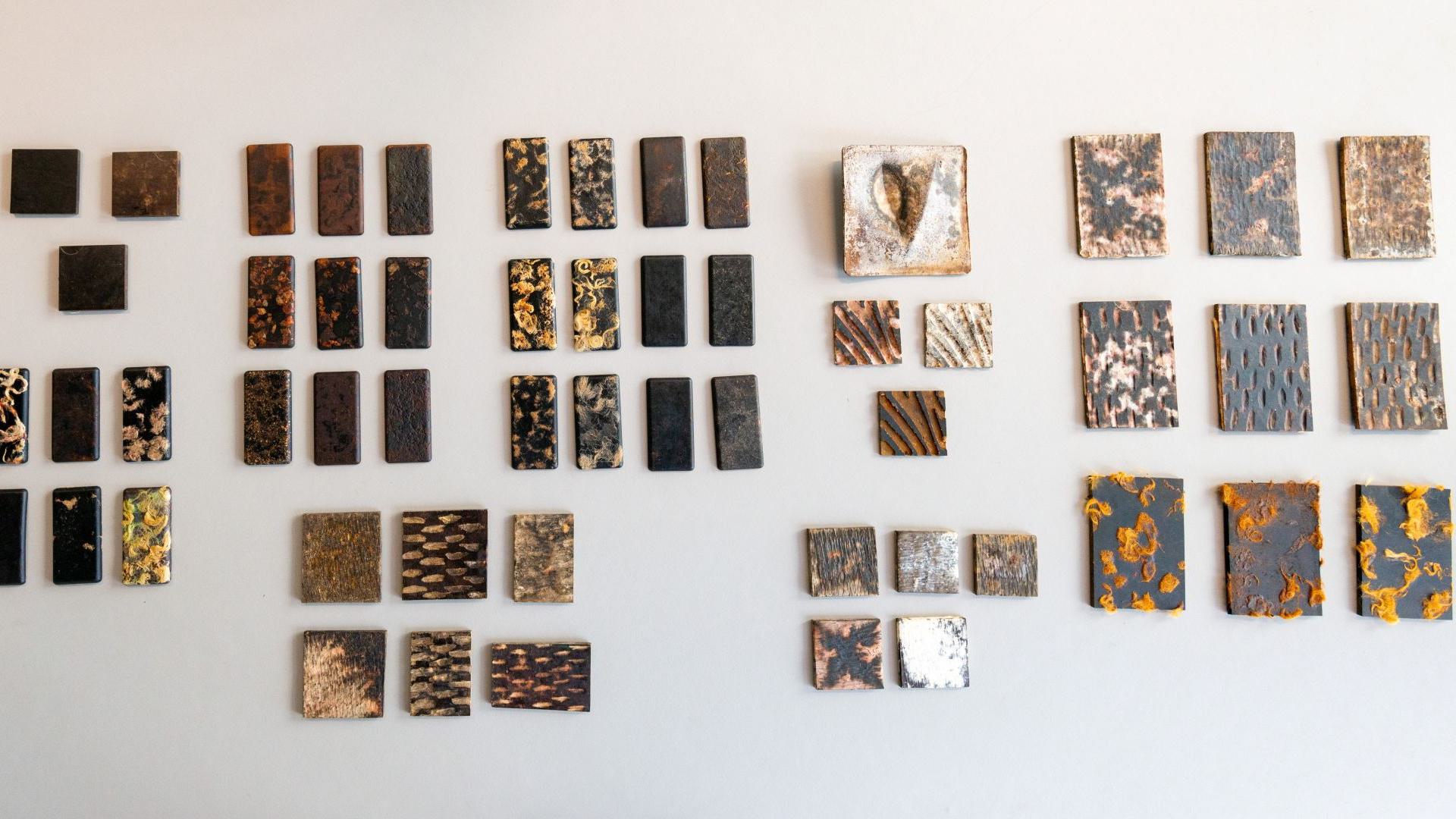
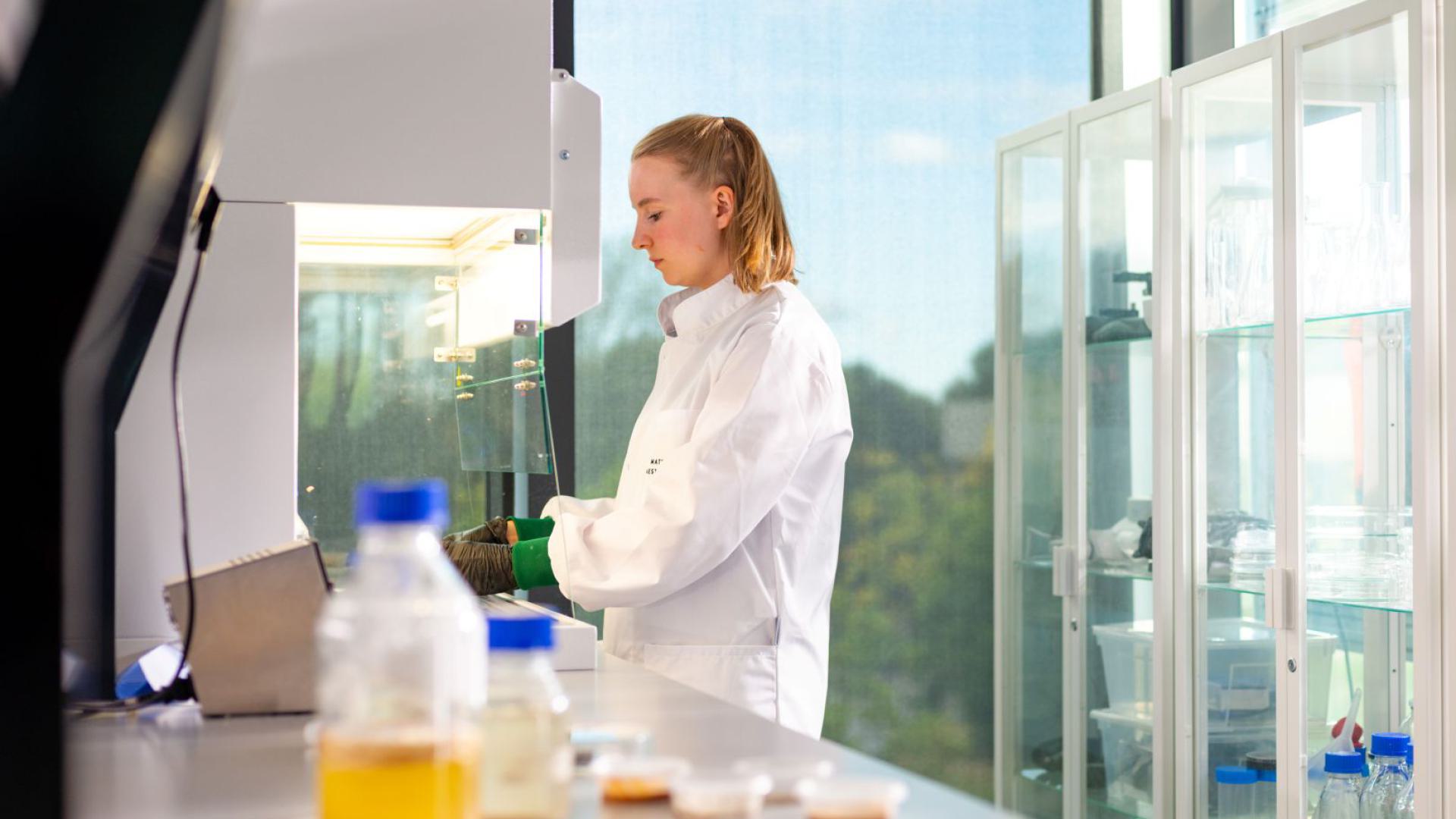
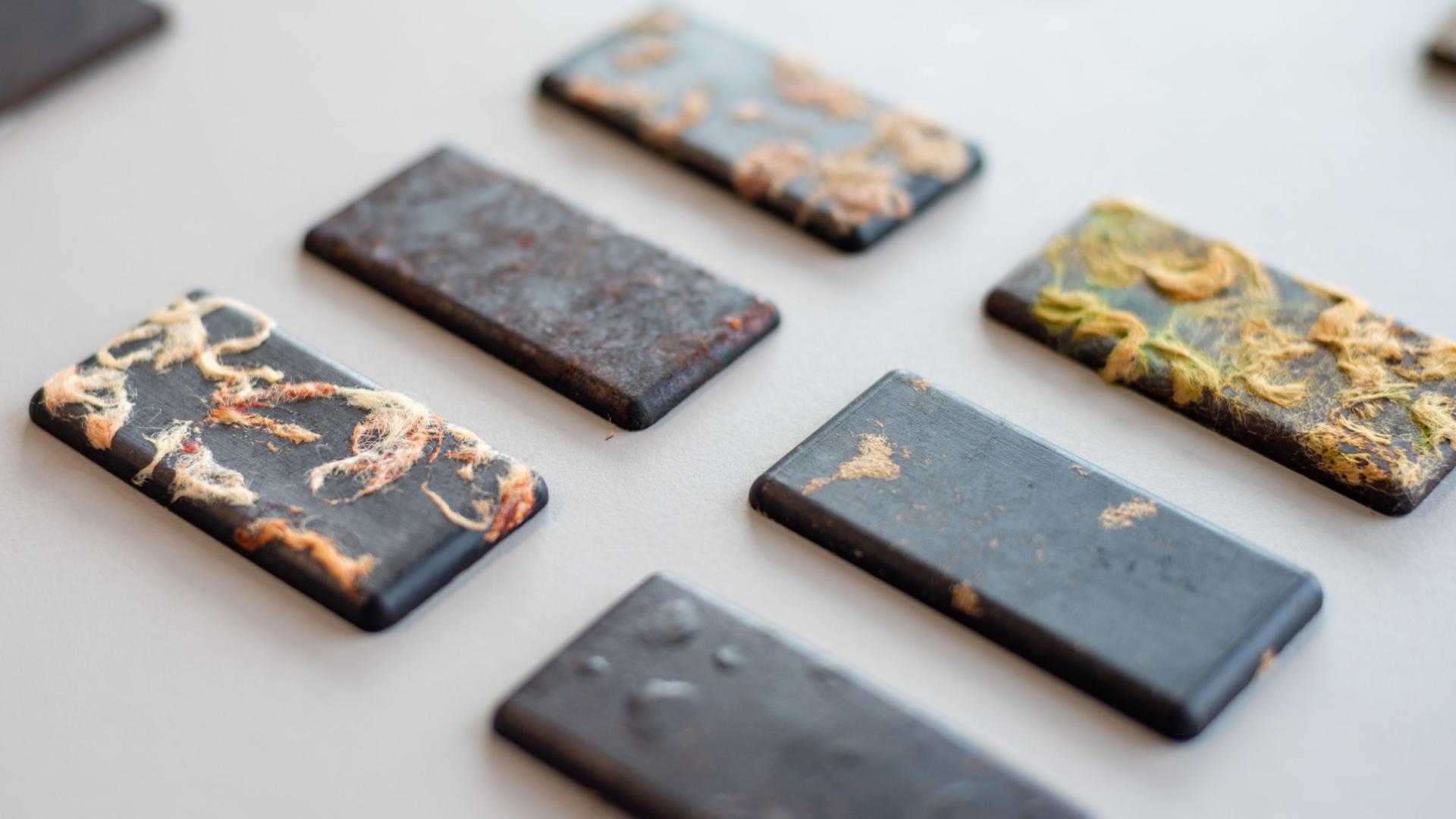
The designer is inspired by natural materials like leather and wood that age with grace, and wants to work with nature instead of against it. Living Traces explores how to create an evolving aesthetic for the N8040 material that conveys its sustainable nature. N8040 is a 100% bio-based and waste-based composite developed by the company NPSP. The main challenge of this material is the black resin, which limits the possibility of incorporating pigmentation and the low user ratings on beauty and expected sustainability. The designer implements imperfection in the production process to create a natural aesthetic, by adding fibres, fibres coloured with fungi and bio-based pigments. Practices like sandblasting, accelerated weathering and lab experiments are used to simulate the effects of wind, moisture, UV and biological colonisation on the aesthetics of the material. Allowing the designer to anticipate and design for decay, leveraging it as a design opportunity.
Acceptance
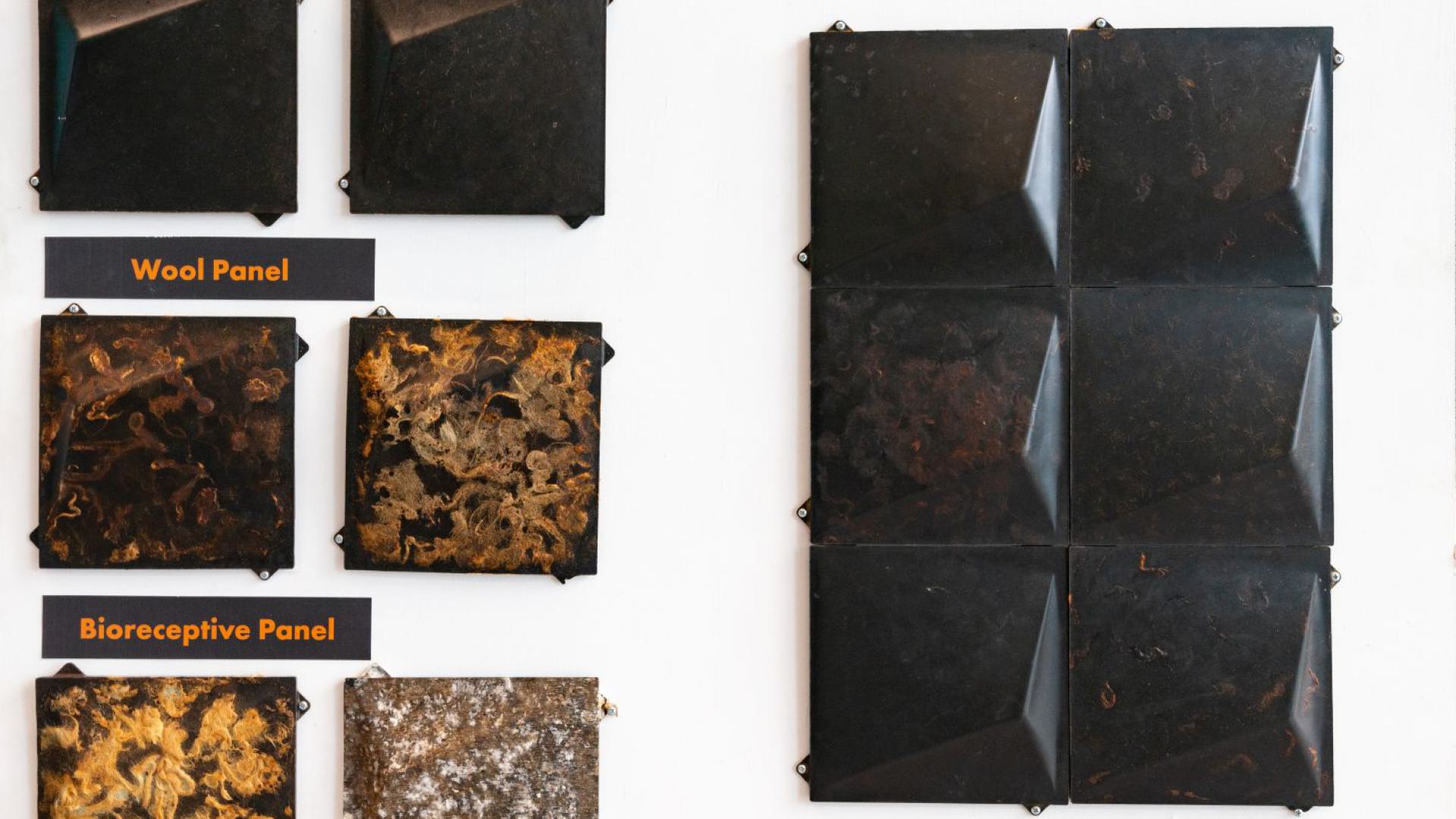
The result is a series of facade panels, one that gradually reveals flax fibres, one with wool that develops a patina over time and two bio-receptive panels that invite algae or mycelium growth. These facade panels gain value over time and embrace imperfection, impermanence and transformation. Living Traces aims to improve the social acceptance of bio-based materials and challenge the current aesthetic model that is rooted in perfection, mass production and newness.