A Second Life for what is Discarded
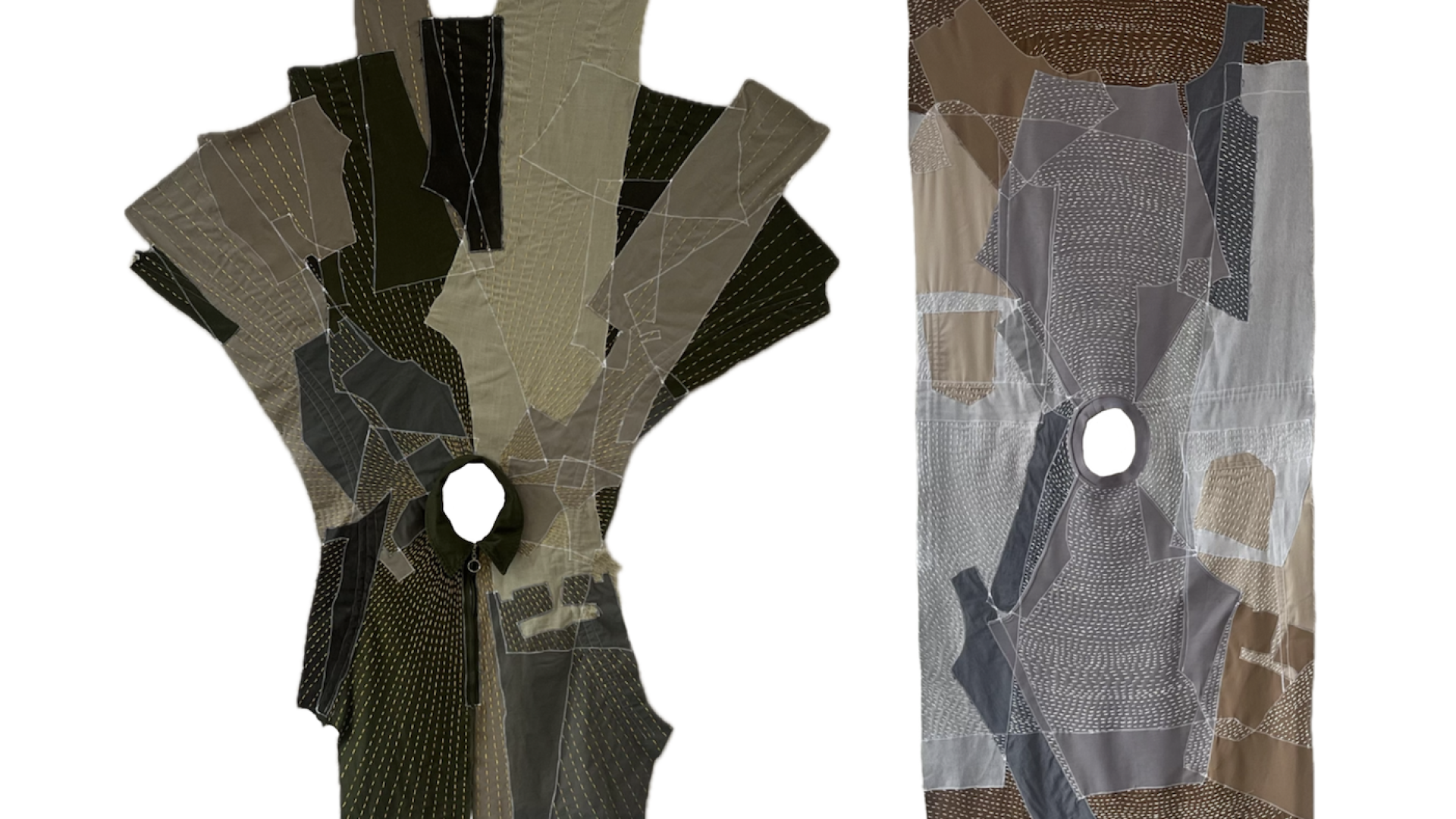
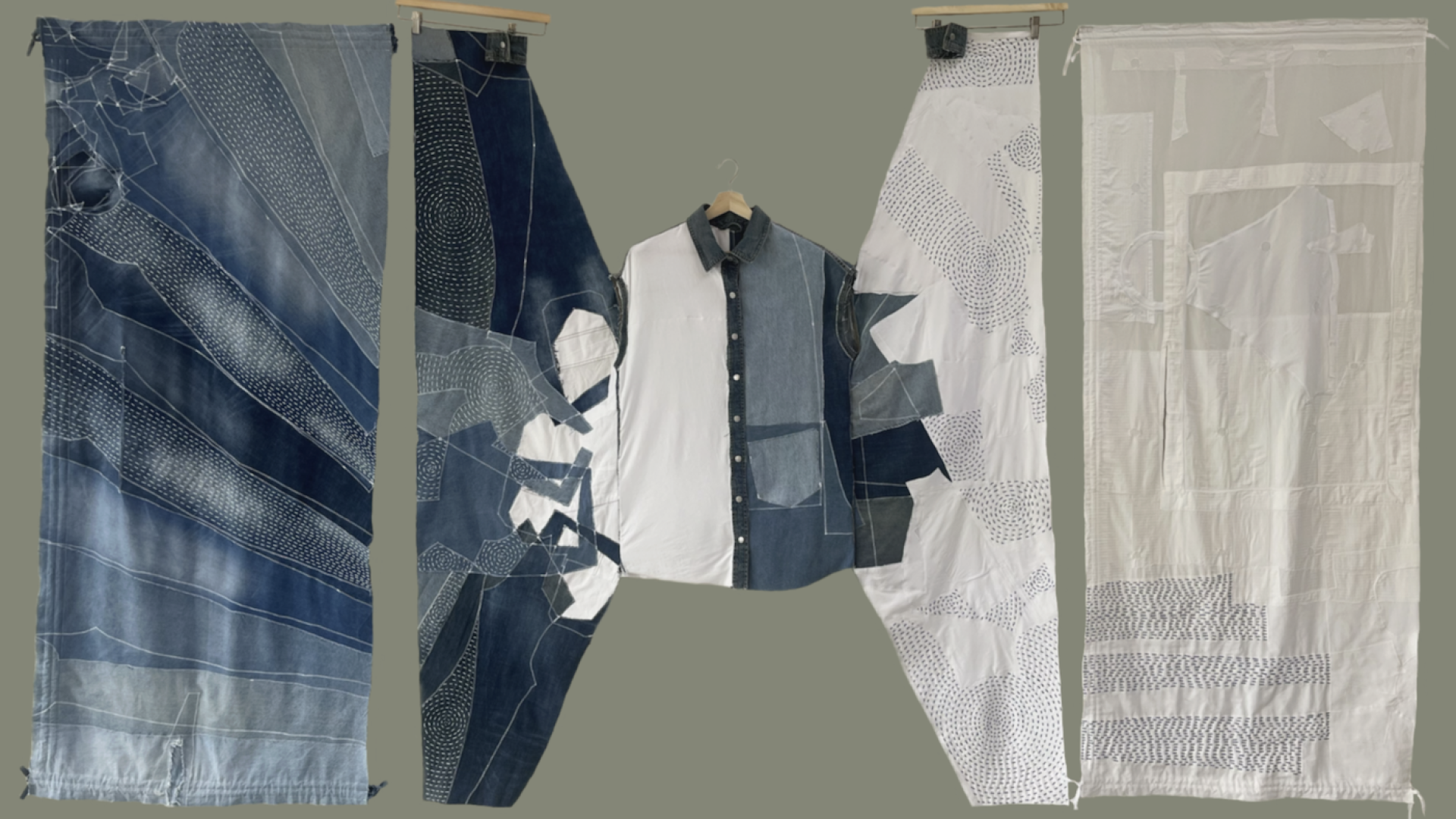
Passage Two is a growing collection of textile works made from textile waste from the Utrecht region. I obtained the material from a textile waste collection company, where clothing had piled up because the sorting center was full. I wanted to remove the textiles from the waste stream before they were burned, shipped, or resold. Instead of treating the discarded clothing as anonymous waste, I deconstruct each garment back to its original pattern pieces. These pieces are then reassembled into two-dimensional compositions, in which seams, shapes, and traces of the garment’s previous life remain visible. I use every part of the garment in its original form, resulting in a minimum of cutting waste. Leaving these shapes visible is an ode to the original textiles and to the fact that they were once clothing. The title Passage Two refers to this second life cycle: the clothing is given a new passage, in which it does not end up as waste again.
Where Different Hands Gather
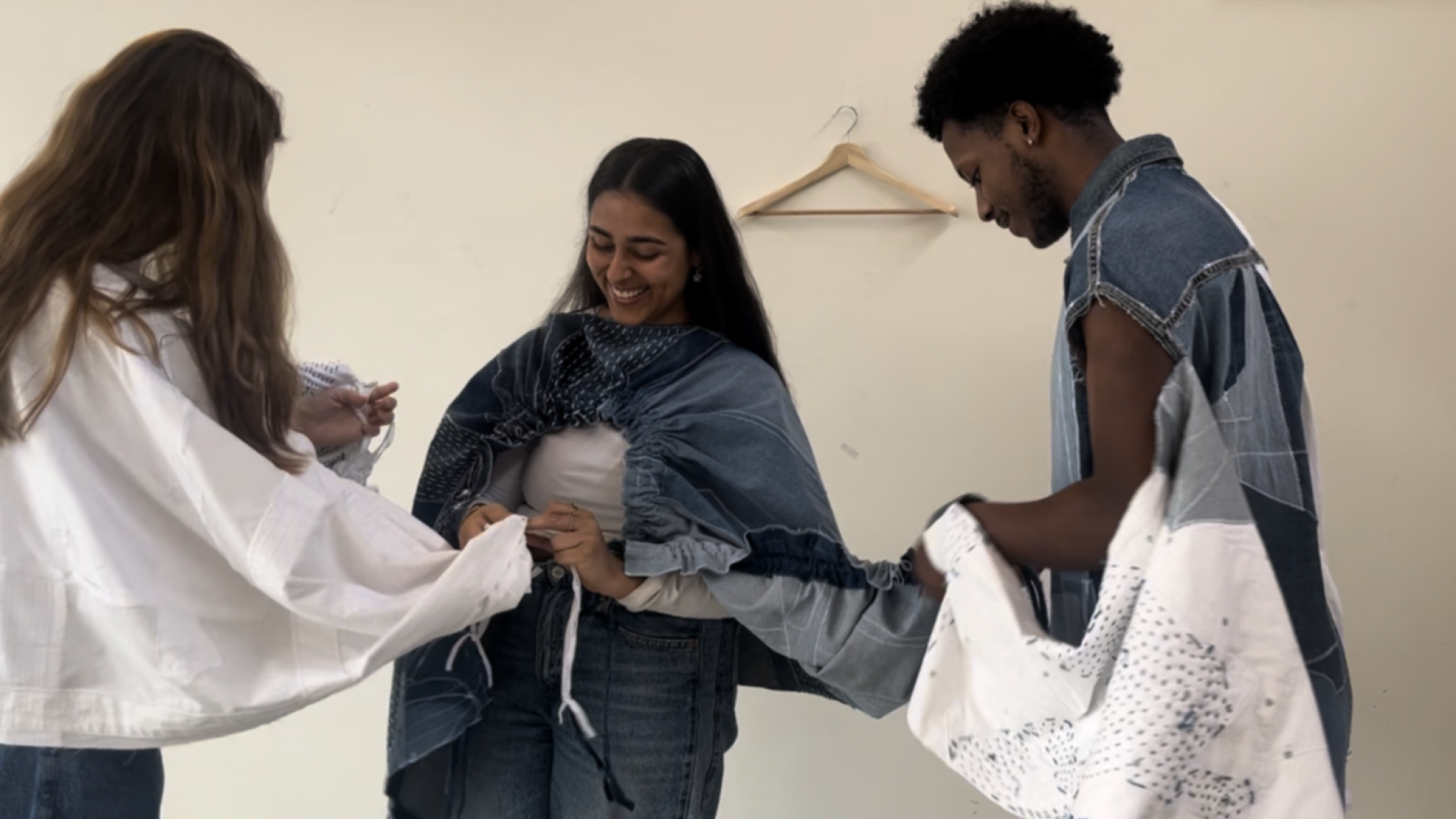
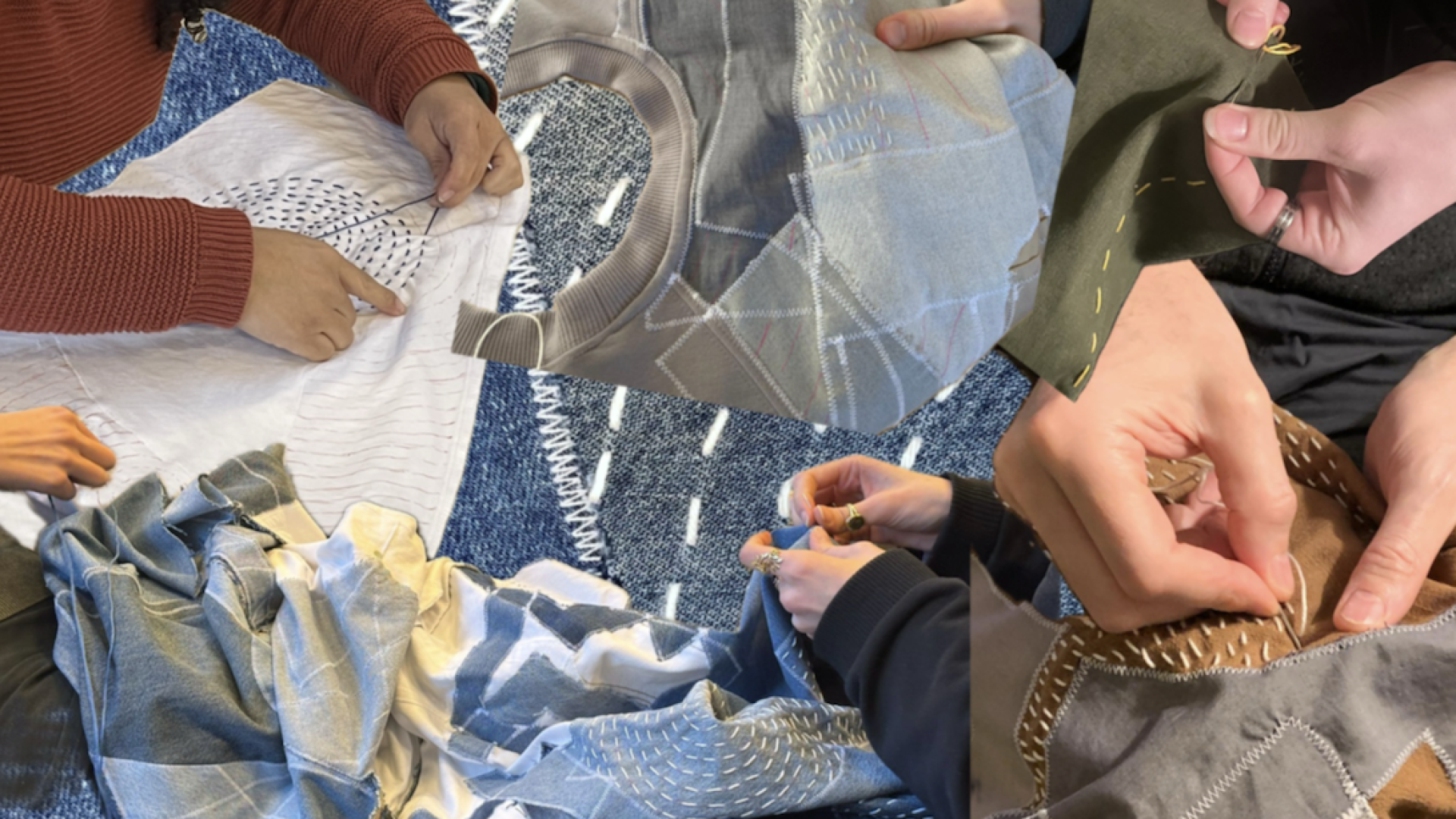
I design and put together the foundation of each piece. Then together with others, the piece is embroidered. I have not created a single piece on my own. People who participate respond to an open call or are invited by me. This can be anyone: friends, family, neighbors, classmates, coworkers, or visitors at an exhibition. Conversations and interactions arise while we’re embroidering. Sometimes the conversation is about the harmful fashion industry, sometimes about our daily choices and habits, and there’s always a focus on the value of the handmade work we’re creating together at that moment. The embroidery lines consist of simple running stitches and respond to the shapes of the fabric fragments and the entire piece. In this way, different hands, experiences, and perspectives come together in a single work. The creative process thus becomes a space for exchange, reflection, and connection.
Shared humanity, shared responsibility
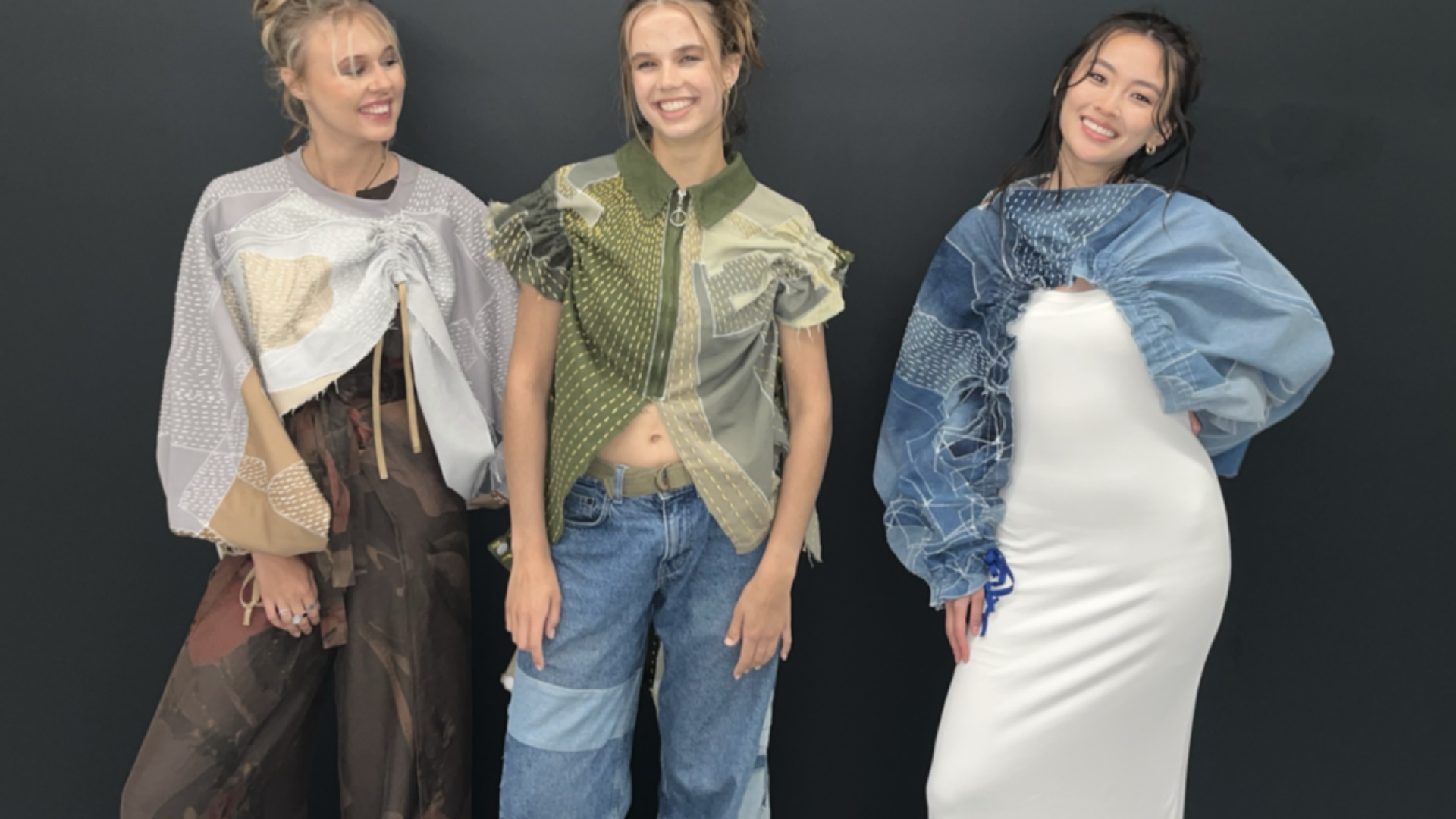
At the heart of Passage Two lies the belief that our shared humanity is an essential starting point for building a better and more sustainable world. Every piece of clothing carries with it a chain of human connection: the people who made it, the one who wore it, the people who embroidered it, the next wearer, and those who encounter the work as art. What connects them is that they are all human. The works make this connection visible and invite recognition, appreciation, and care. Each piece can be worn as clothing or hung on the wall as a two-dimensional work of art. Through the use of ribbons that run through tunnels in the fabric, the works can change shape and adapt to different bodies. In this way, the material retains its value and meaning and is no longer disposable. Passage Two proposes that change can begin with the realization that we are part of one humanity, one body, and that what harms another ultimately concerns us all.