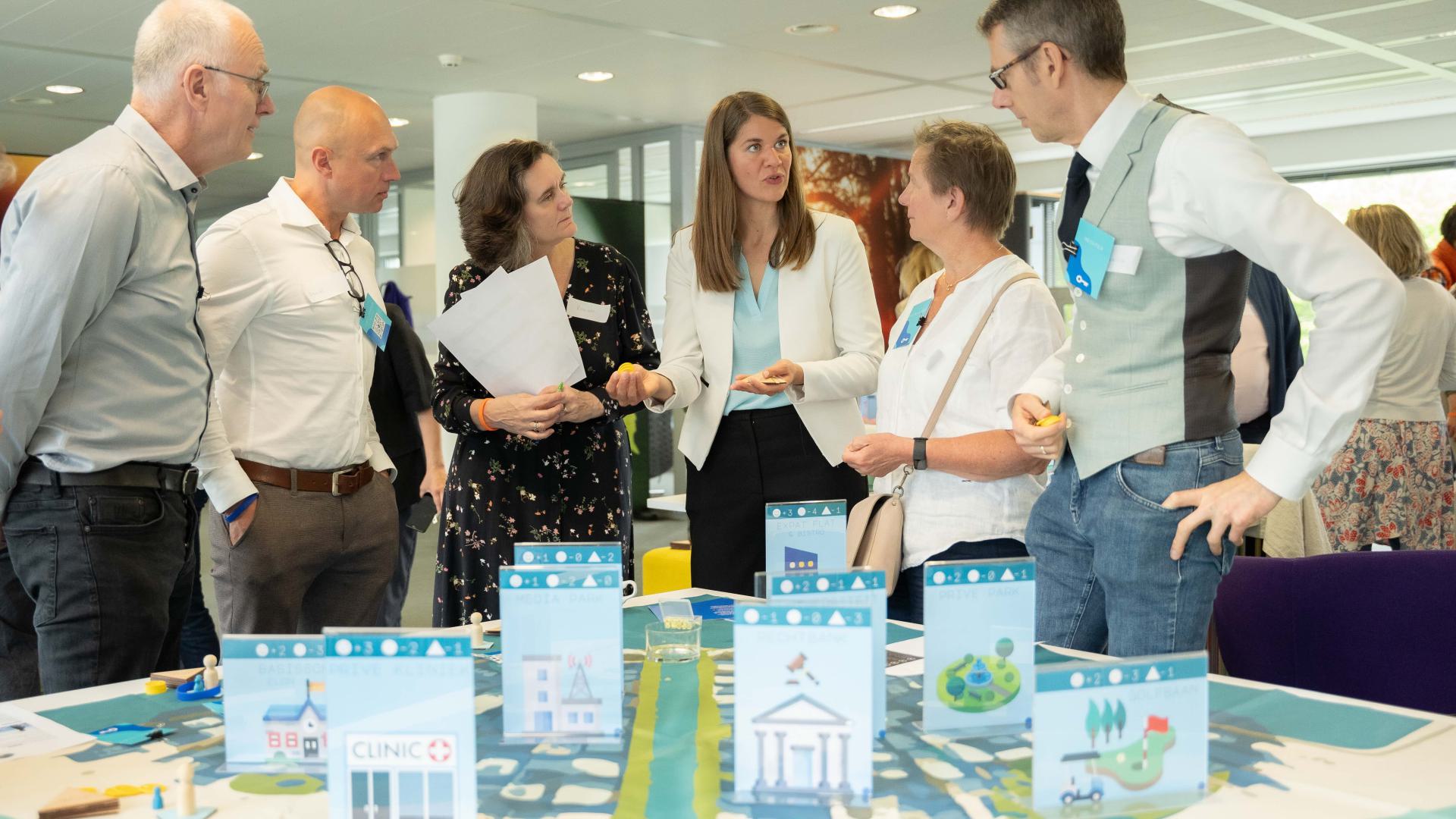
Polarisation is...
The term "polarisation" is interpreted differently in academia. Polarisation is often discussed as a social problem, a threat to public safety. But as a sociologist, I also see it as a force. It's a social dynamic that drives societal renewal. It's an attempt to determine on a large scale (sometimes by fighting) what we consider "normal" in our society and what we don't. Many human rights have been acquired this way.
Sociology meets transition science
Each transition issue touches on several related issues. For example, the "housing shortage" touches on agriculture, the aging population, water quality, and the energy transition. Where do you begin? In POLARIS, the lived experience of residents plays a key role. This is a rather unique design choice in simulation games, which often seek abstraction and operate at the process level. By giving the lived experience a prominent place in the game, players gain greater insight and a sense of the potential impact of policy choices. You train yourself to respond to changing circumstances and recognize the emotional dynamics of polarisation. This way, through play, you learn how to reach the social tipping points (support) in societal change.
The power of a well-designed simulation game
POLARIS is an applied game in which a large group of people simulates a society facing major societal challenges. The game design is based on insights from science, as well as practical experiences from professionals who encounter polarisation in their daily lives. We spoke with social workers, researchers, students, policymakers, and other professionals and incorporated their experiences on what works and what doesn't in a polarised situation into the game design. The beauty of a simulation game like POLARIS is that you truly embrace the complexity, which allows you to better navigate the chaos of the challenging real-world environment.