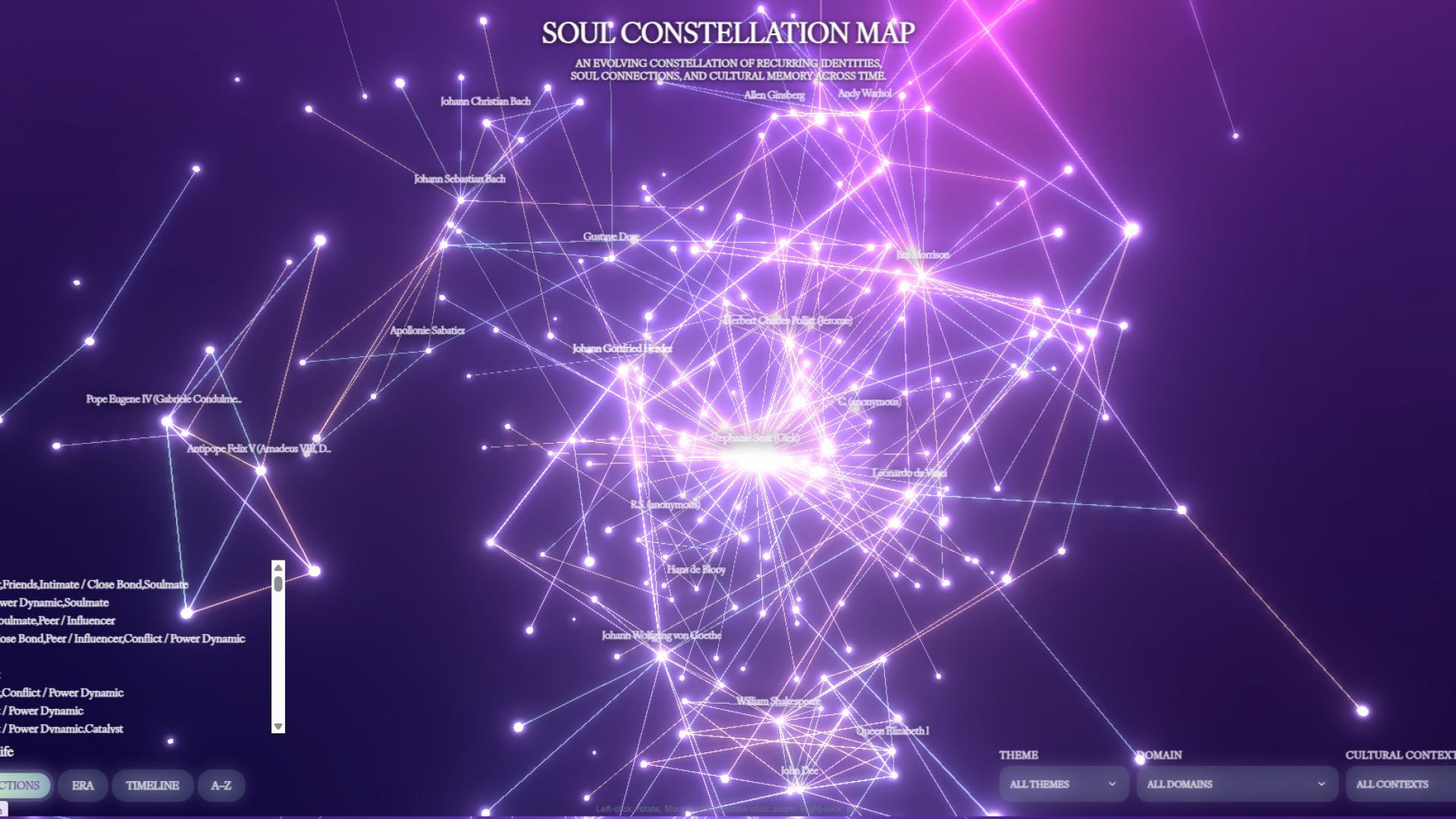
Recurring Constellations
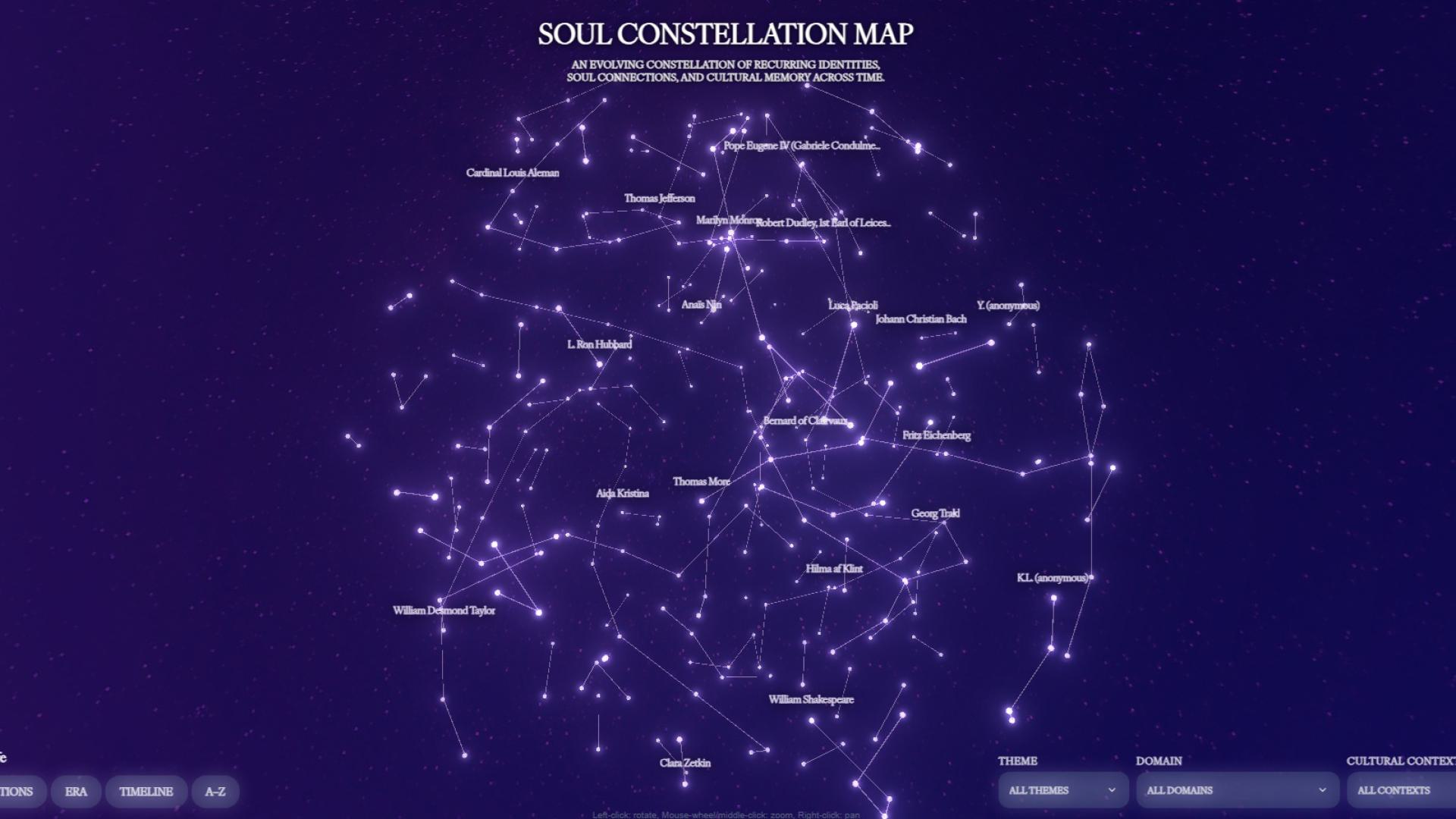
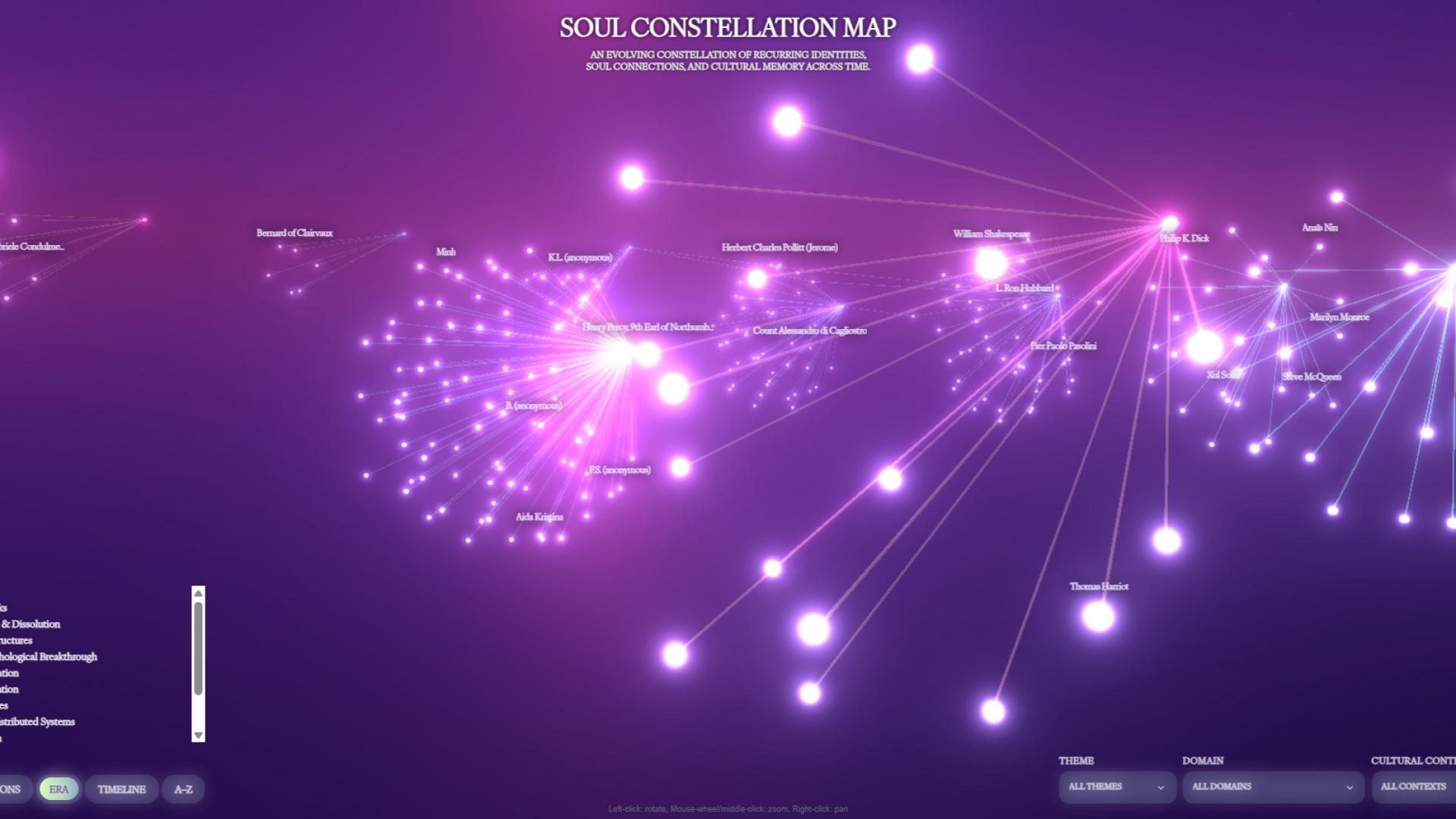
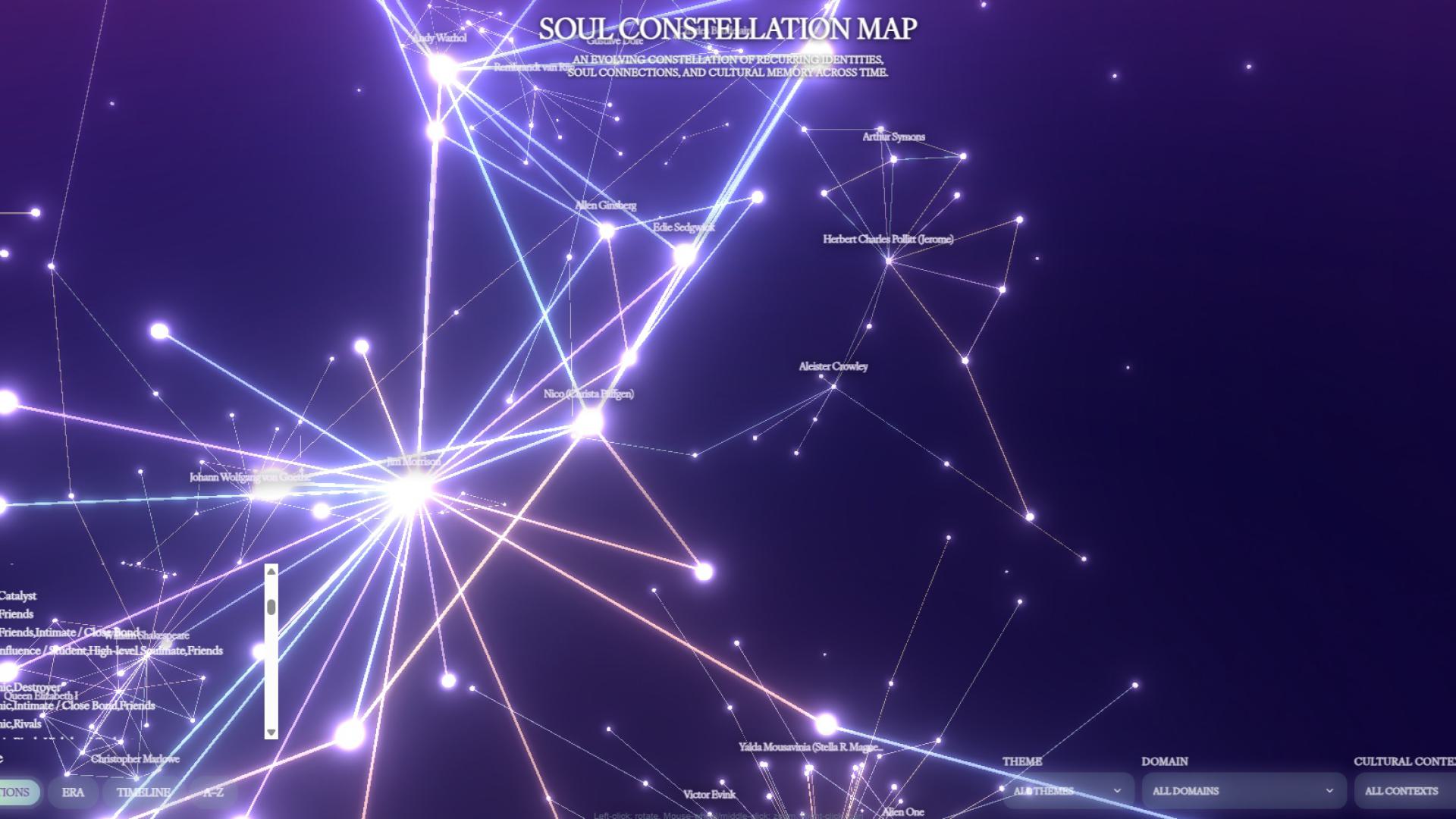
Soul Constellation Map emerged from years of artistic research into possible continuities of identity across lifetimes. What began with individual case studies gradually revealed a more complex pattern: people seemed to reappear not alone, but within recurring constellations of relationships and themes, unfolding within the cultural context of each era.
As the archive expanded, larger questions emerged. Could groups of people repeatedly encounter one another across different historical periods? Could creative impulses, unresolved dynamics and shared themes travel through these constellations, taking on new forms within changing cultural contexts? And might these recurring networks contribute to moments of cultural change?
Drawing on historical research alongside symbolic and intuitive methods, the project explores these patterns without seeking to prove reincarnation or offer a single explanation. Instead, it opens another way of looking at identity, memory and history - and at the connections that may exist between them.
Reflections of Self
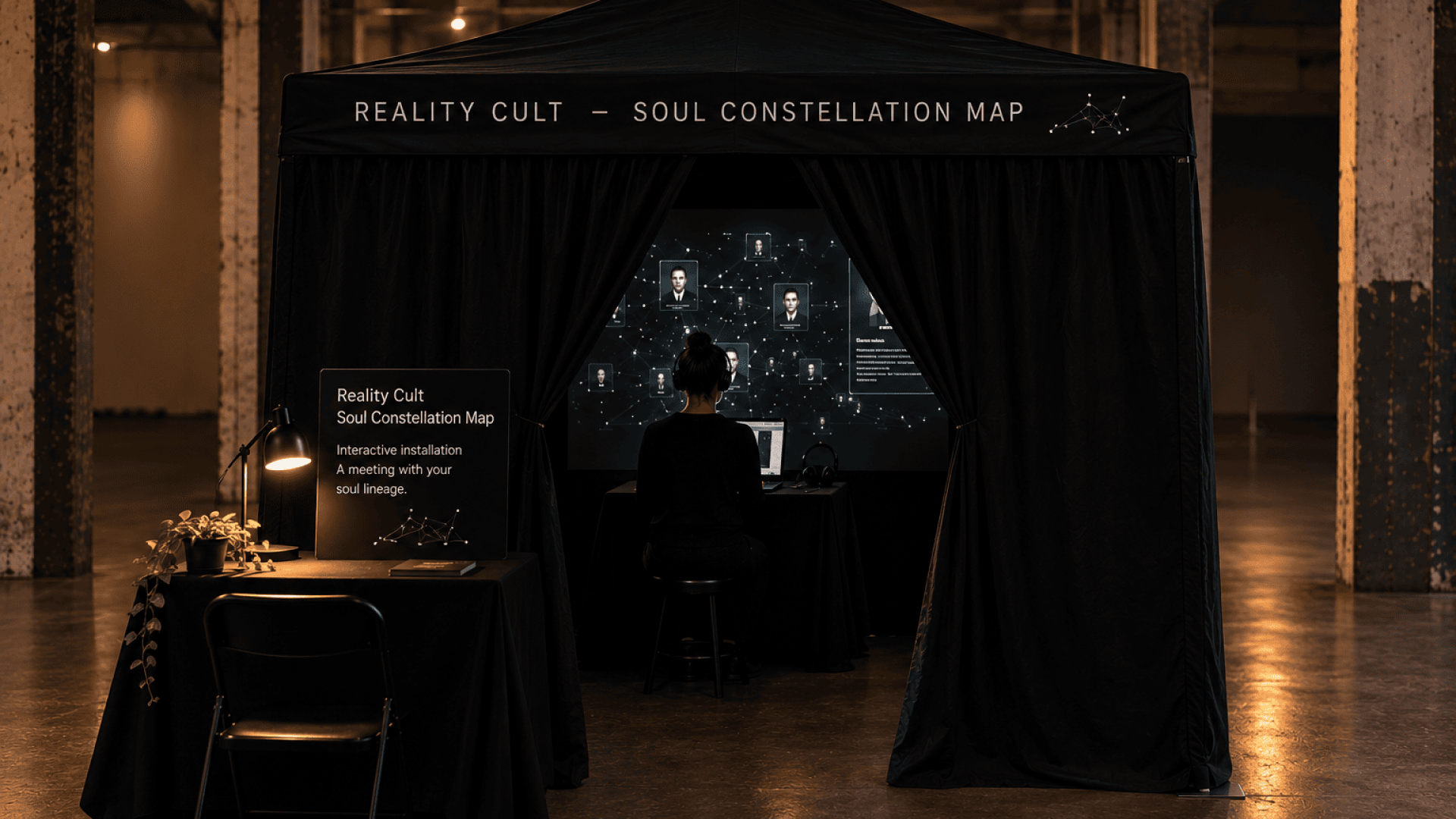
At Dutch Design Week, the constellation becomes a personal encounter. Visitors are invited to turn their attention inward and reflect on recurring themes and patterns within their own lives. From this encounter, a historical figure emerges whose story carries an unexpected resonance with their own. This figure becomes a personal entry point into the wider Soul Constellation Map.
The experience plays with the boundary between the personal and the archetypal. What makes us recognise ourselves in someone who lived in another place and another century? Which parts of identity feel uniquely ours, and which seem to belong to larger patterns that repeat across people, cultures and time? Visitors are invited to explore these questions without needing to adopt any particular belief or interpretation.
An Open Invitation
Soul Constellation Map invites visitors to enter this evolving constellation and explore what resonates with them. Moving between personal experience, historical figures and larger patterns, the work leaves its central question open: where does one identity end, and another begin?