Moving Image
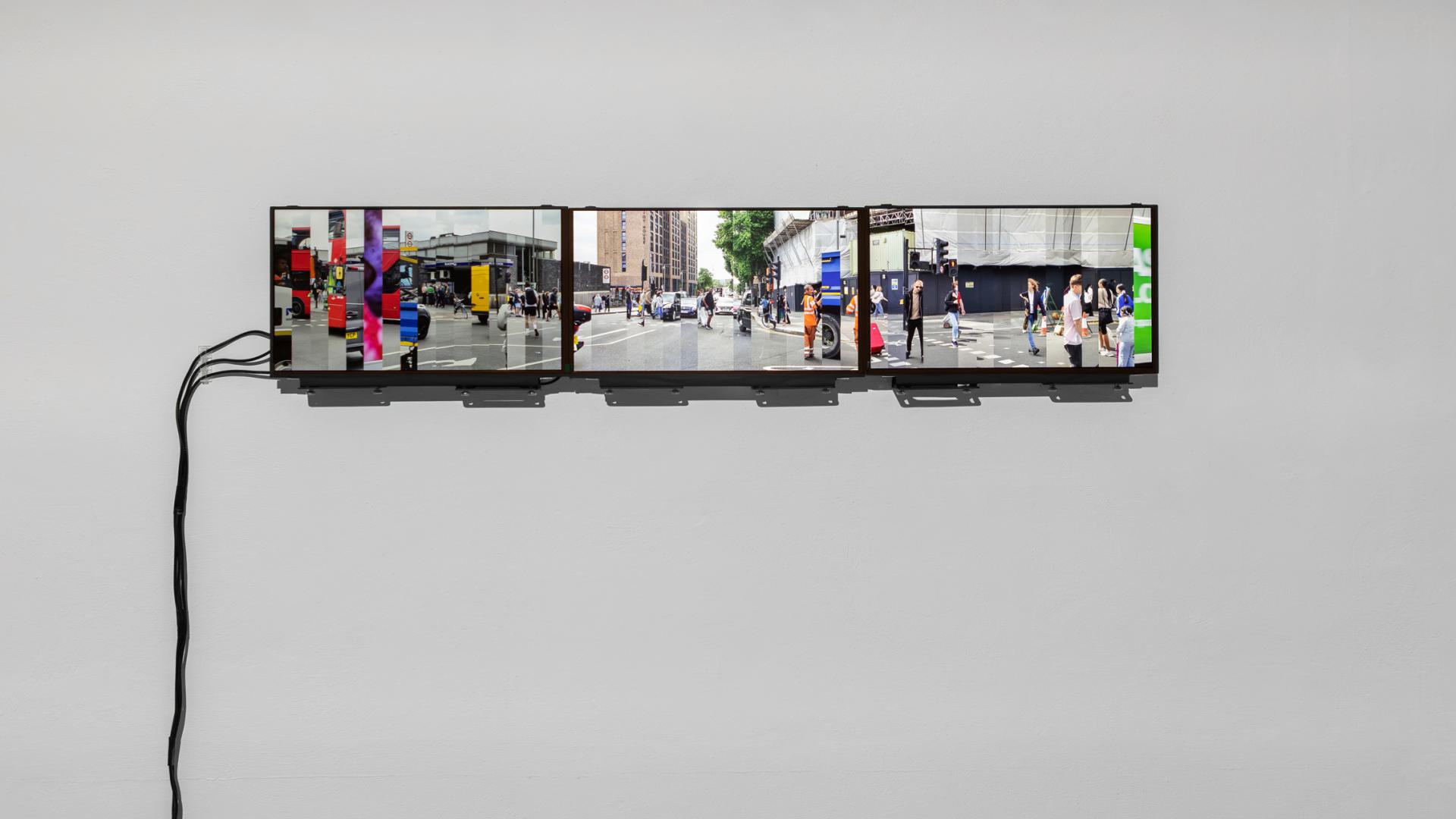
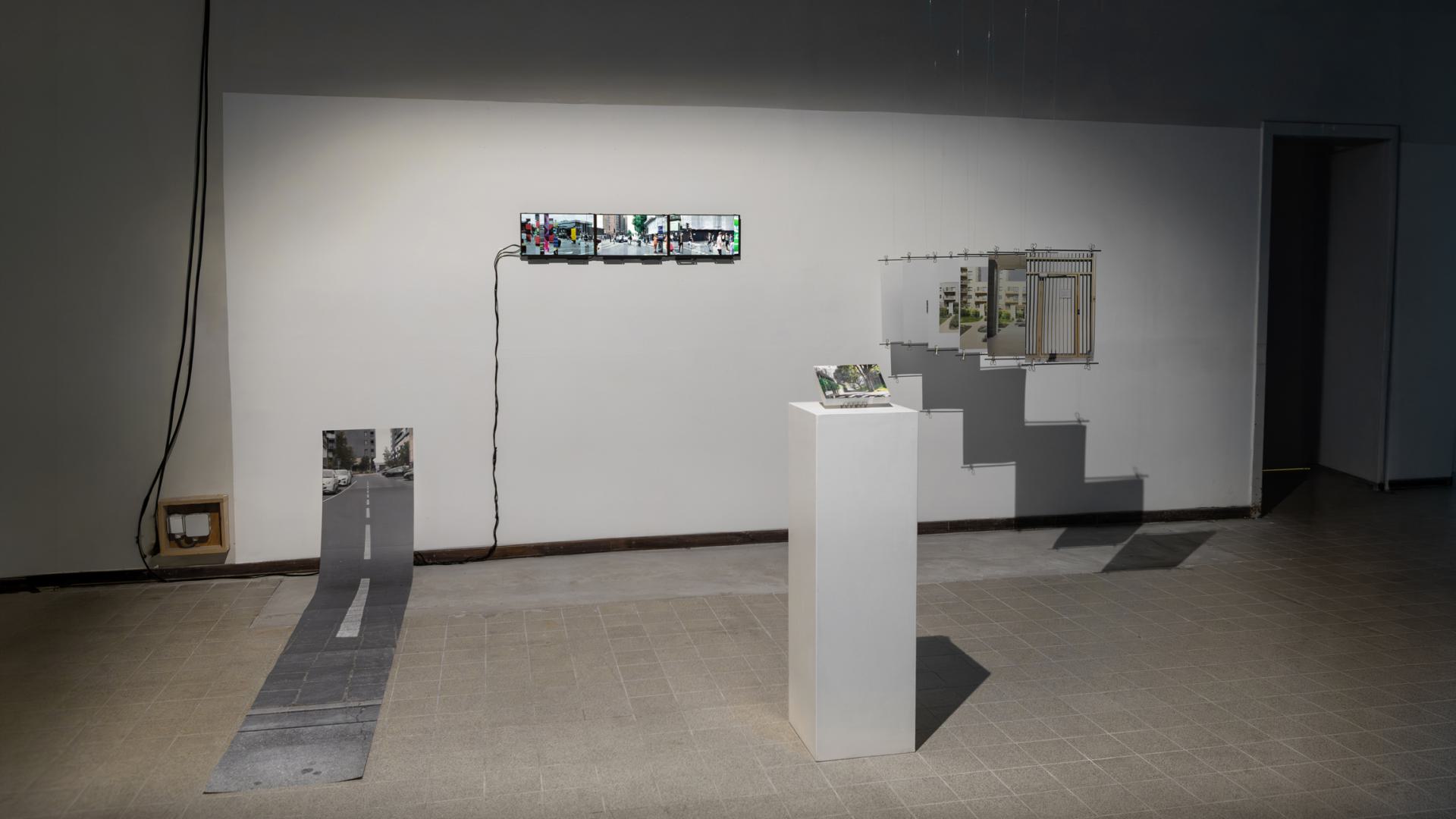
Threading, Drifting, and Sensing uses three connected screens to present three temporal conditions: deceleration, normal speed, and acceleration. A single moving image is fragmented across multiple displays, allowing viewers to experience both the expansion and disruption of space. Rather than simply altering playback speed, each condition changes how space is perceived. In slowed sequences, space gradually unfolds through stretched duration and layered imagery. In accelerated sequences, spatial information becomes compressed and unstable. Even at normal speed, the image is reorganised through slicing, duplication, and layering, revealing how the structure of an image can reshape spatial experience.
Paper Experiments
The paper-based experiments approach space through three different perceptual structures.
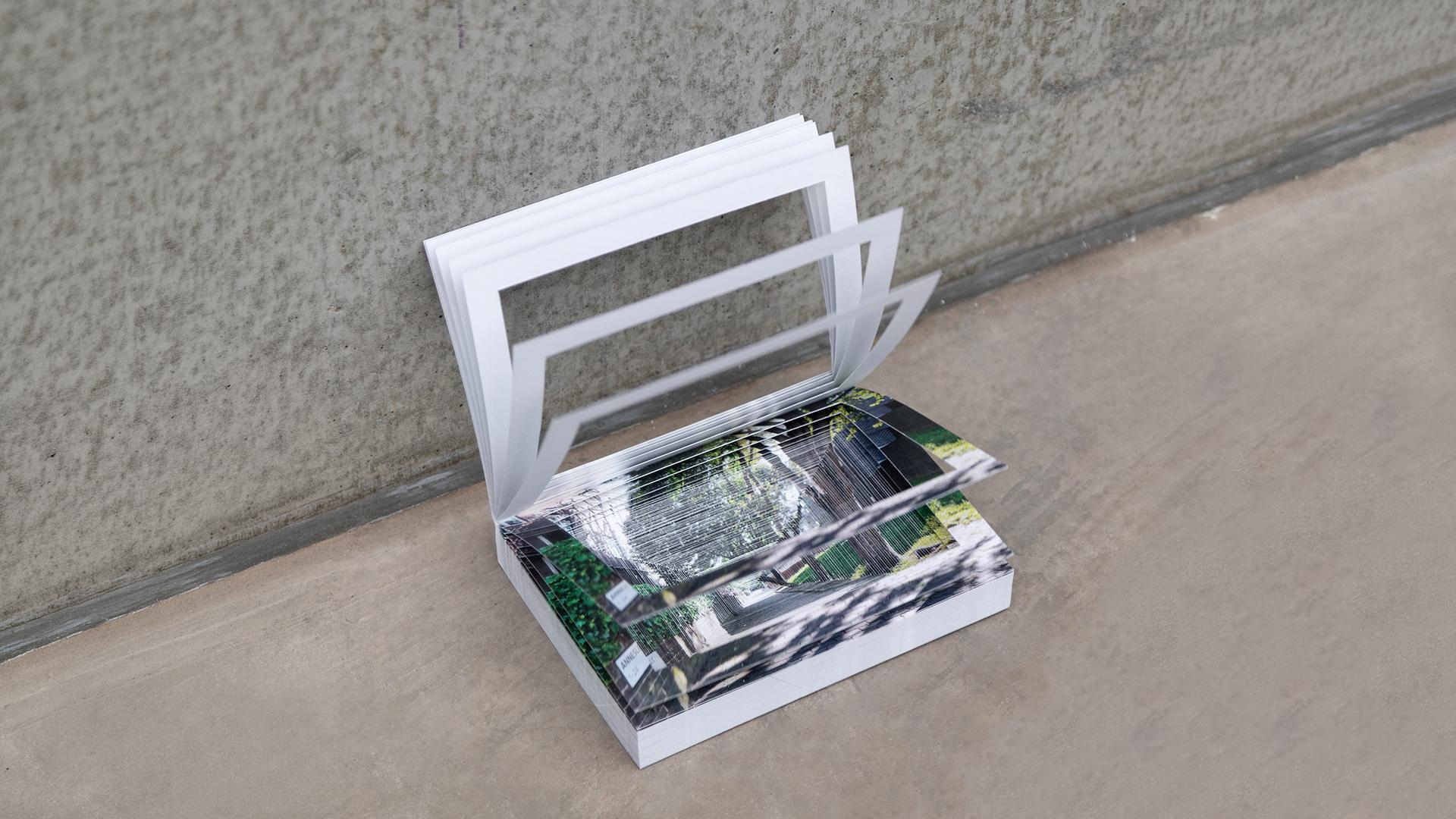
Linear Perspective uses a photograph with strong depth, printed across 166 pages with a small window cut into each one. As viewers flip through the pages, the repeated openings form a visual tunnel, turning perspective into a compressed physical space within the book.
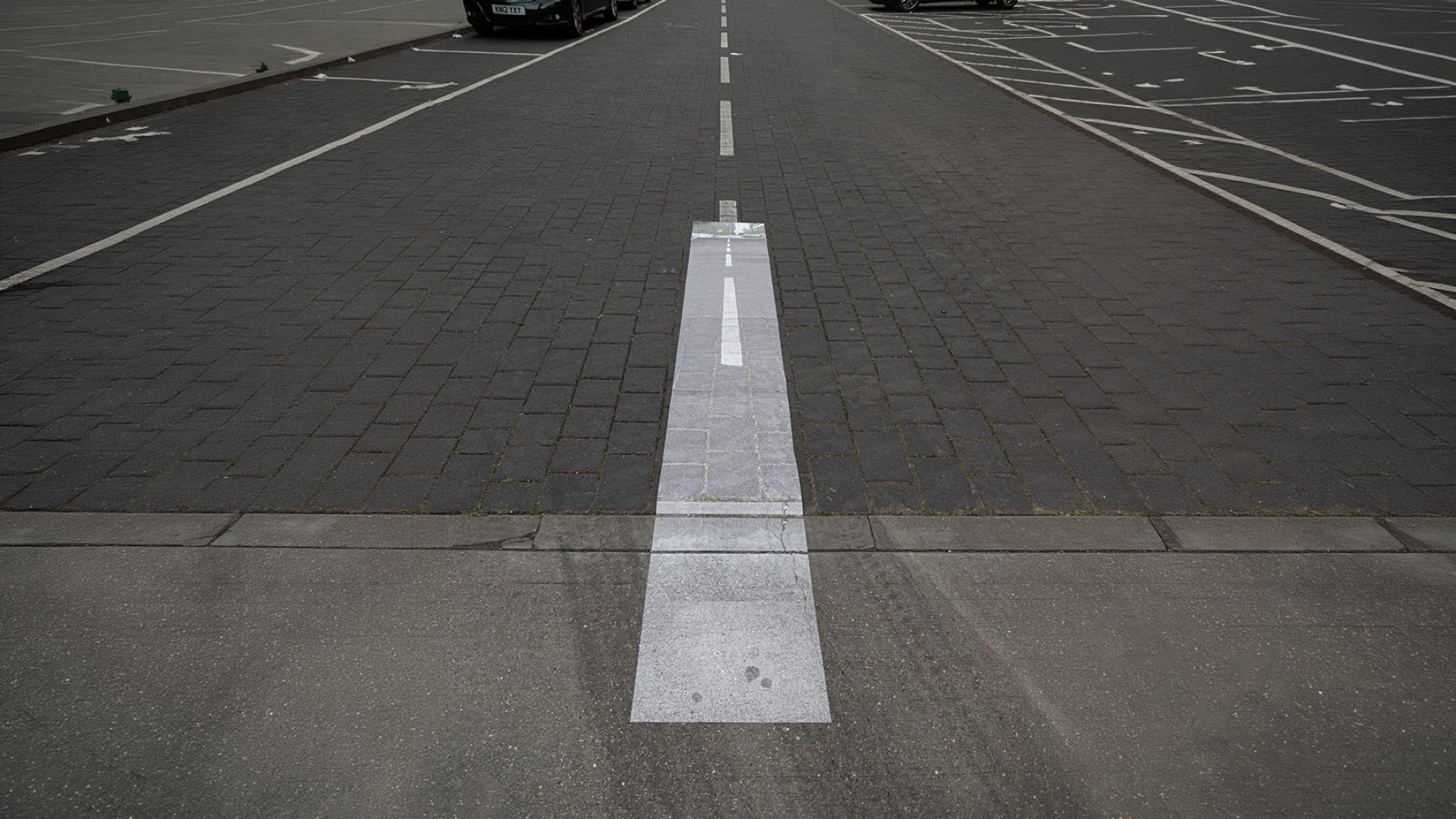
Texture Gradient follows a 32-metre stretch of paving bricks, recording how texture becomes smoother and less detailed with distance. Changes in paper, from richly textured 250gsm stock to lighter 120gsm paper and smooth, glossy 80gsm sheets, reinforce the gradual loss of visual detail as distance increases.
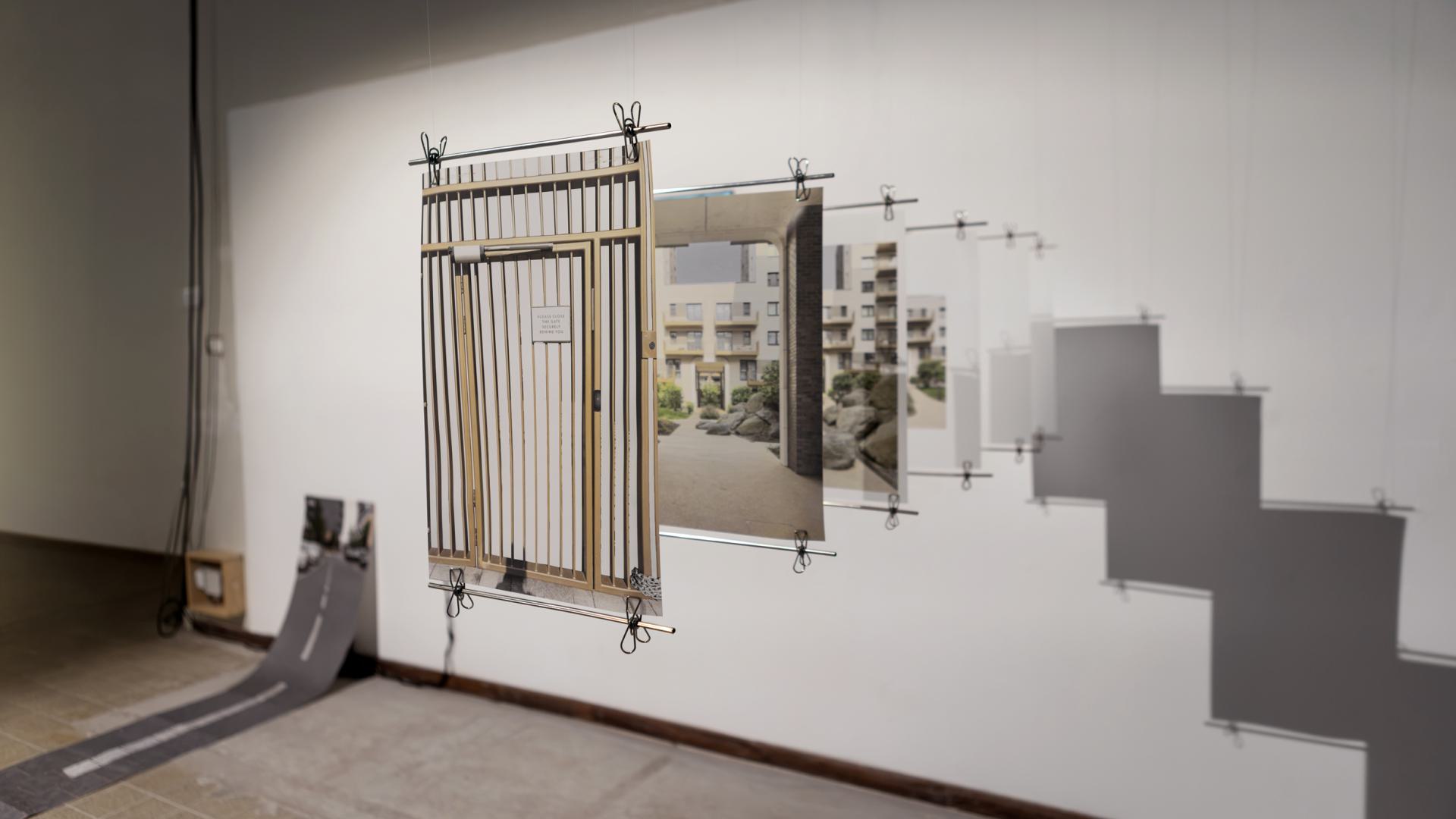
Layering and Occlusion reconstructs the path through an apartment and garden using semi-transparent pages. As viewers flip or unfold the work, doors, trees, and surrounding spaces overlap and reveal themselves layer by layer, creating the sense of moving gradually through the space.
Ways of Seeing
There is no fixed sequence for viewing the project. Viewers can move freely between the three-screen moving image and the paper-based experiments, encountering different temporal and spatial conditions through movement, duration, and interaction.
The act of viewing becomes part of the experiments themselves. Moving between screens, flipping through pages, unfolding paper, or following an image layer by layer each produces a different experience of time and space. Rather than offering a single perspective, the project allows these relationships to be continually reconstructed through the viewer’s own process of looking.