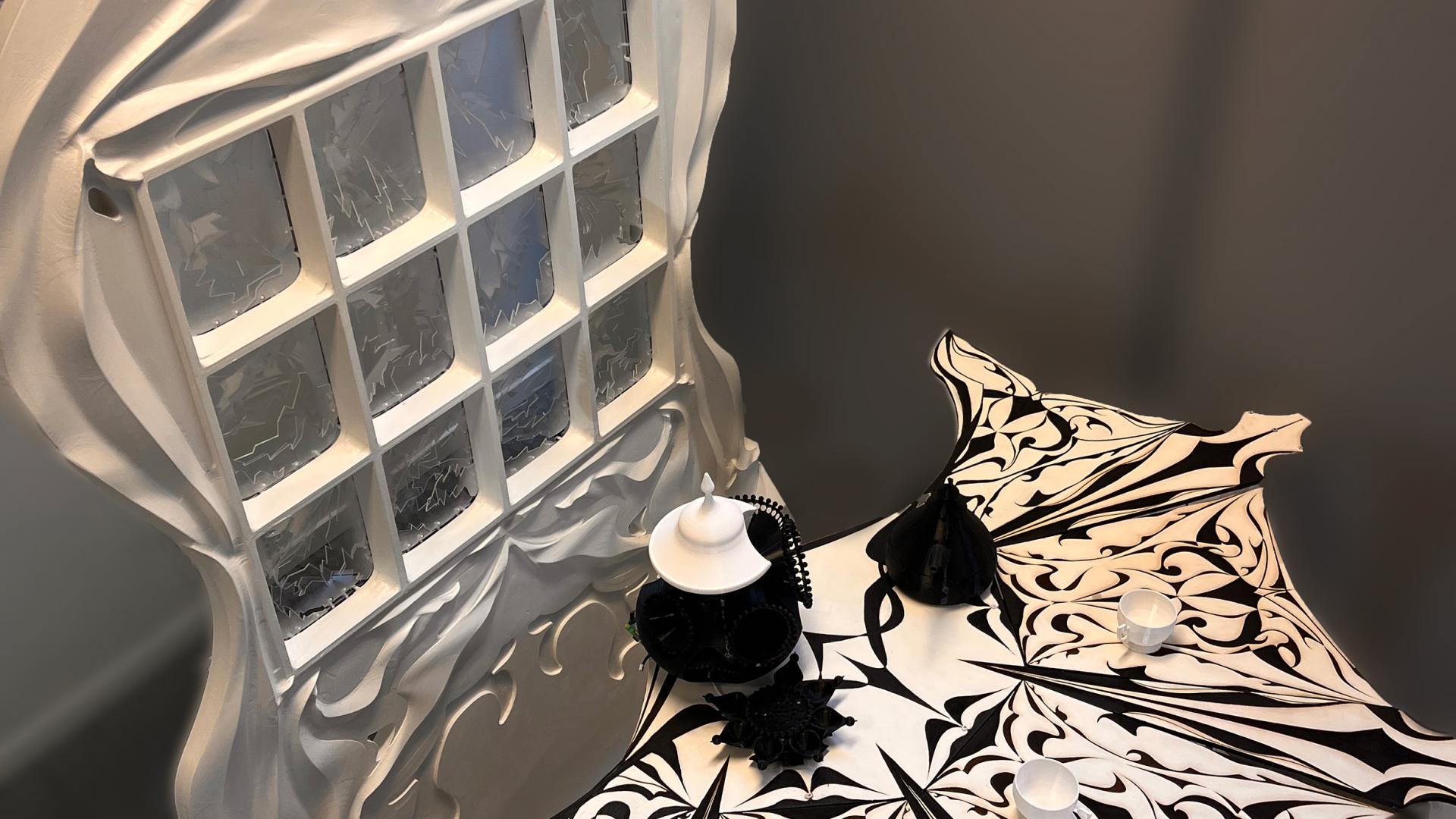
“The Aesthetics of Bias”, highlighting and amplifying what disrupts the balance in human relations.
This project encourages a deeper reflection on whether our biases selectively honor who speaks and allow a dominant voice to prevail in a meeting, thereby preventing us from hearing diverse perspectives. By using four everyday objects trained and acted upon by machine learning, “The Aesthetics of Bias” progressively produces palpable provocations when dominance has not been addressed among people.
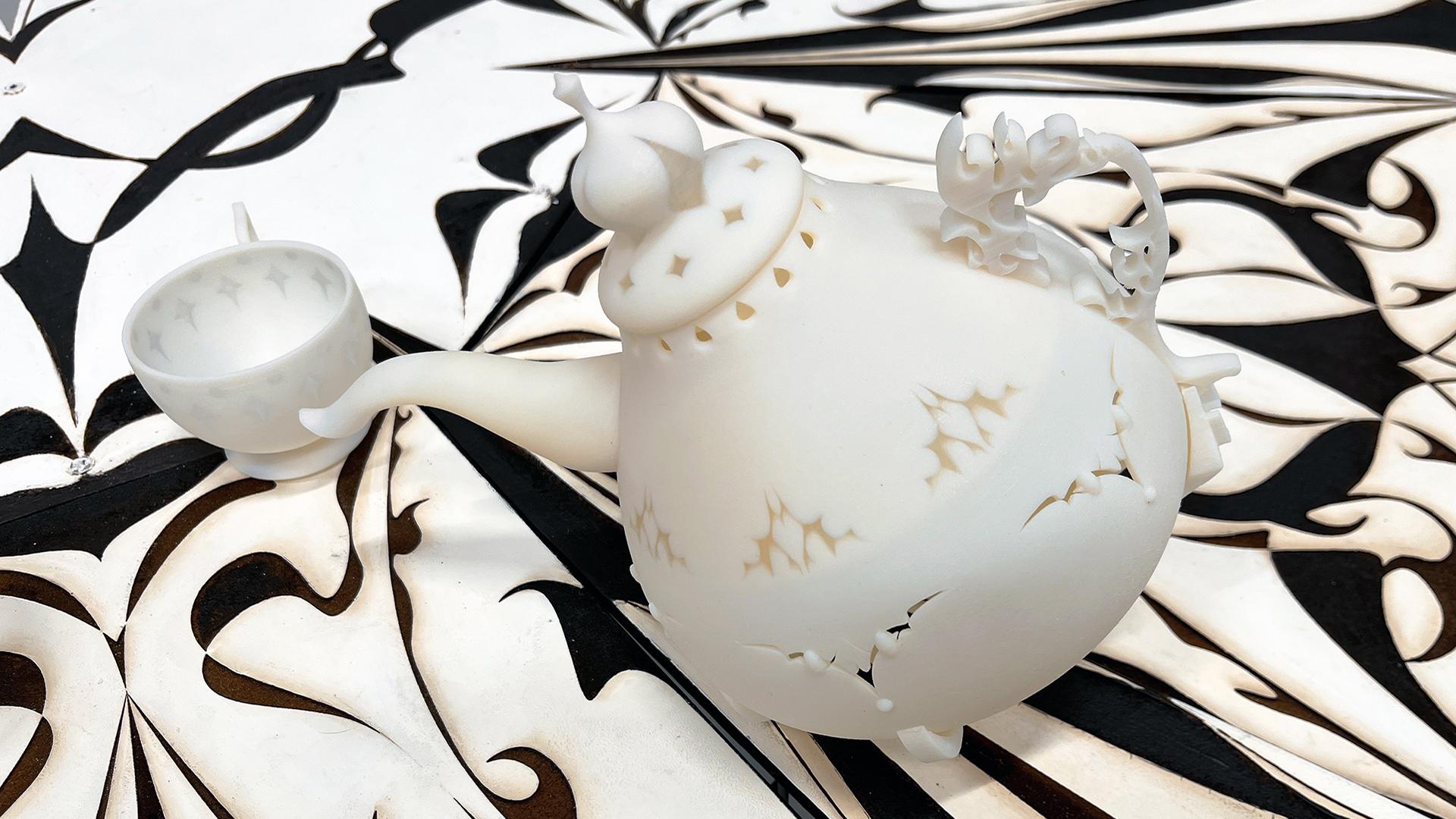
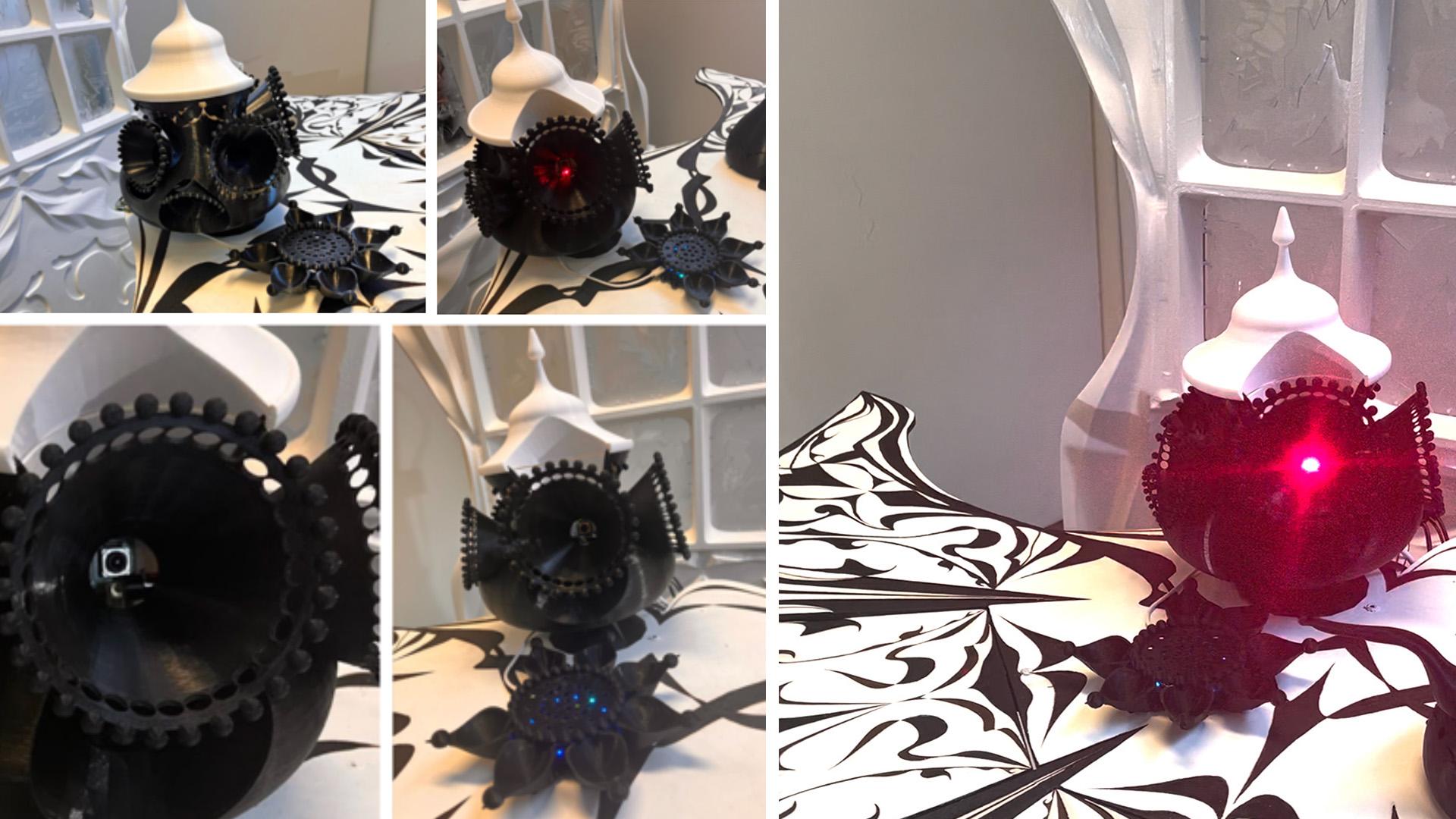
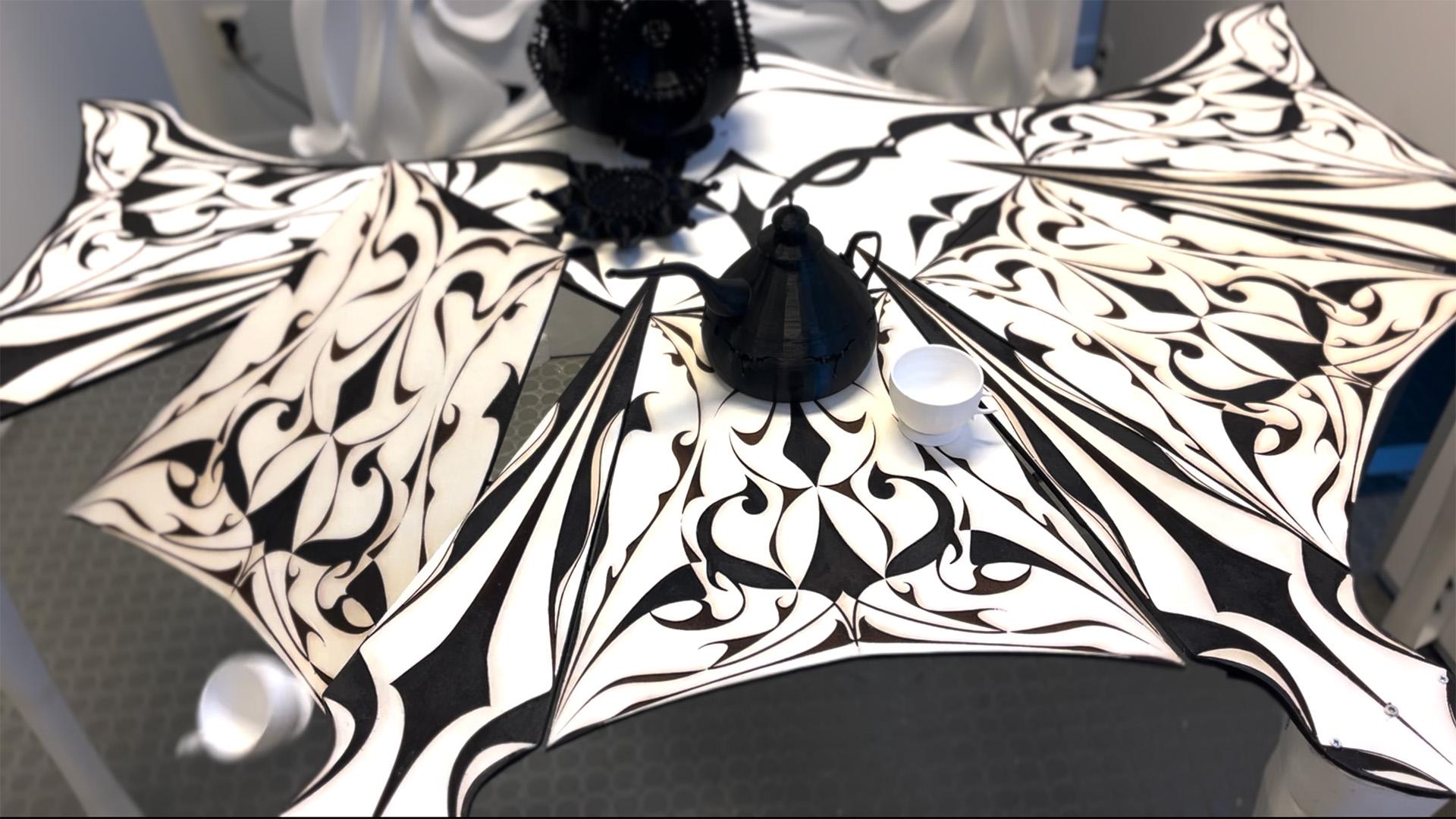
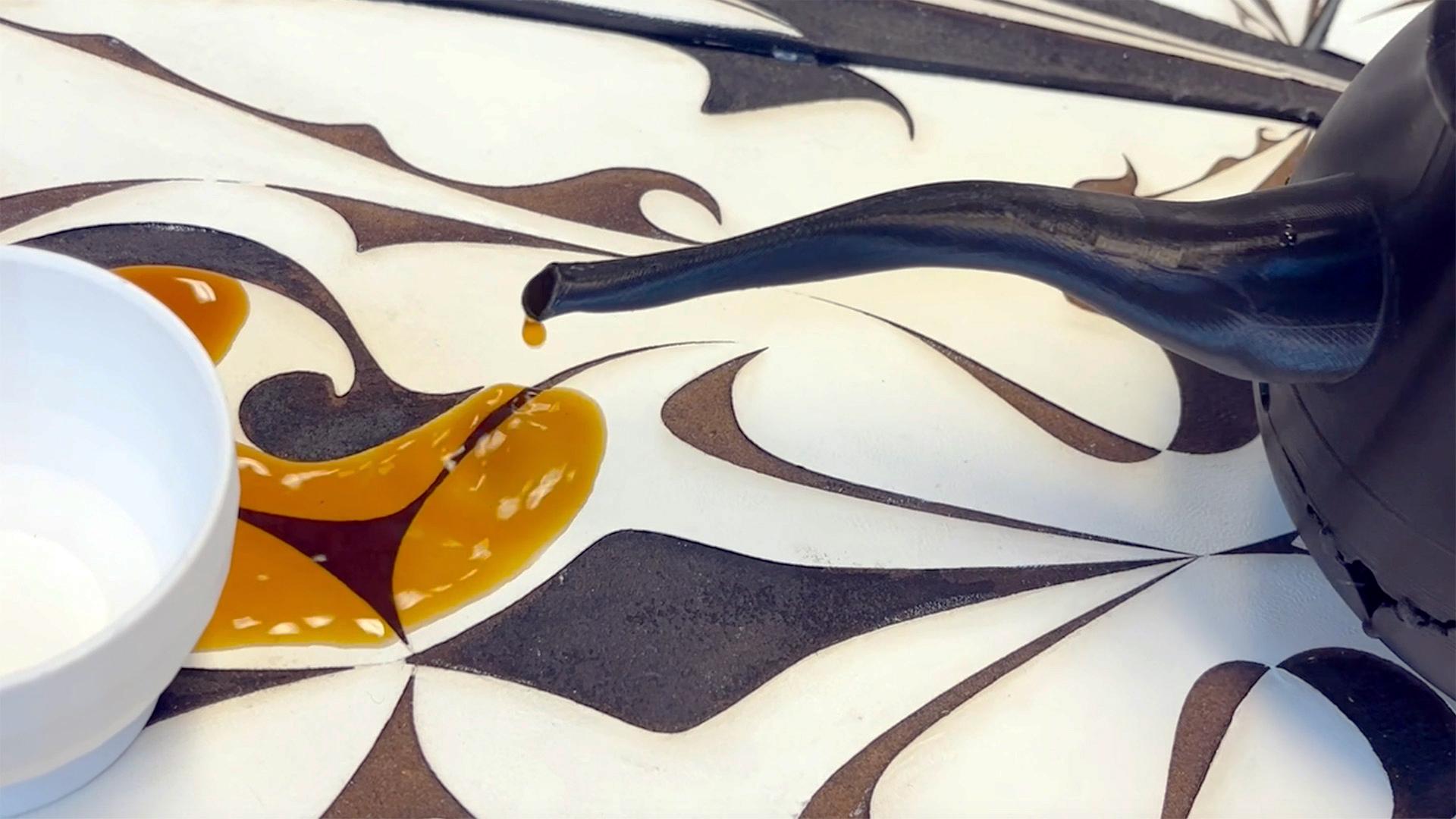
First, the window starts with ́Detecting the Direction of Speaking ́ and signaling it by the breaking effect in the windowpanes. Second, the sugar jar follows up by ́Indicating Dominant Personnel ́ by simultaneously chasing the person’s face, aiming to pointing a laser beam at their mouth. Third, the coffee pot continues to 'Responding to Dominance' in a more physical way, walking towards the dominant person's nearest cup and even dripping coffee on the dominating person ́s lap. Lastly, the table threw all objects that were in front of the dominating person onto the floor as ́Interrupting the Situation ́.
This aesthetics could be completely changed depending on how people relate to each other. If dominance did not prevail or was interrupted, the aesthetics of bias would not appear.