dutch design week, 17-25 oktober 2026 eindhoven

Fit-to-farm Models for Biomanufacturing

Can microorganisms color the future of textiles?

Hosted by Veenweide Atelier

Log in to save this programme item to a favourite list.

Login

Entrance fee

DDW ticket required

Accessibility

Free wifi available
Toilets available
Fully wheelchair accessible
Wheelchair friendly toilet available

Opening hours

11:00
-
18:00
11:00
-
18:00
11:00
-
18:00
11:00
-
18:00
11:00
-
18:00
11:00
-
18:00
11:00
-
18:00
11:00
-
18:00
11:00
-
18:00
At the Veenweide Atelier Faber Futures works with Frisian farmers, scientists, and textile makers, using local pigment-producing bacteria fed by farm waste and residual heat. The project pioneers a distributed, farm-based biomanufacturing in Friesland for sustainable textile finishing.

Veenweide Atelier – An Ecosocial Design Lab for Peat Landscapes

The Frisian peat meadow area is the largest continuous peat landscape in the Netherlands—one of the planet’s critical zones where climate, biodiversity, and human livelihood intersect. Low water levels dry out the soil, releasing vast amounts of CO₂. Restoring peat, fostering biodiversity, and raising water levels offer solutions.

The Veenweide Atelier (Peat meadow Atelier) is a project initiated by artist and designer Henriëtte Waal and Arcadia Foundation and functions as an ecosocial design lab, where farmers, residents, nature managers, scientists, and designers collaborate. Together, they explore how peat landscapes can remain resilient and livable—for both people and the more-than-human world.

Can microorganisms color the future of textiles?

Creative design studio Faber Futures explores how local pigment-producing bacteria - mainly found in healthy soil and manure - can provide a sustainable alternative to conventional chemical dye processes.

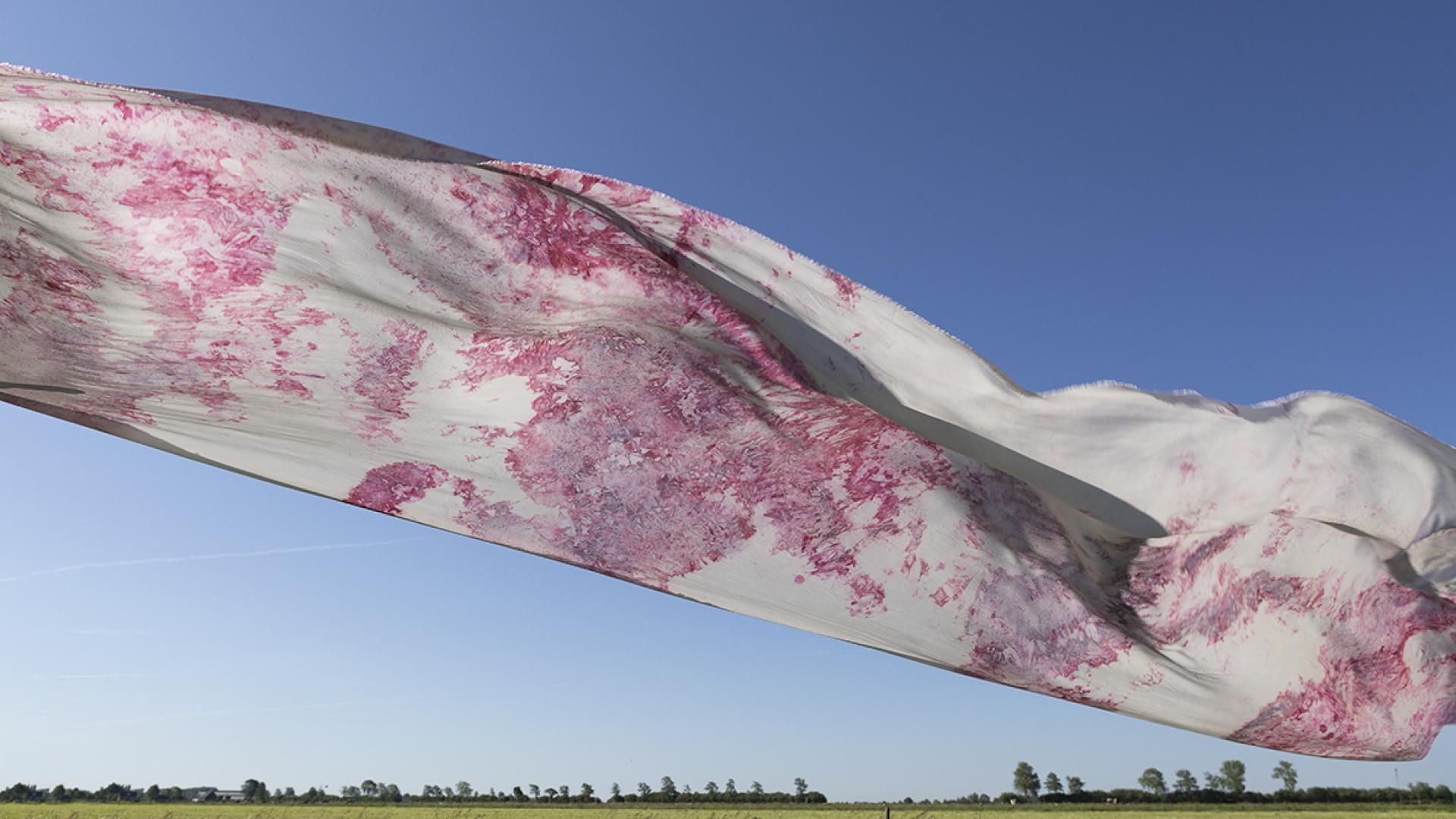
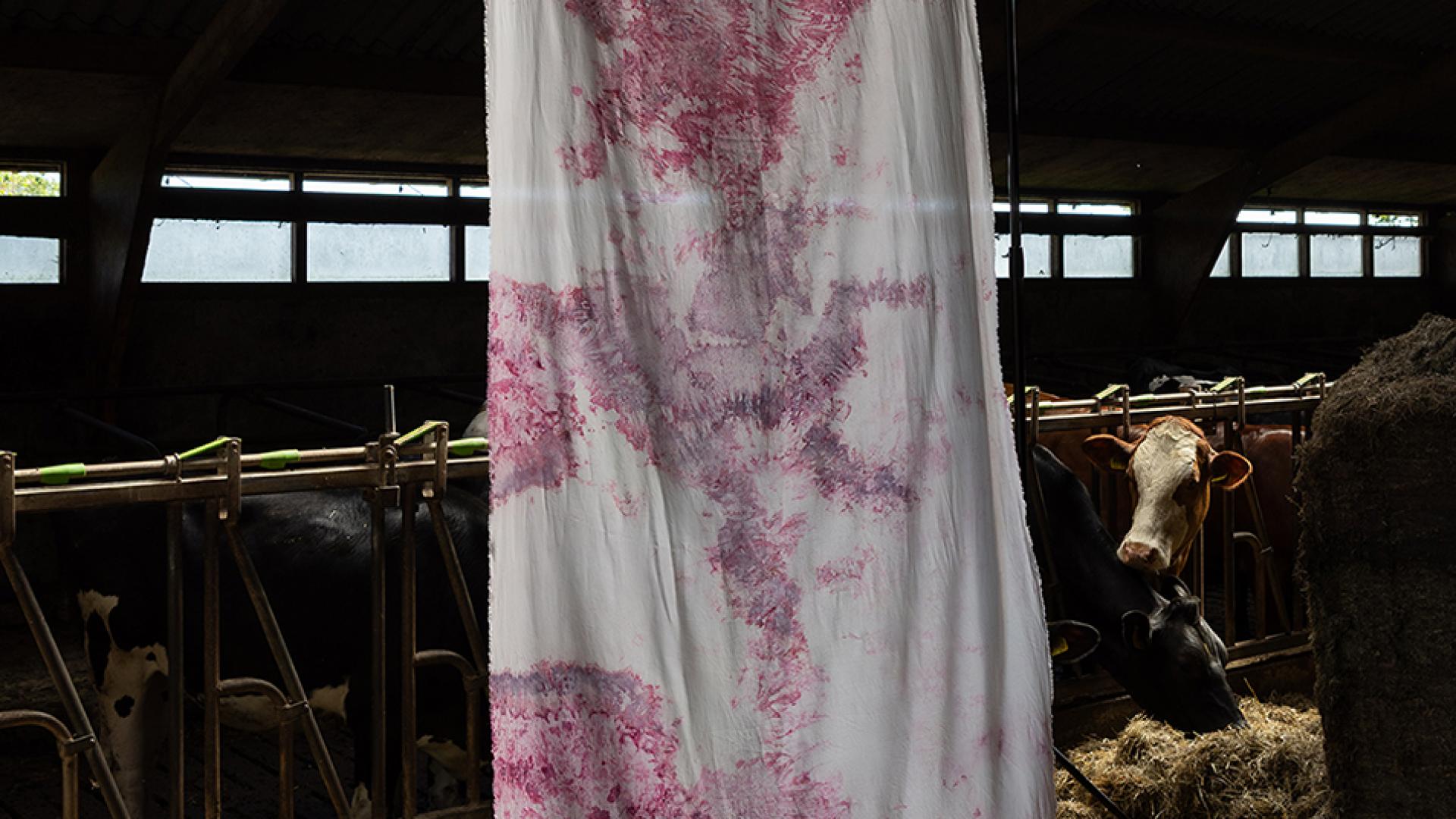
At the Veenweide Atelier, Faber Futures collaborates with Frisian farmers, microbiologists, and textile makers. They experiment with locally cultivated bacterial strains from the peat meadow area. They test how agricultural waste can feed these bacteria, supported by residual heat from the farm. The project proposes a distributed, fit-to-farm model of biomanufacturing in Friesland and aims to establish a circular system for textile finishing. The large printed fabric embodies collaboration between humans, plants, and bacteria.

Ready to visit?

Come to Dutch Design Week and make this project part of your visit.

Buy tickets
Bacterial dyed textile at the Veenweide Atelier
textile: Faber Futures photo: Tryntsje Nauta
Participants of this exhibition

programme.hosted_by.about Veenweide Atelier

Veenweide Atelier, initiated by Henriëtte Waal and Arcadia Foundation, is an ecosocial design lab where farmers, residents, scientists, and designers collaborate on peatland resilience.

Colofon

General Director Arcadia Immie Jonkman
Artistic Director Veenweide Atelier Henriëtte Waal
Project leader Veenweide Atelier Wendy Gooren
Project Coördinator Veenweide Atelier Gisanne Hendriks
Team Fit-to-Farm Models for Biomanufacturing Natsai Chieza, CEO, Faber Futures
Team Project Fit-to-Farm Models for Biomanufacturing Ioana Man, Design Lead, Faber Futures
Team Fit-to-Farm Models for Biomanufacturing Camille Thiery, Faber Futures
Team Fit-to-Farm Models for Biomanufacturing Emily Marsh, Faber Futures
Microbiologist, Streptomyces expert Jeroen Siebring, Kenniscentrum Biobased Economy (KCBBE) Hanze University of Applied Sciences
Organic Dairy Farmer Kees Boon
Organic Flax Farmer Willem Bruinsma
Textile network partner House of Design
Textile design partner Tess van Zalinge
Video portraits Jonathan Doornenbal

Partners

Sponsored by Fit-to-farm Models for Biomanufacturing

As featured in