CHAOS
The world around us is becoming increasingly complex, noisy, and overstimulating. For neurodivergent individuals—including autistic people and those with ADHD—everyday environments can be overwhelming, making it difficult to concentrate, regulate emotions, or simply feel comfortable in public spaces. While presenting our biomaterial research at exhibitions and conferences, we were approached by researchers and practitioners working with neurodivergent people. They revealed an urgent challenge: purpose-designed sensory spaces are still rare, and many schools, healthcare facilities, and public institutions rely on improvised solutions created by teachers or therapists. This dialogue inspired us to rethink the role of sustainable materials—not only as ecological innovations, but as tools for creating environments that genuinely care for people.
TRANSFORMATION
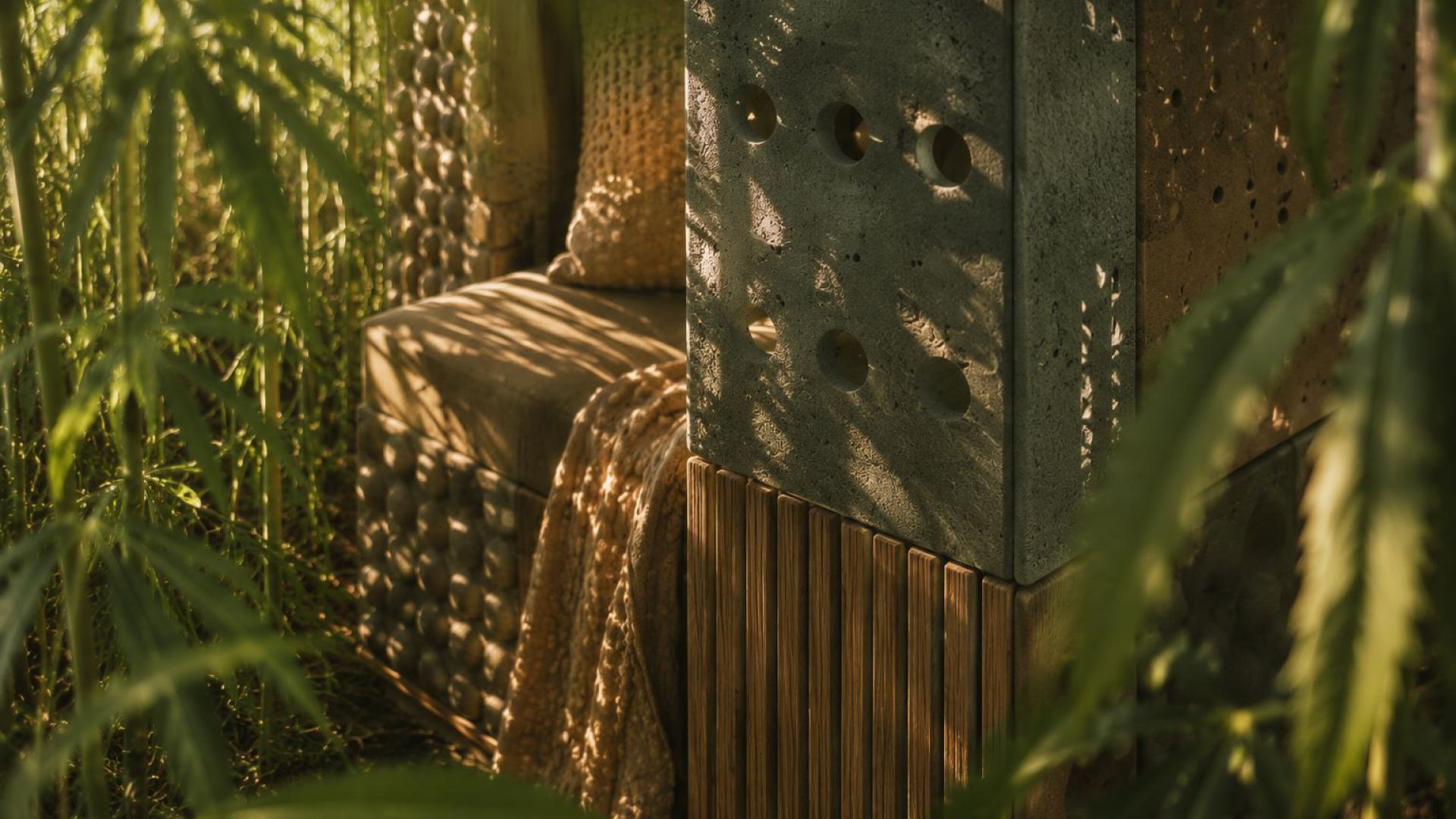
From Field to Refuge transforms agricultural and food waste into meaningful architectural experiences. Hemp fibre and hurd, cork, eggshell waste, and food-derived bioplastics are explored not merely as sustainable materials, but as active elements shaping acoustic comfort, tactile perception, light diffusion, and emotional wellbeing. Visitors move through a dense hemp field, continue into a tactile material laboratory where every surface can be touched and explored, and discover how scientific research, material innovation, and design converge. The installation demonstrates that materials themselves can become part of a spatial language—one that supports inclusion, calm, and human wellbeing.
REFUGE
The journey culminates in a sensory refuge—a soft, immersive architectural space designed as a prototype for future public environments. Rather than displaying untouchable objects, the installation invites visitors to experience, interact, and reflect. The sensory cube demonstrates how architecture can foster calm, privacy, and emotional comfort while remaining beautiful, sustainable, and accessible. As societies increasingly recognize the need for sensory-friendly public spaces, From Field to Refuge proposes a new design paradigm: transforming waste into care, biomaterials into architecture, and architecture into a place where everyone can feel safe, welcome, and at ease.