De Noest
Our education as landscape architects taught us to understand the world through systems: how landscapes form and natural processes shape one another. Nature, for us, is a vocabulary, a structural principle, a way of thinking.
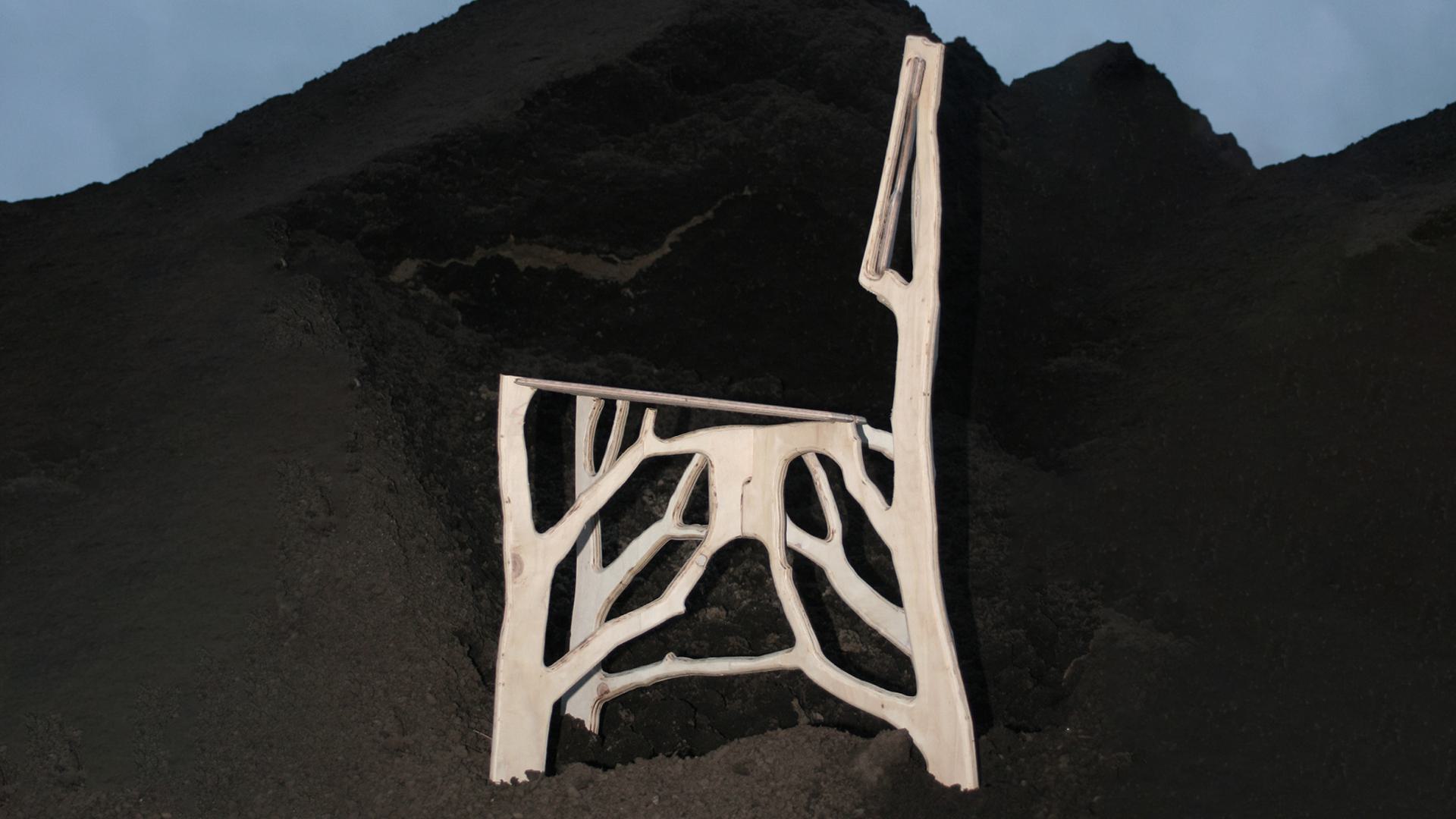
The challenge was translating that into something simple in buildability and material. This became De Noest chair.
3 frameworks shaped our thinking:
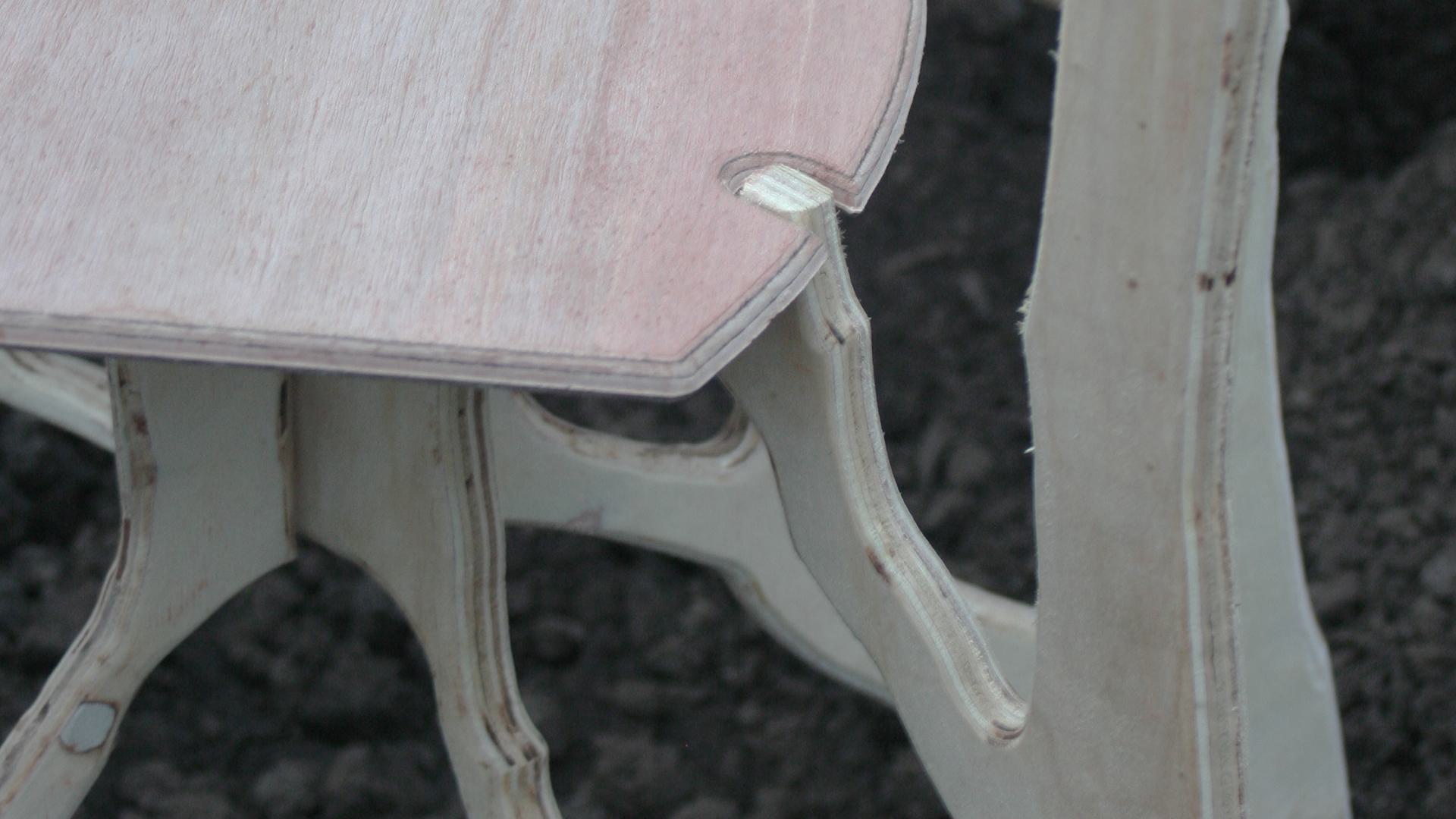
1. The Teacher Tree theory draws from biomimicry: its notches (in Dutch: Noest) distribute load, derive resilience from tension, adapt organically, becoming our structural logic, tension binding frame to surface.
2. Jugendstil restored beauty to everyday objects: flowing lines, decorative and structural at once.
3. Bauhaus contributed honesty of craft: visible connections, deliberate material, modular, replaceable parts.
These converged in an iterative cycle, each version building on the last.
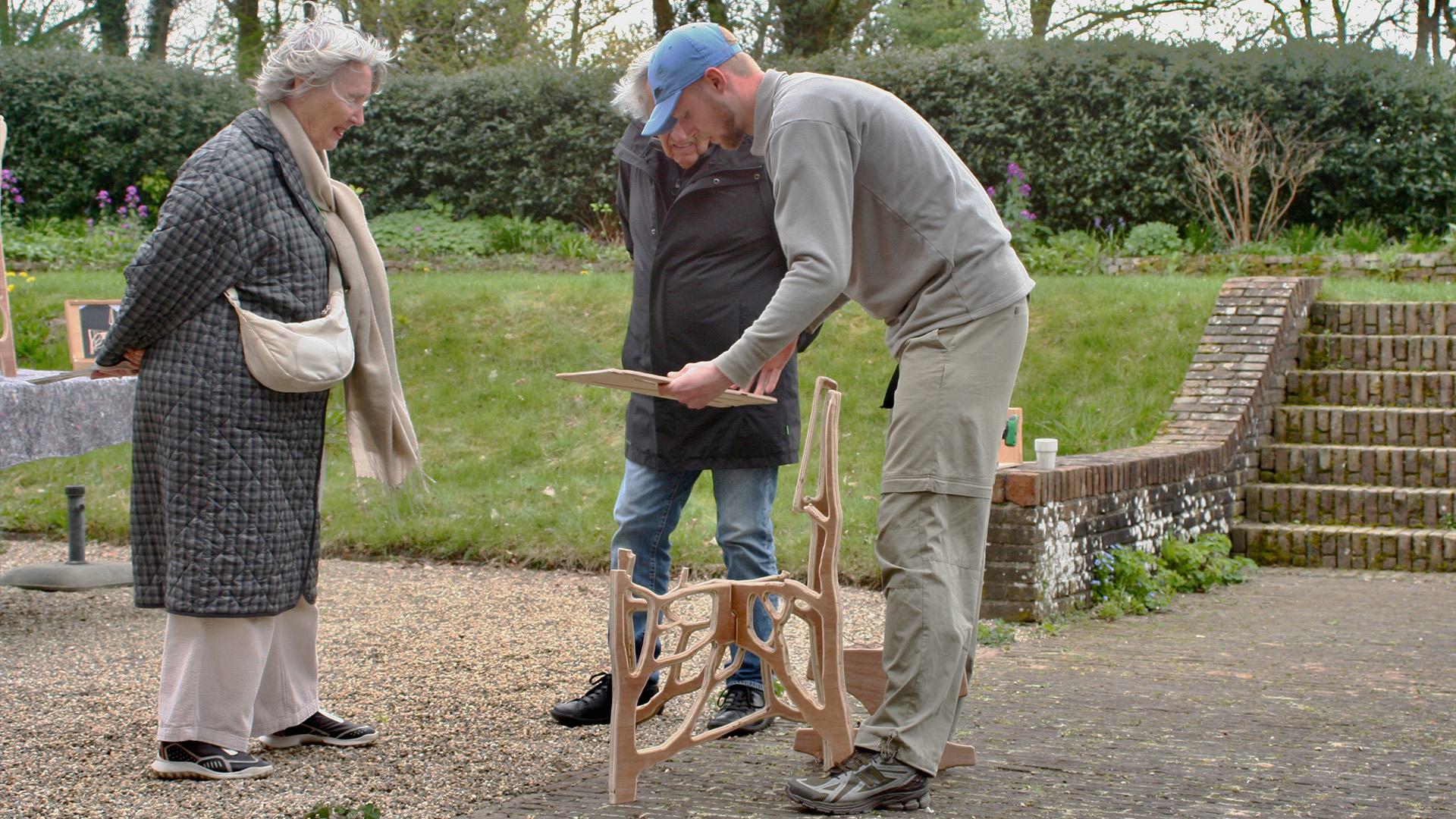
De Noest is complex in form, simple to build. Its two sides meet at an angle, sliding into a cross joint, interlocking geometry that holds the frame without glue or screws. Flat, CNC-cut, unfastened parts make it durable, repairable and adaptable.
Nature as teacher, beauty as belief and the maker as the designer.