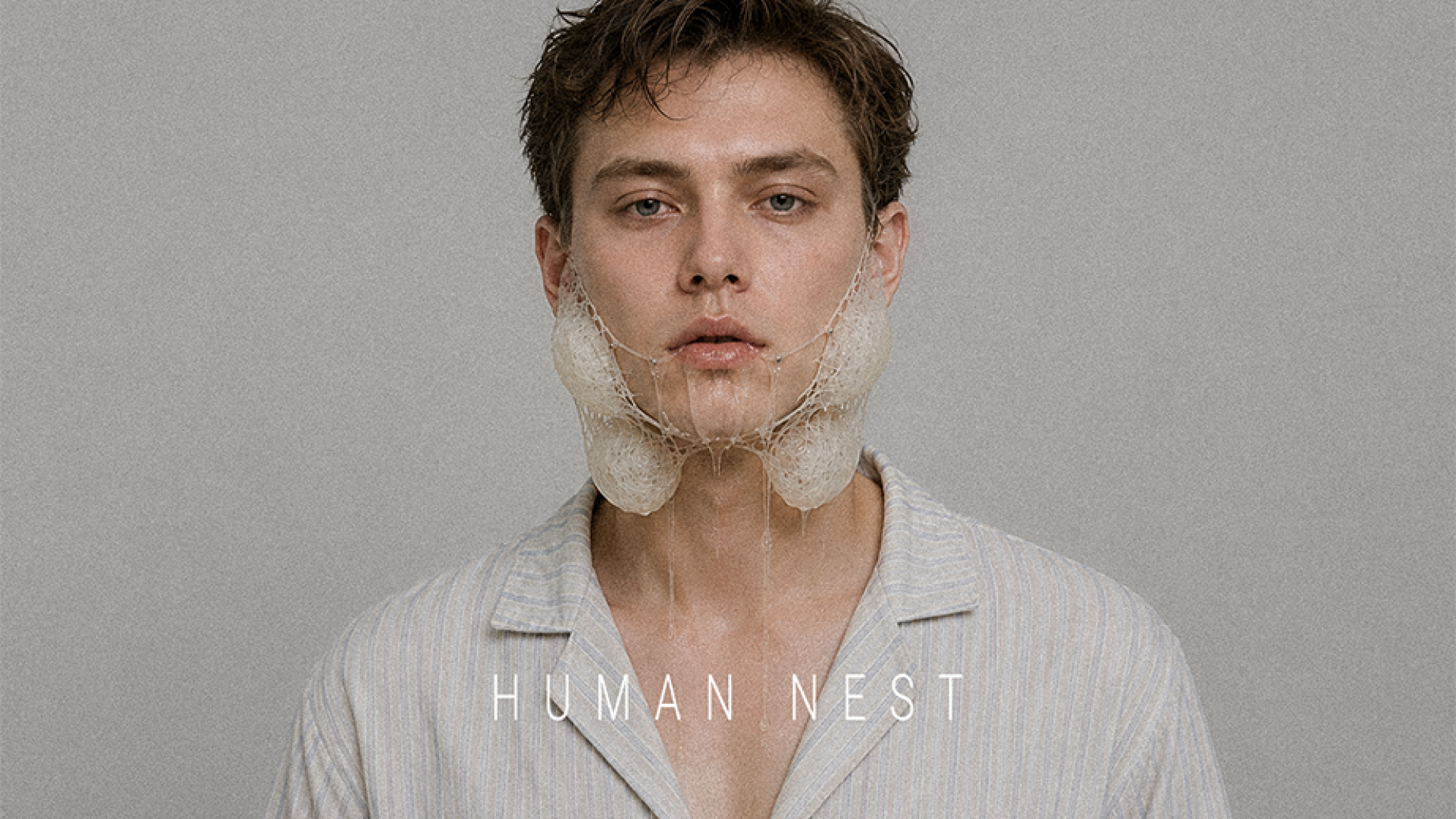
Bird’s Nest
In Traditional Chinese Medicine, bird’s nest is a delicacy and traditional medicinal ingredient made from the solidified saliva of edible-nest swiftlets. It has long been valued for its believed medicinal and nourishing properties.
What if humans could produce their own version of bird’s nest, turning their bodies into a source of nourishment and medicine?
Human Nest
Human Nest is a bio-art and speculative design project inspired by the historical concept of the “human body as medicine” found in the Compendium of Materia Medica, as well as the use of animal-derived medicinal substances in Chinese medical traditions.
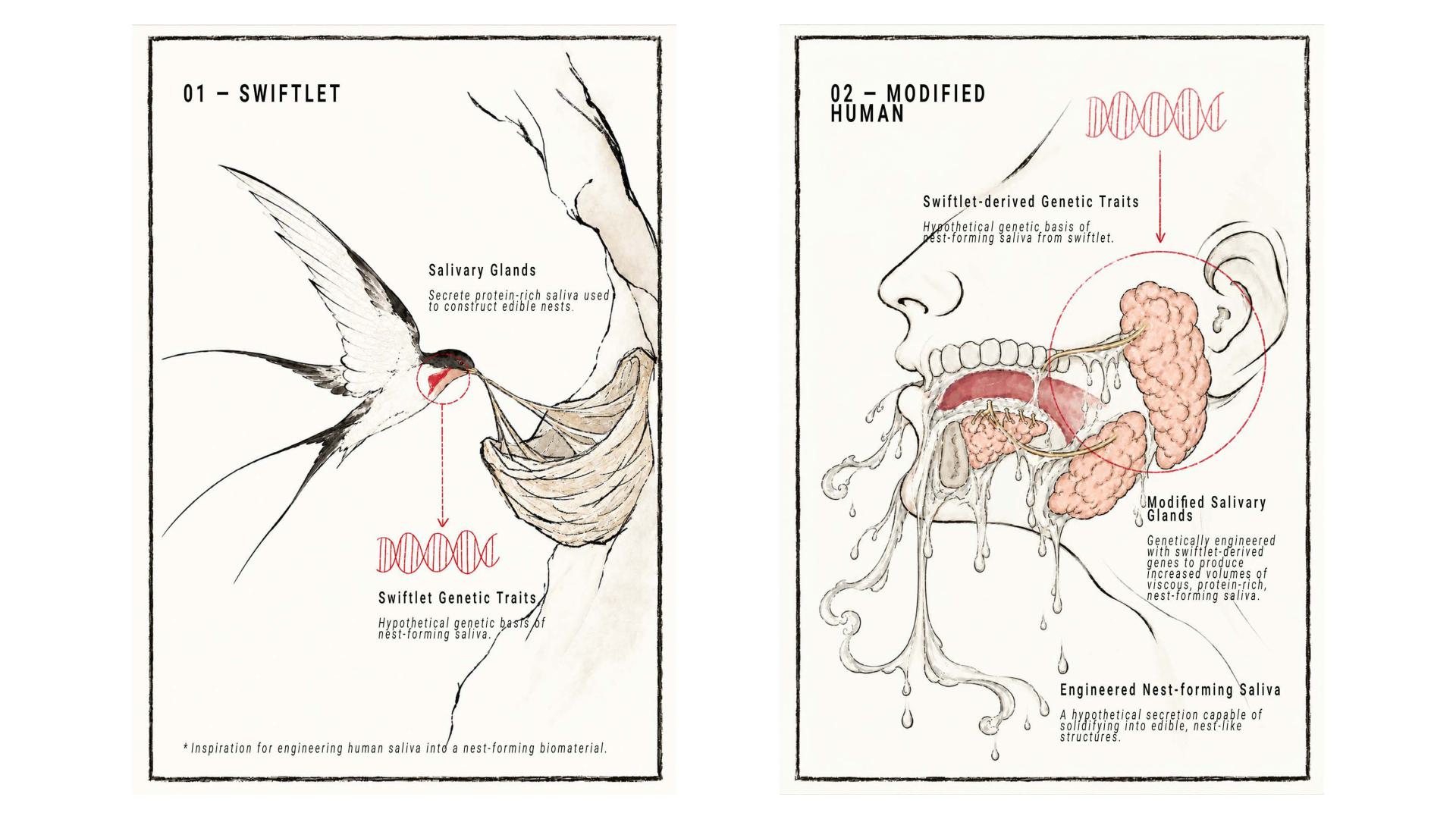
The project imagines a future in which human salivary glands are genetically engineered with swiftlet-derived genes, enabling people to secrete viscous, nest-forming saliva that solidifies into edible “human nests”, believed to possess the same medicinal and nourishing properties as traditional bird’s nests.
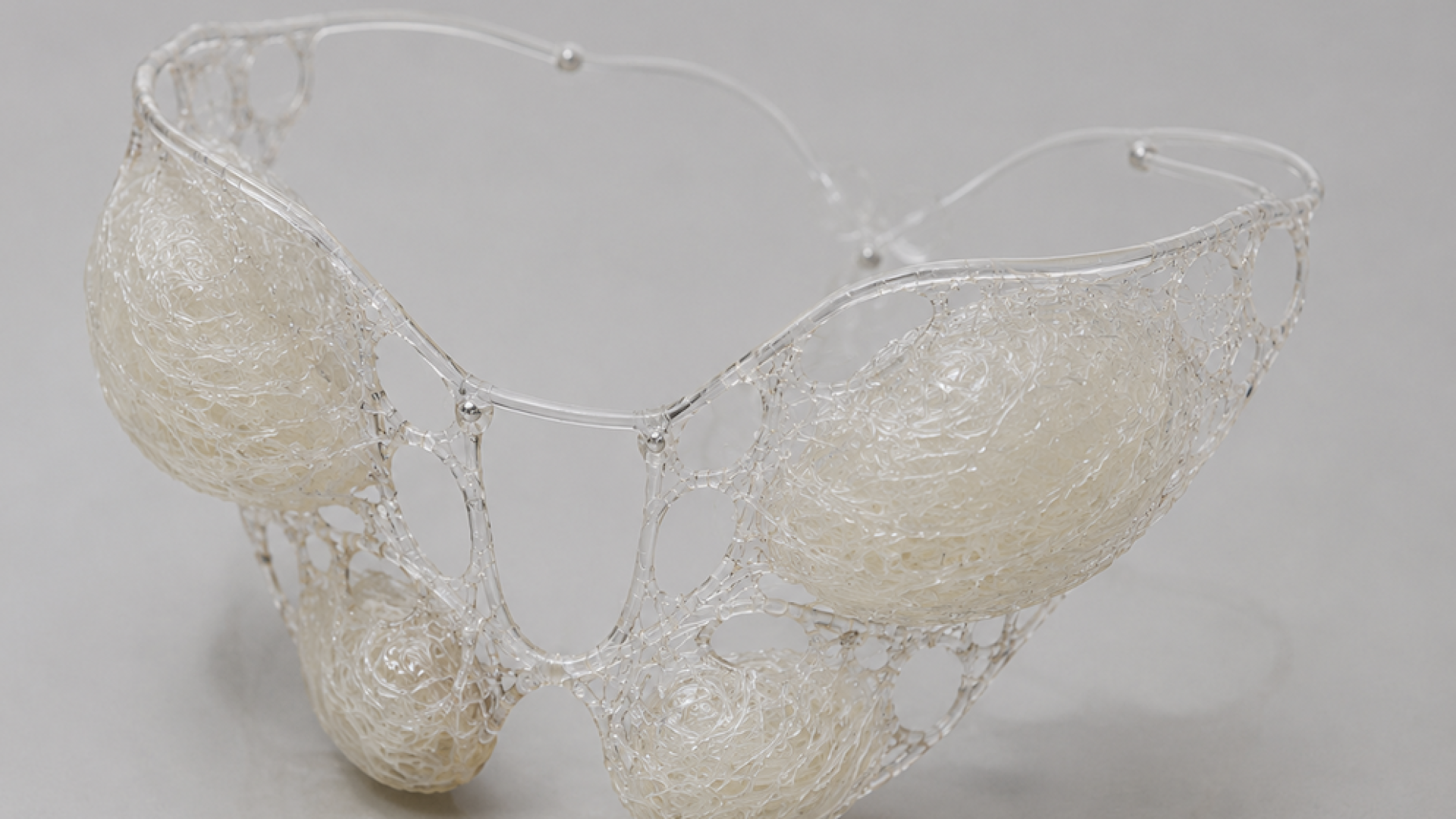
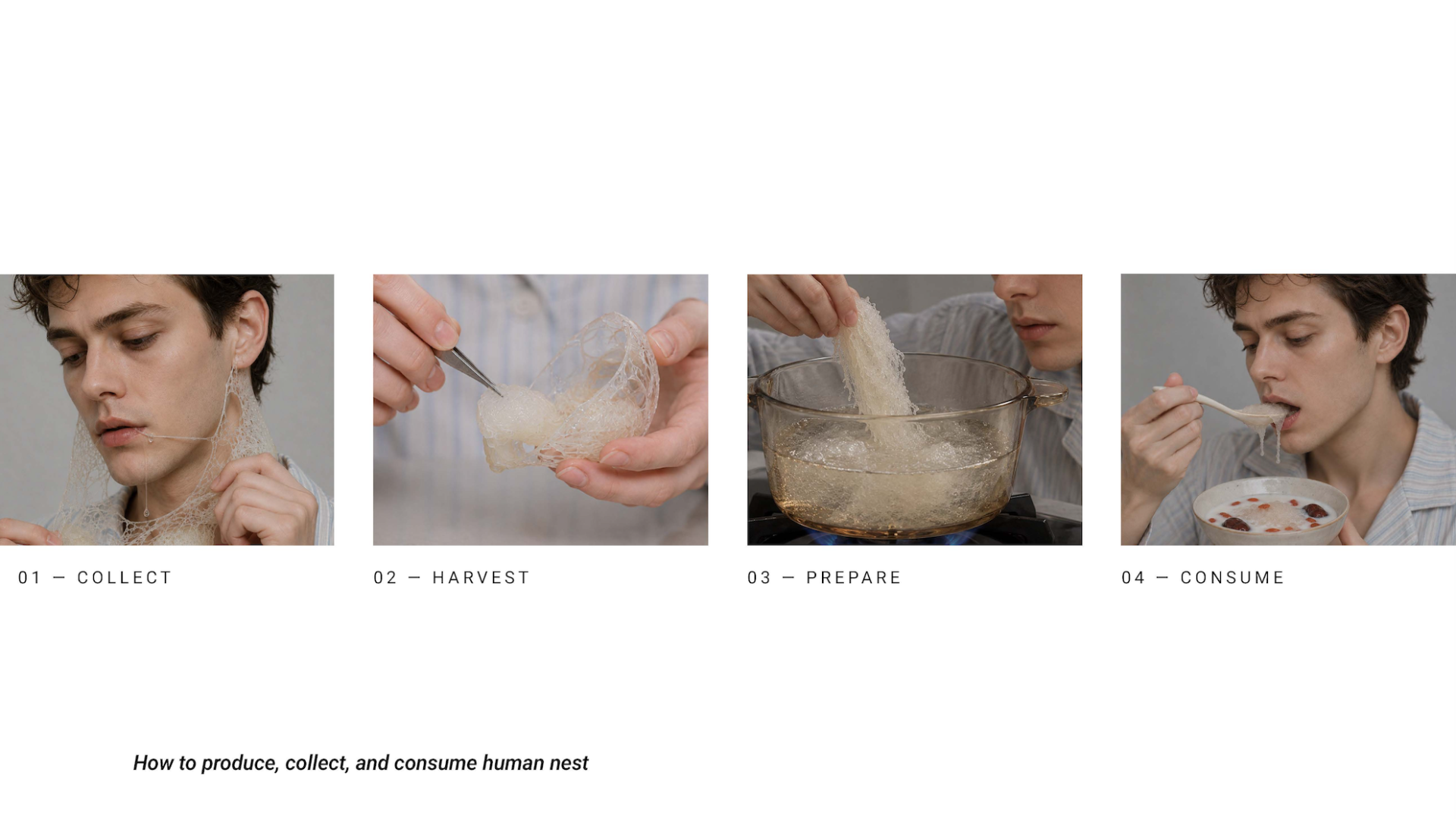
To support this speculative biological transformation, the project proposes wearable extracorporeal prostheses designed to collect, store, and facilitate the solidification of these secretions into edible nests. The resulting “human nests” can then be prepared and consumed by the very people who produce them, as a form of self-nourishment.
The Final Medicine: Human!
By transforming the human body into both a producer and consumer of its own medicinal substances, Human Nest blurs the boundaries between body and medicine, re-examines the relationships between biotechnology, health, and self-care, and questions how far we might modify and consume our own bodies in pursuit of better health.
What if consuming ourselves became a way of nourishing ourselves?
And what if the final entry in the "Compendium of Materia Medica" were simply:
Human.