Rethinking Healthcare
Our entire living environment is designed and increasingly tailored to our personal needs. Customization has become an integral part of design and manufacturing, driven by our desire for products and environments that feel unique, intuitive and personal. Healthcare, however, remains a major exception. Hospitals, medical devices and treatment environments are primarily designed around functionality and efficiency, often resulting in sterile, mechanical and impersonal spaces. Yet illness, treatment and recovery have a profound impact on our mental and emotional well-being. Atelier Van Lieshout questions why medical care should be separated from the way we live. With the Colonic Cleansing Clinic, part of the larger project Sanitas Futurum, the studio proposes an alternative: healthcare that is personal, humane and integrated into everyday life. Rather than treating illness as an interruption of life, the clinic considers care, recovery and even death as natural parts of it. Medical procedures and their surroundings can therefore be designed to complement individual needs, preferences and lifestyles.
Form Reflects Function
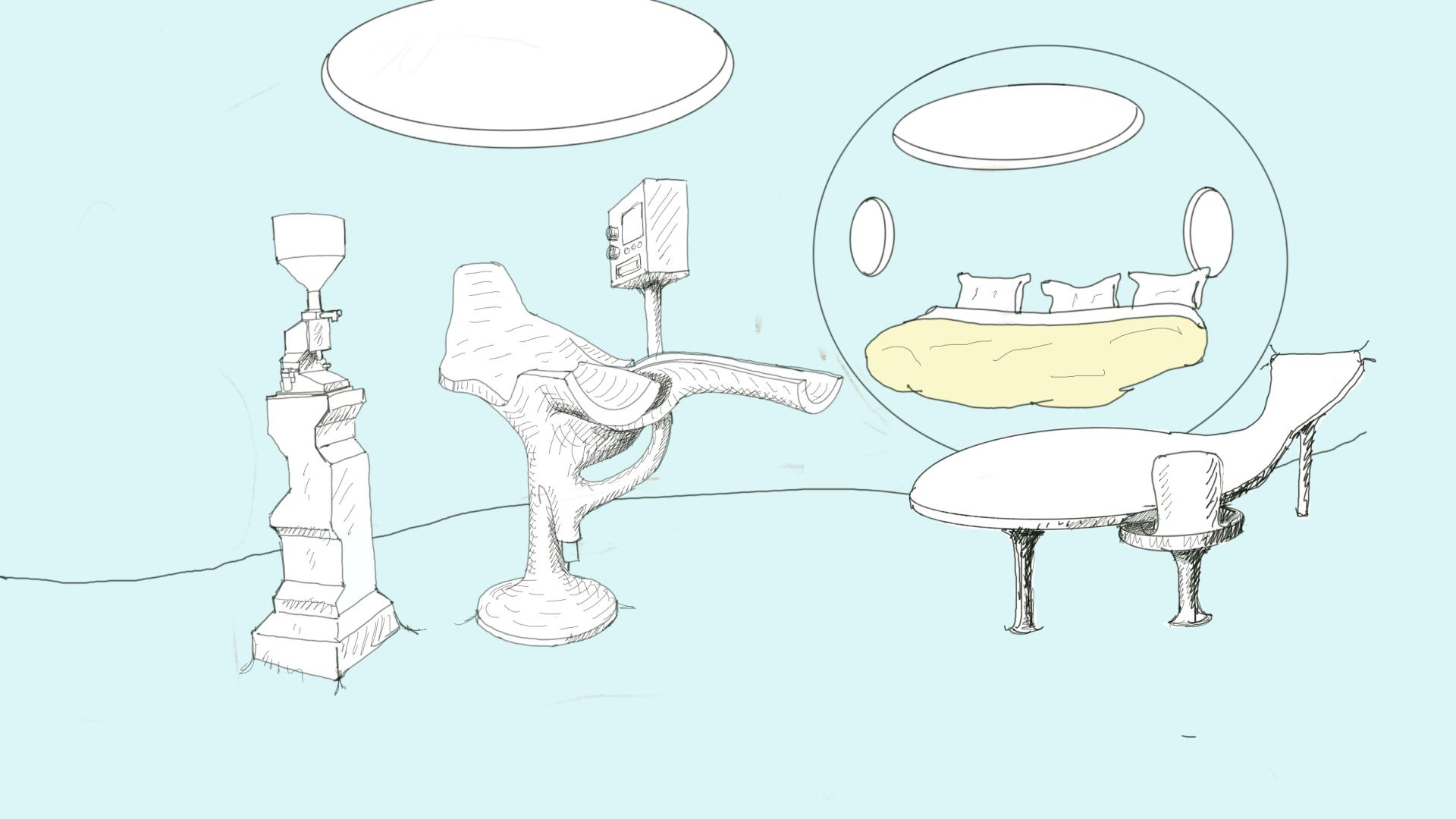
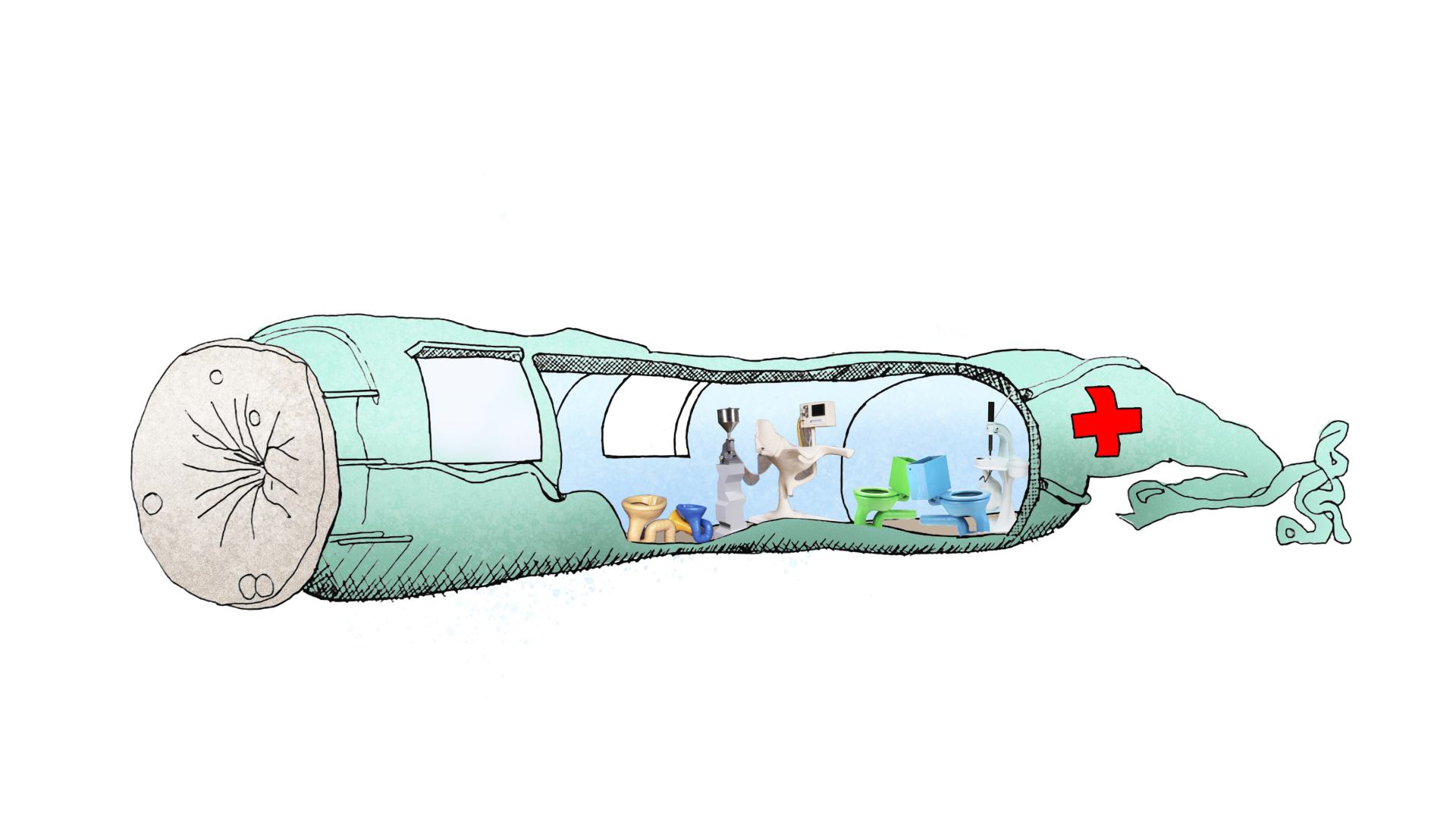
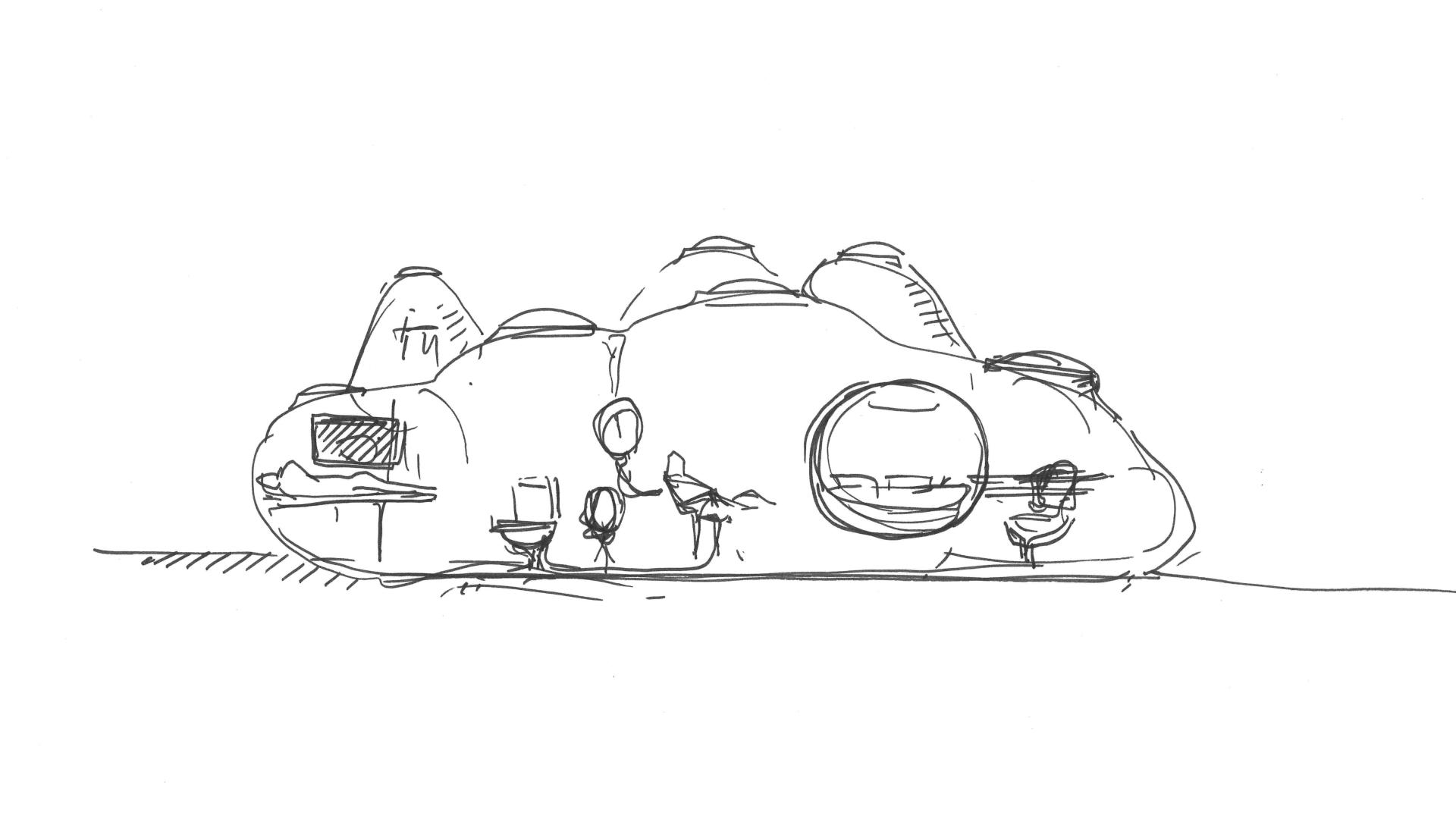
Colonic Cleansing Clinic challenges conventional ideas about what a medical environment should look like. Its exterior does not follow the principle of “form follows function”, but rather “form reflects function”. Atelier Van Lieshout has created a functional sculpture shaped like the human gut, transforming a medical facility into an architectural and artistic statement. Inside, functionality and design continue to intersect. Instead of the polished stainless steel and white plastic associated with conventional medical environments, the clinic uses colour, organic forms and surreal shapes. Futuristic equipment for internal cleansing is combined with a comfortable bed, shower and kitchen, creating an environment that connects treatment with everyday life. The result is neither a traditional hospital nor simply a piece of furniture, but a total environment in which art, architecture, design and healthcare converge.
The Future of Care
The Colonic Cleansing Clinic explores how design can transform our perception and experience of medical care—and potentially change its status and value. The project is deliberately speculative: rather than offering a ready-made solution, it presents an alternative reality that invites us to reconsider what healthcare could be. Its immediate purpose is to spark discussion about the experiential value of medical care and the role design can play in improving it. How should a medical environment make us feel? Can treatment become more personal, intuitive and humane? And can design help us relate differently to illness, recovery and death? The clinic builds on Van Lieshout’s forty-year practice of questioning and transforming existing systems. It extends his long-running series of Dwellings—mobile and fixed structures tailored to specific functions or users—into the field of healthcare. Colonic Cleansing Clinic therefore operates on several levels: as a functional sculpture, a speculative design proposal and a catalyst for dialogue between art, architecture, design and medicine. It invites us to imagine healthcare not as something outside everyday life, but as an integral part of it.