Incident
Residue takes as its starting point two waves of salt hoarding in China, triggered by the Fukushima nuclear disaster in 2011 and the release of treated wastewater in 2023.
Although ordinary table salt cannot protect people from radiation, and seawater contamination never threatened salt supplies, the panic repeatedly resurfaced.
Rather than focusing on the disaster itself, the work examines the residues it leaves behind: fears, habits, emergency responses and collective behaviours that continue to circulate long after the event has faded from public attention.
Materialization
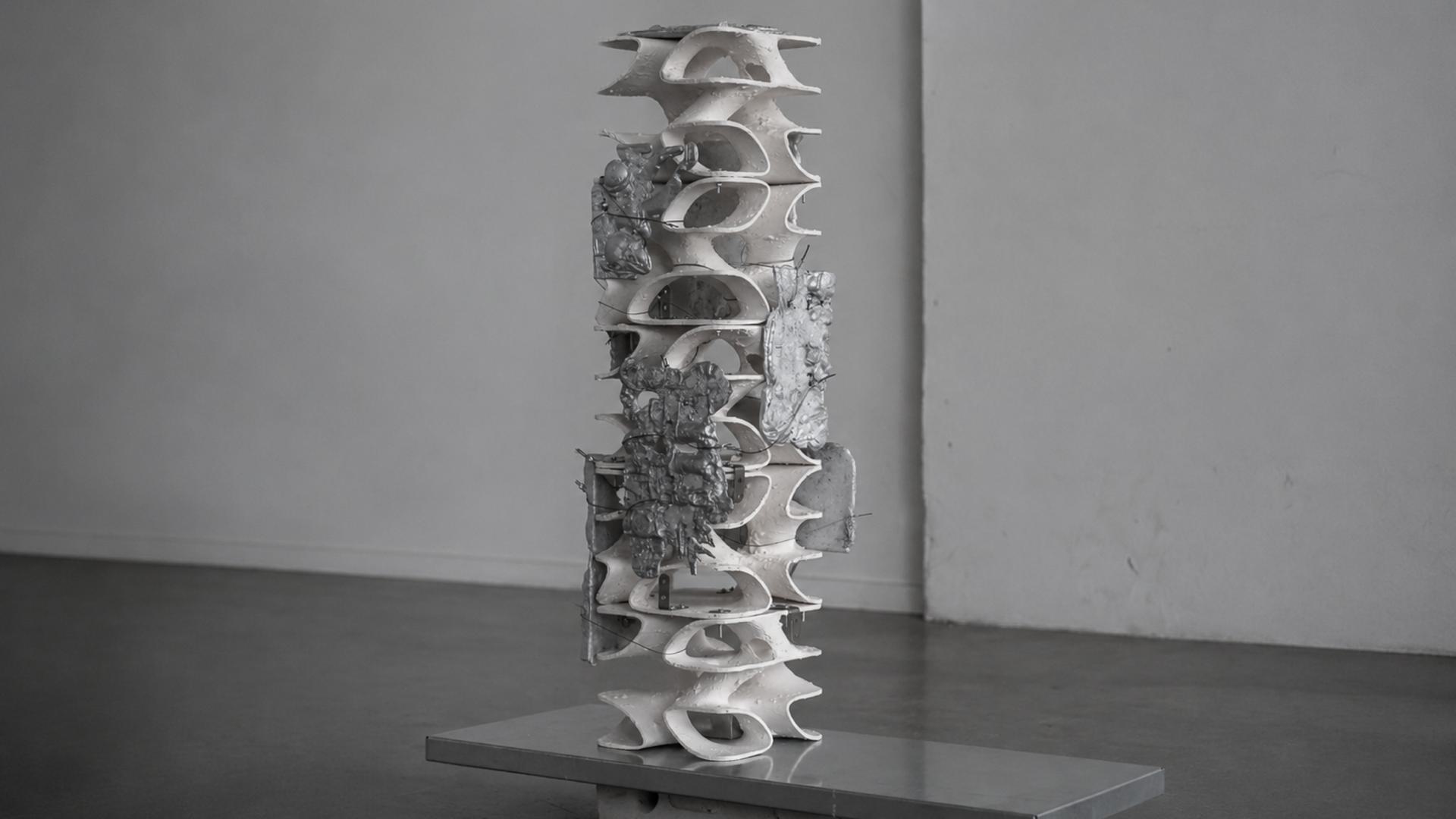
The installation gives physical form to invisible chemical and behavioural residues.
Its central skeletal structure resembles both bones and marine formations, referring to chemical residue: radioactive elements such as Strontium-90 can enter the body and become embedded in bones.
Cast aluminium objects derive from sites, infrastructures, testing procedures and incidents associated with Fukushima. Over time, salt crystals accumulate across these forms, gradually obscuring the information beneath them as behavioral residue becomes matter.
Conclusion
By drawing parallels between radioactive incorporation and social repetition, Residue explores how collective behavior can accumulate like matter, gradually becoming part of the structures through which we perceive, remember, and respond to the world.