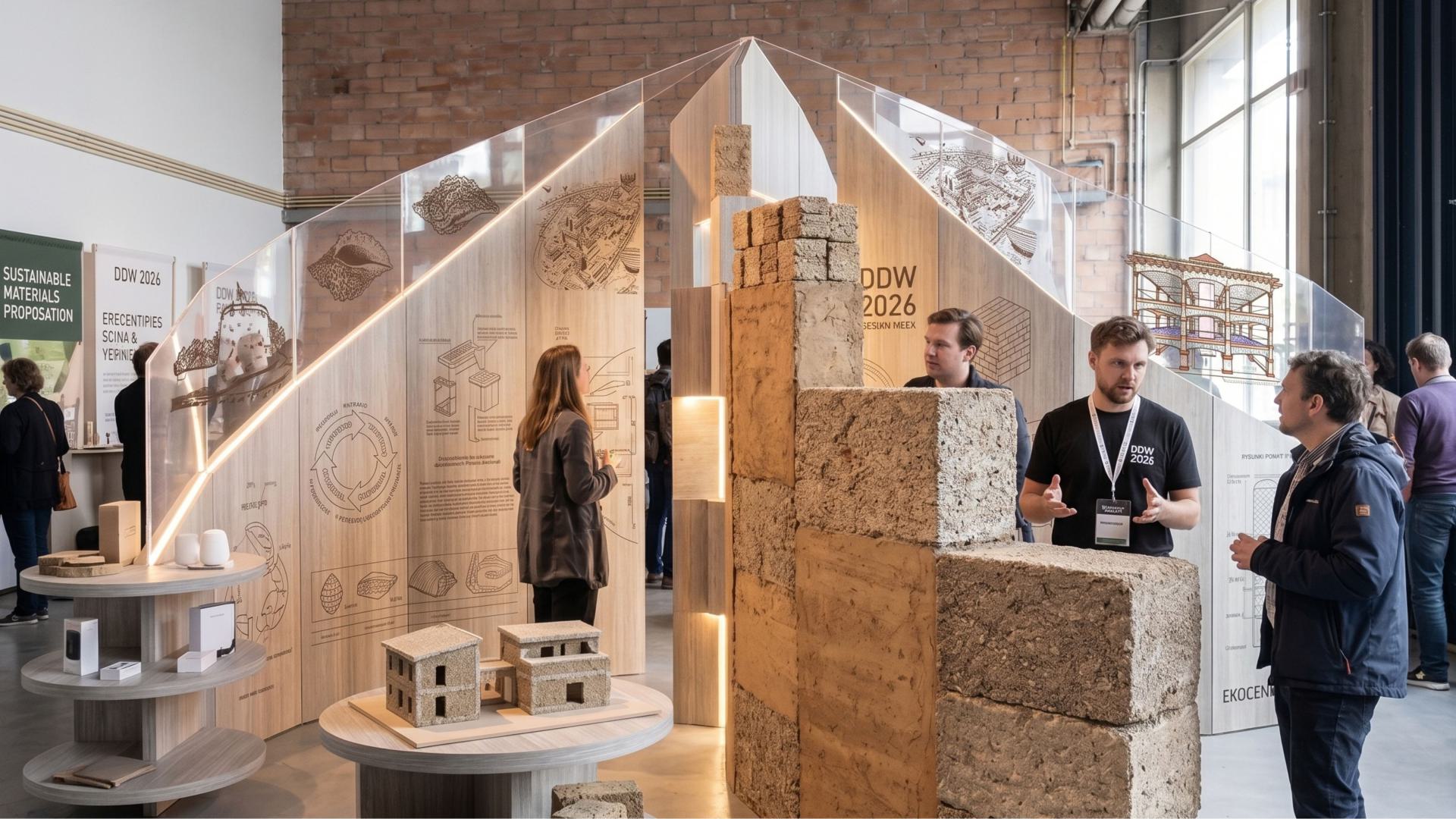
More than just bio-based: build bio-logically!
Building is more than choosing materials. It's about the relationship between people, buildings, and the environment. So the question isn't just WHICH materials we build with, but WHAT, WHY, for WHO, WHEN, WHERE, and HOW (process and form).
In the Netherlands, a lot of knowledge and experience has been gained over the past 50 years about how bio-logical architecture can contribute to a healthy, balanced, and regenerative living environment. There are now also many well-developed building products made from natural materials.
The foundation is ready for a mature bio-logical building culture!
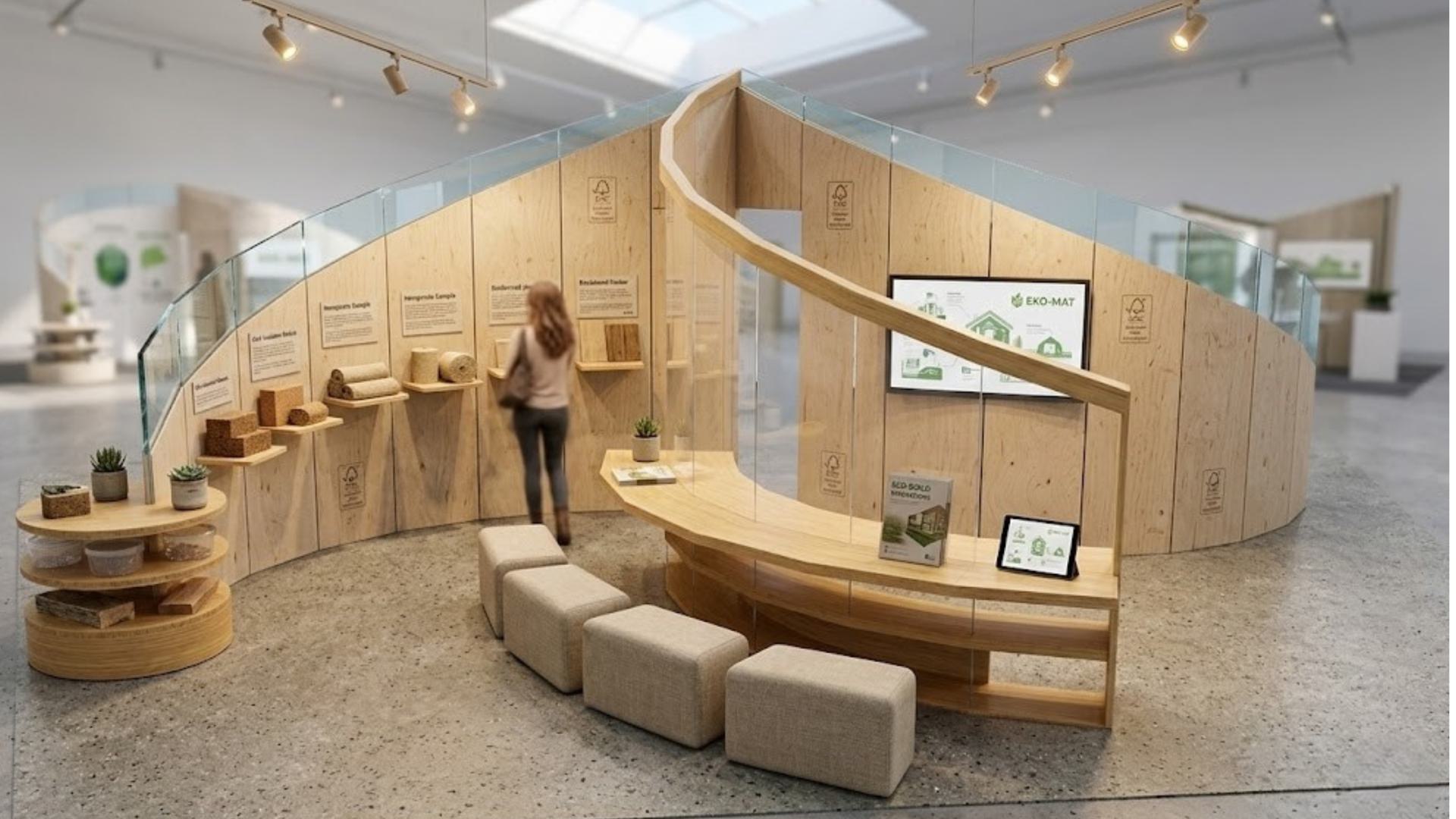
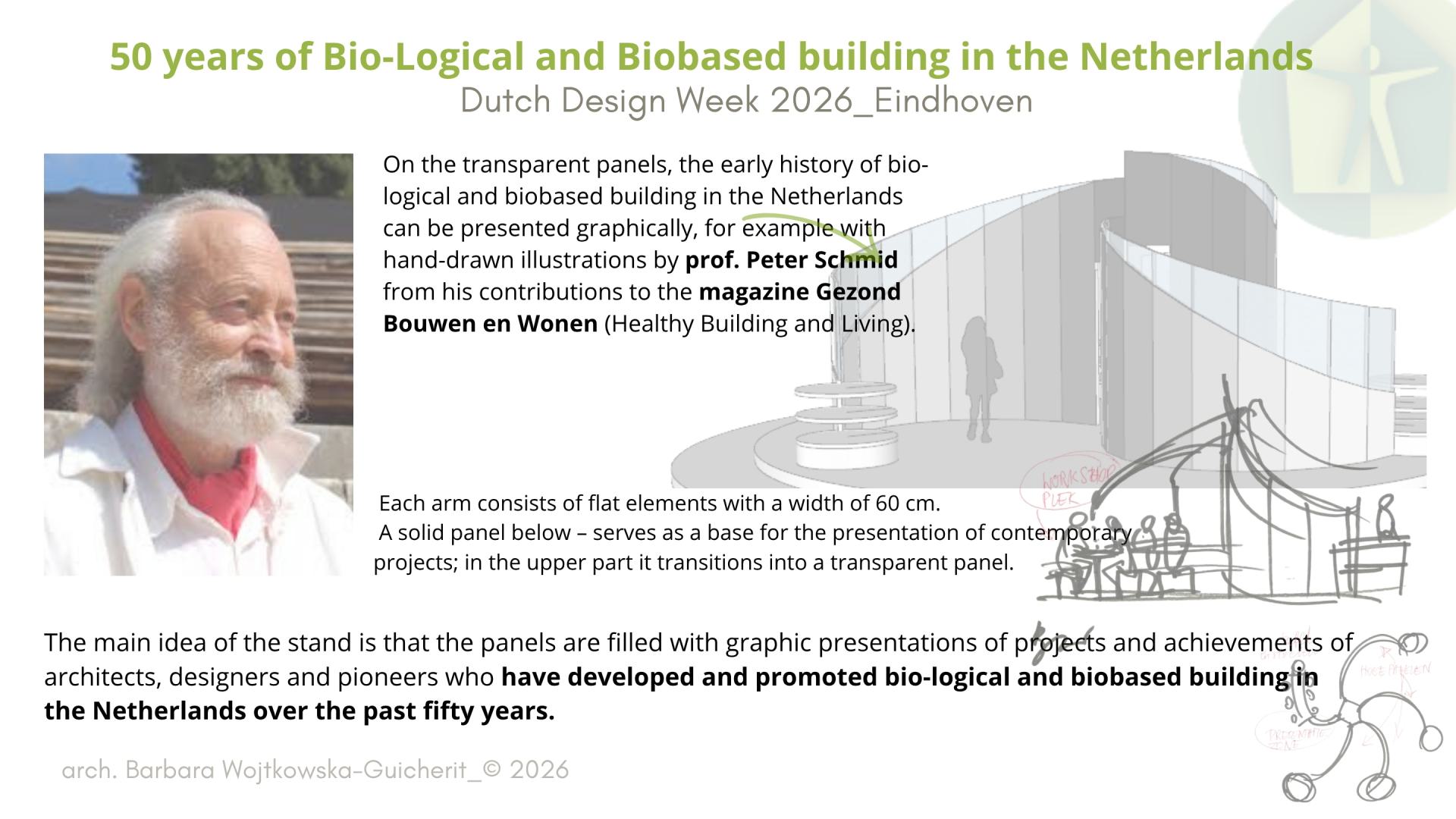
The spiral shape of the stand refers to the principles of harmony from building biology and organic architecture: harmony in forms and measurements, aimed at creating a rich sensory experience of space.
Drawings, photos, project informations, stories and materials
This exhibition is inspired by 50 years of the Association for Integral Bio-logical Architecture (VIBA). There are examples of research, design, and construction by the pioneers of bio-logical building in the 1970s and 1980s. Professor Peter Schmid from TU Eindhoven played an important role in education and practical experiments.
There are also many photos and stories of recently completed homes, other buildings, and outdoor spaces, alongside a display of the finest contemporary bio-building materials.
Inspiration and knowledge
The initiative for this stand comes from architect Barbara Wojtkowska, and sustainable and healthy building advisor Mieke Weterings is helping to organize all. They have gained decades of inspiration and knowledge within the network of bio-eco-logical building and organic architecture in the Netherlands, which has had a big influence on their work.
Several experienced architects and building biologists from this network are joining in and can guide visitors on how to just build bio-logically!